American casseroles reflect many stages of the nation’s culinary evolution, from Depression-era shipwreck casseroles to the “million-dollar” dishes of the 1950s. Some of these meals remain staples today, while others—like the King Ranch chicken casserole—have slipped quietly into obscurity. Originating from Texas, this dish embodied the state’s bold, border-influenced character with ingredients that went far beyond the minimalist casseroles of its time.
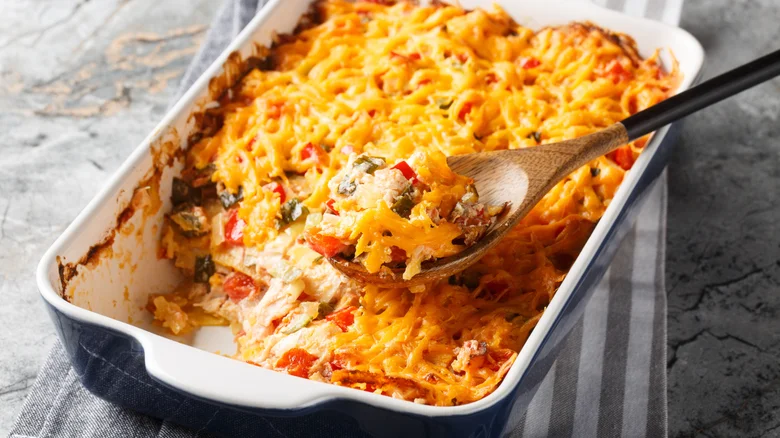
Unlike simple, binder-heavy counterparts, the King Ranch casserole incorporated toasted tortillas, peppers, onions, and a creamy sauce often built on canned soup, a hallmark of mid-century convenience cooking. A generous layer of shredded cheese completed the dish, contributing to a rich, Tex-Mex-inspired profile that captured the dining trends of the era.
Despite its distinctive name, the casserole’s origins remain uncertain. Although King Ranch is the largest ranch in Texas, its management denies any connection to the recipe. The dish shares ingredients common in Tex-Mex cooking, such as sour cream, chili powder, and Monterey Jack cheese, and its structure resembles elements of Mexican chilaquiles. Even so, it did not arise strictly from Mexican or Texan traditions.
Most food historians point to the basic pairing of chicken and a creamy component—whether dairy-based or derived from canned soup—as the most reliable clue to its origins. It may have developed as a Texan interpretation of early twentieth-century dishes like chicken à la king, which combines cream, bell peppers, and diced chicken within a similar structure. Yet definitive evidence remains elusive.
The casserole gained popularity through the mid to late twentieth century, appearing in cookbooks, restaurant menus, and even frozen-food aisles. Though it never vanished completely—its presence resurfaced during the recent pandemic—it has faded from the cultural spotlight that once made it a household favorite.
In the end, the enduring appeal of the King Ranch casserole lies not in a precise origin story but in the simple truth shared by many comfort foods: if it is easy to prepare and delicious to eat, it finds a place in the kitchen, even if only for a season.