Waiting is often misunderstood as a passive or pessimistic act. In a world that celebrates speed and certainty, waiting appears inefficient, even painful—a mere attempt to fill empty time. Yet waiting is rarely empty. More often, it is filled with expectation, uncertainty, and a quiet refusal to give up entirely.
Modern life trains us to demand immediacy. Messages are expected to be answered quickly, outcomes to be delivered promptly, emotions to be clarified without delay. In such a context, waiting feels almost inappropriate. But human emotions do not follow the logic of productivity. They move at their own pace, shaped by longing, fear, and hope.
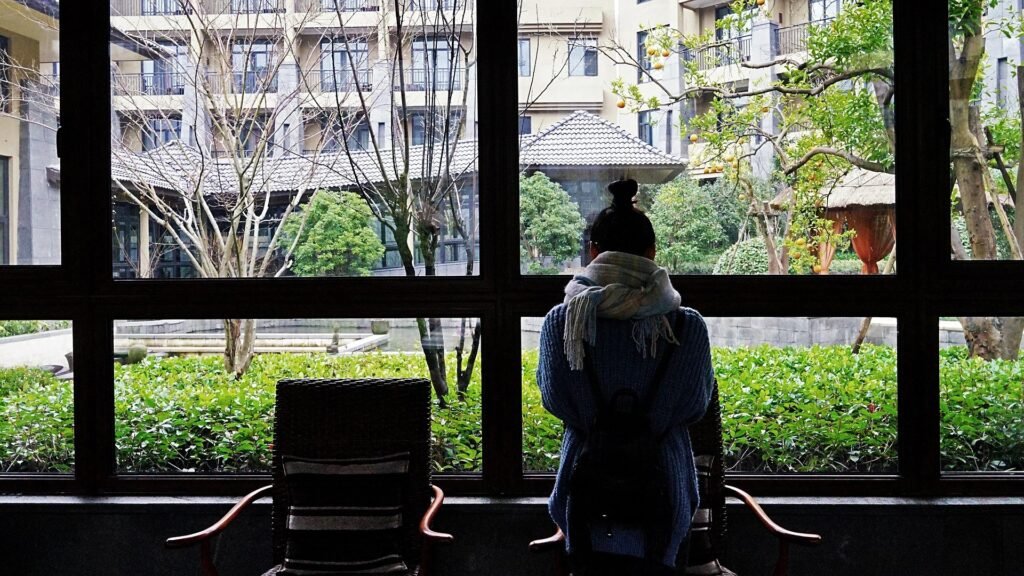
We wait for a message, a call, a meeting, a result. Sometimes we wait for clarity, for reassurance, or simply for things to make sense again. These moments are rarely calm. They are marked by inner tension—a fragile balance between believing and doubting. Waiting is uncomfortable precisely because it keeps us awake to possibility.
In relationships, waiting becomes even more complex. It can be difficult to tell whether we are being patient or slowly hurting ourselves. Some connections linger in ambiguity, where neither departure nor commitment occurs. In such spaces, waiting can feel less like a choice and more like inertia.
Yet not all waiting is illusion. Some things require time before they can exist honestly. Some people need distance to grow, to understand themselves, to become capable of staying. In these cases, waiting is not weakness but composure—a conscious decision to allow time its work without surrendering self-respect.
The essential question is not whether we wait, but what we are waiting for. Are we waiting for something real, or for an image we have constructed? Are we waiting with intention, or simply avoiding the pain of letting go? These questions are uncomfortable, but avoiding them only deepens the weight of time.
Waiting is also a test. It tests relationships, decisions, and our capacity to endure uncertainty. Waiting longer does not necessarily mean loving more, just as leaving sooner does not imply a lack of sincerity. Each person navigates waiting in the way that feels most survivable.
Some opportunities require patience. Others demand the courage to move on. Hope itself is not a mistake—but it must be grounded in reality. When waiting consumes our entire life, it ceases to be hope and becomes stagnation.
Perhaps the most honest form of waiting is one in which life continues to expand. We keep living, growing, and moving, even as we wait. Then, regardless of the outcome, we remain alive in the fullest sense—and that, in itself, is hope.

