《海岛舒服日志》- Island Comfort Diary is still being filmed. There are no trailers, no finished clips, and no concrete material to judge. At this stage, it is impossible—and unnecessary—to evaluate its quality, success, or future reception.

And yet, quietly, it has begun to draw attention.
This is an original script without the protection of a known IP. Directed by Liu Chang, whose past work includes With You, and written by a team associated with The Fallen Bridge, the project leans toward realism rather than spectacle. The cast, led by Liu Haoran and Li Landi alongside Dong Zijian and Cheng Xiao, feels deliberate rather than flashy.
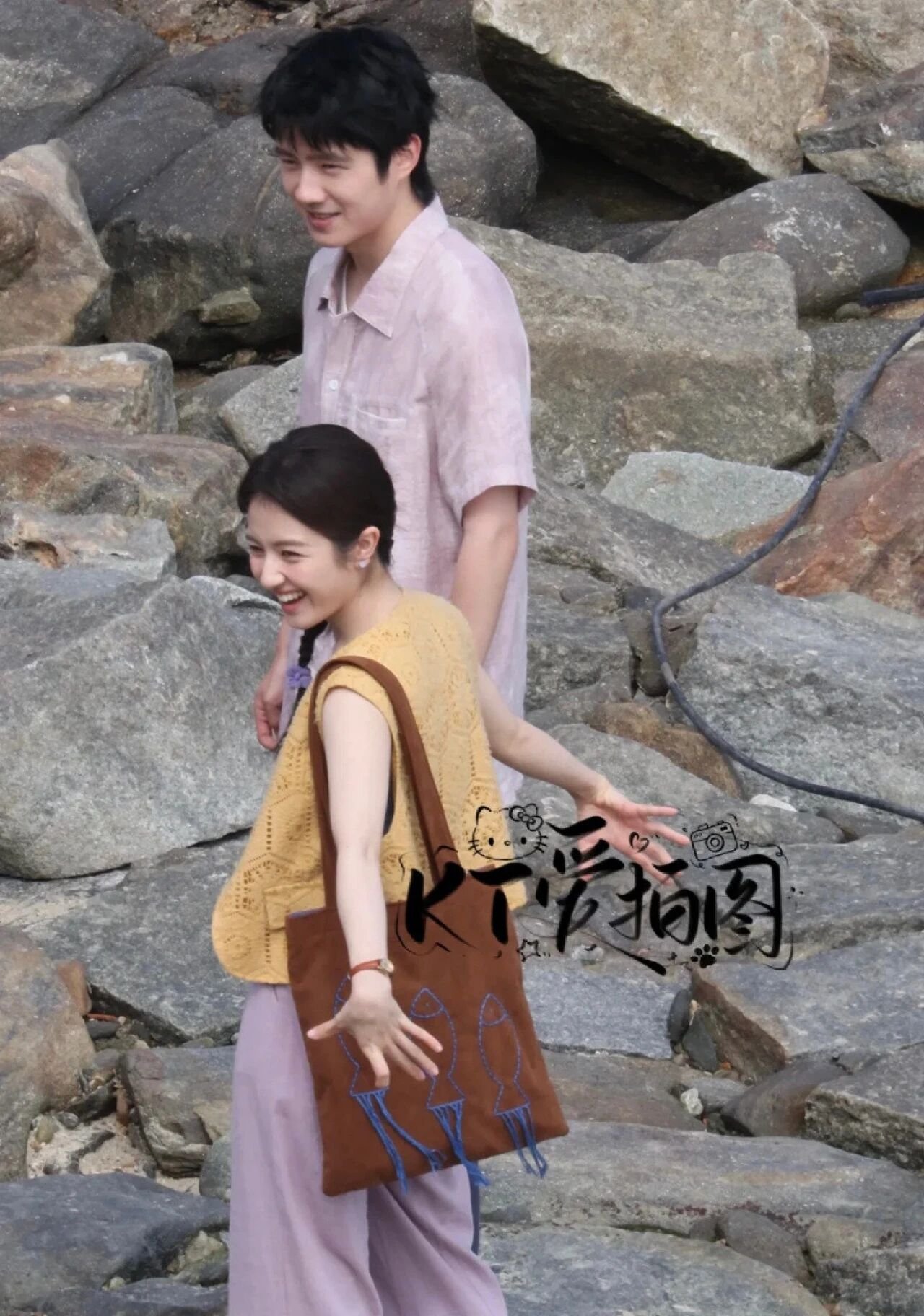
The series is filmed in Xiamen and Pingtan, using undeveloped beaches and aging docks to recreate a 1990s island fishing village. Weathered houses, old boats, and wind-worn streets dominate the early descriptions from set. The visuals are not polished in a conventional sense, but they carry a sense of lived-in reality.
Still, what resonates most with viewers so far is not the setting, but the people.

For many audience members, Liu Haoran and Li Landi are deeply tied to memory. They are actors whose early roles coincided with viewers’ own formative years. Those characters did not just appear on screen; they accompanied a generation through school days, summers, and the slow realization of growing up.
As time passed, the audience grew older—but emotionally, many kept these actors frozen in those earlier moments. Not out of denial, but out of attachment.
That is why the early glimpses from Island Comfort Diary feel quietly affecting. There is no dramatic reinvention here. No urgent declaration of maturity. Instead, there is calm.
Li Landi appears understated, grounded in the environment around her. Liu Haoran looks weathered by sun and sea, his presence more restrained than before. These images do not demand recognition—they simply exist.
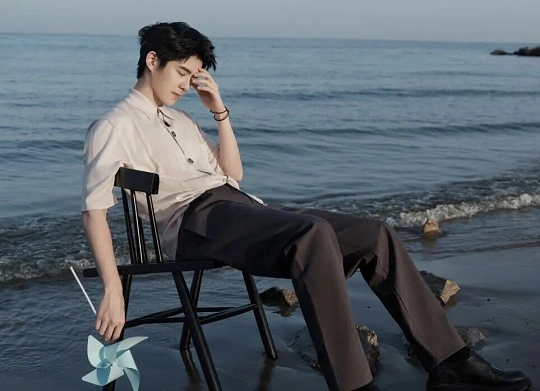
And that is precisely what makes them powerful.
For viewers, seeing familiar faces occupy a different rhythm of life creates a subtle emotional shift. It is not about abandoning the past, but allowing it to settle naturally into something new. Growth, in this sense, does not need to be announced. It happens quietly, often without permission.
The details shared from set—learning local dialects, sitting on stone steps, eating sugarcane—are not extraordinary. But they feel real. They suggest a story that values everyday texture over dramatic emphasis.

That restraint is rare.
Actors who grew up in the public eye often face pressure to redefine themselves loudly, to prove distance from their younger images. What Island Comfort Diary seems to offer instead is space. Space for actors to continue forward without erasing who they once were, and space for audiences to adjust at their own pace.
This is why the project feels worth anticipating.
Not because it promises innovation or success, but because it appears patient. It trusts time, character, and atmosphere. It does not rush to explain itself.
It is far too early to predict outcomes. But even now, before the cameras stop rolling, Island Comfort Diary has already achieved something rare: it has made people willing to wait—and to feel—without needing to be convinced.

