On January 22, Deng Jie, known for her restraint and long absence from public emotional expression on social media, unexpectedly shared a short post of mourning. The message was brief, yet its closing line featured three prayer emojis, a subtle but heavy signal of grief. For those familiar with her character, this was not a ceremonial gesture, but an unfiltered moment of sorrow breaking through years of silence.
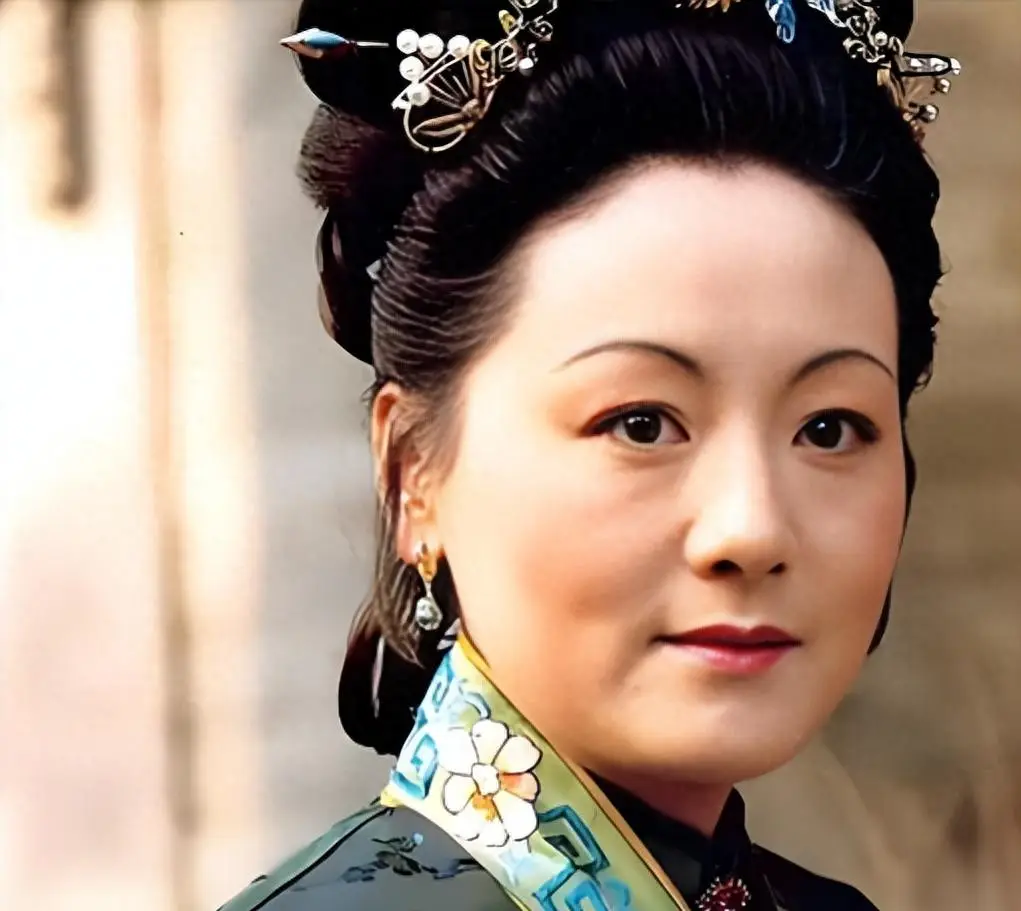
The post was dedicated to Sun Caihong, the actress who portrayed Zhou Rui’s Wife in the 1987 television adaptation of Dream of the Red Chamber. Sun passed away in Beijing in the early hours of January 20 at the age of 77. The news became public only after her farewell ceremony, reflecting the modest temperament of an older generation of performers who preferred discretion in both life and death.
To many viewers, Sun Caihong remains inseparable from her role as the sharp-eyed, worldly housekeeper in Dream of the Red Chamber. Director Wang Fulin once remarked that she “gave life to the character.” Trained in Peking Opera as a Li-school laodan performer, Sun brought to the screen a refined physicality and expressive depth shaped by years of stage discipline. With minimal screen time, she created a vivid, grounded presence that left a lasting impression.
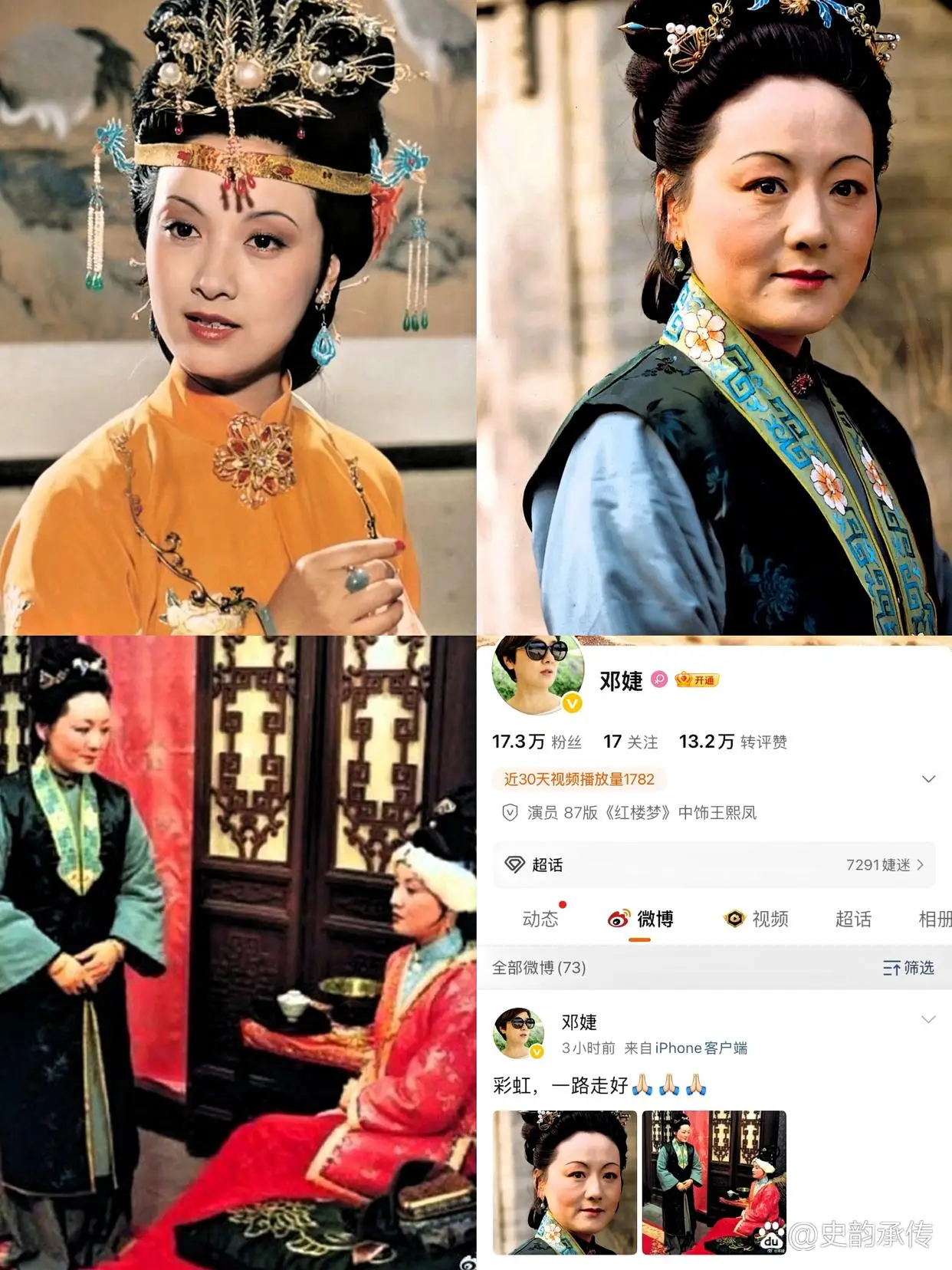
Yet for Deng Jie, Sun Caihong was far more than a memorable supporting actress. During the prolonged and demanding production of Dream of the Red Chamber, resources were scarce and emotional pressure was constant. Sun often shouldered responsibilities beyond acting, assisting with logistical coordination and emotional support. In many ways, she played the role of a caretaker off-screen, stepping in whenever tensions rose or spirits faltered.
Deng Jie’s portrayal of Wang Xifeng was one of the most scrutinized performances in the entire series. The role carried immense expectations and intense debate, placing her under extraordinary stress. At moments when she considered stepping away, it was Sun Caihong who quietly stood behind her, offering reassurance and stability. The old photograph Deng later shared, showing the two actresses standing side by side in costume, captures a bond forged under pressure rather than a casual professional acquaintance.
Sun Caihong’s passing also revives a sobering reality. Since the death of Chen Xiaoxu, who played Lin Daiyu, this marks the fifteenth loss among the core cast of the 1987 adaptation. One by one, the figures who once animated the Grand View Garden have departed, turning the drama into a living archive of a bygone era.
In retirement, Sun did not pursue commercial opportunities linked to her legacy. Instead, she dedicated herself to teaching, sharing performance insights, and promoting Peking Opera among younger generations. Her focus remained on preserving the craft rather than capitalizing on past recognition. Such devotion feels increasingly rare in an industry driven by speed and visibility.
Deng Jie’s moment of public grief, therefore, resonates beyond personal loss. It reflects a collective farewell to an era defined by patience, discipline, and reverence for performance. Her sorrow speaks quietly for those who remember a time when dedication to the art itself mattered more than immediacy or fame.

