A closer look at the current slate of upcoming Chinese dramas reveals a noticeable trend: the growing presence of so-called “young marshal” characters. One early example this year was Zha Xi, which recently concluded its broadcast. In the series, the male lead Xiao Zhiyu (played by Chen Xingxu) appears in military uniform within a play-within-a-play setting, a visual that many viewers regarded as the first notable “young marshal” moment of the year.
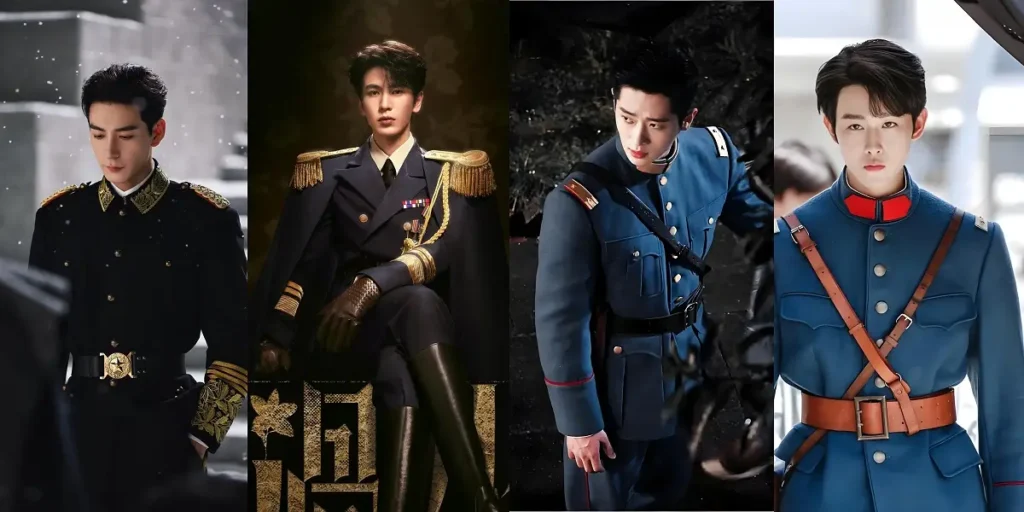
What stands out is that Republican-era “young marshal dramas” were relatively rare in previous years, yet several such projects are now awaiting release. This shift raises an industry-wide question: is the increase driven by changing market demand, or is it simply another cycle of aesthetic trends?
In online discussions and leaked set photos, military uniforms often dominate the conversation. However, beyond surface-level fascination with uniforms, what exactly are audiences seeking from these dramas?
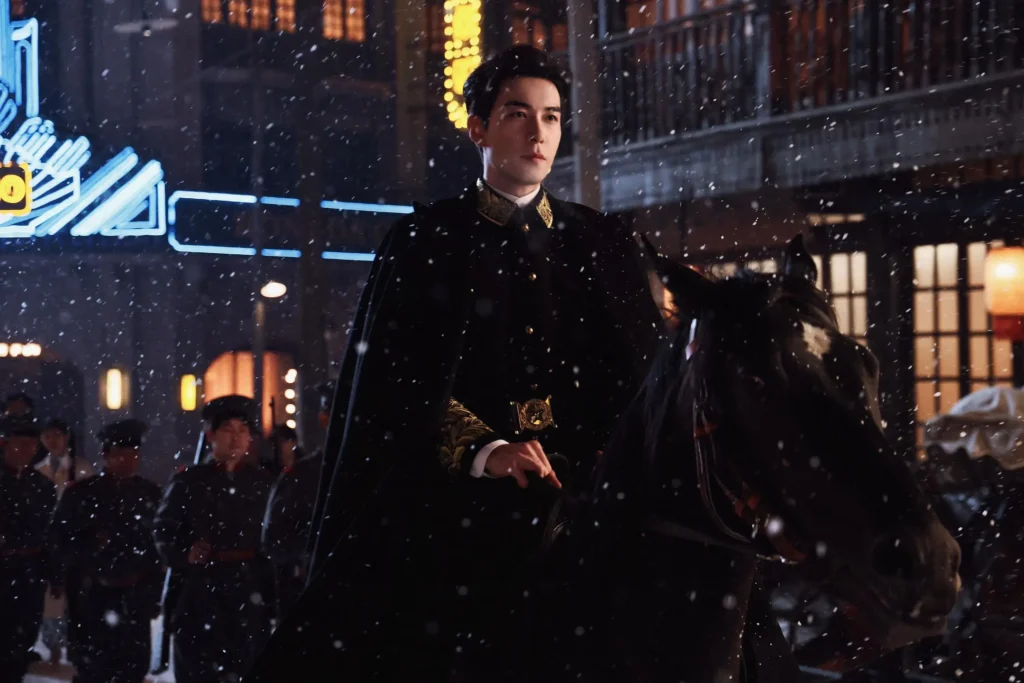
In contemporary screenwriting, the term “young marshal” has evolved far beyond its historical meaning. During the Republican era, it originally referred—often jokingly—to the sons of warlords. In modern film and television narratives, the label typically denotes male characters who either inherit or personally command military power. Over time, it has become a generalized shorthand for men in Republican-era military attire, carrying authority, danger, and emotional intensity.
Judging from current reception, the resurgence of such characters reflects genuine audience interest. At the beginning of Zha Xi, Chen Xingxu’s appearance in full military dress—shot through director Mao de Shu’s signature romantic visual style—quickly became a talking point and helped propel the show’s popularity.
A similar pattern can be seen across multiple upcoming productions. Whether in teasers or behind-the-scenes footage, male leads in military uniforms have repeatedly generated buzz. Most of these projects fall within the Republican-era romance category.
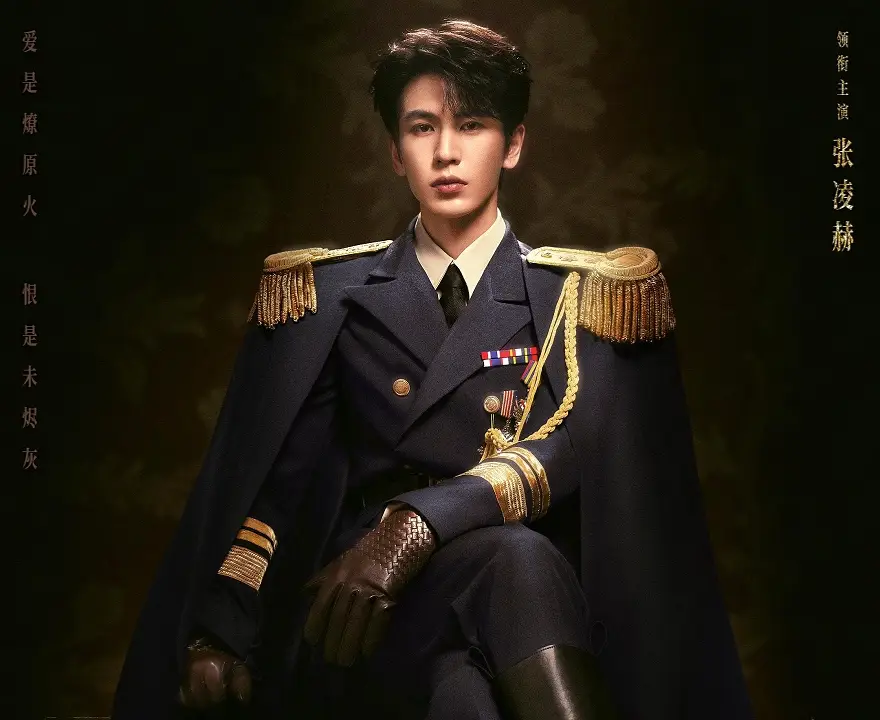
One example is This Second, Over the Line, starring Zhang Linghe and Wang Churan, adapted from Fei Wo Si Cun’s novel If I Hadn’t Met You at That Second. Leaked scenes featuring intimate yet confrontational interactions between the leads sparked discussion, while Zhang Linghe’s portrayal of Murong Qingyi—clad in a governor’s coat, playing with a lighter in solitude—reinforced the character’s appeal and heightened anticipation for the series.
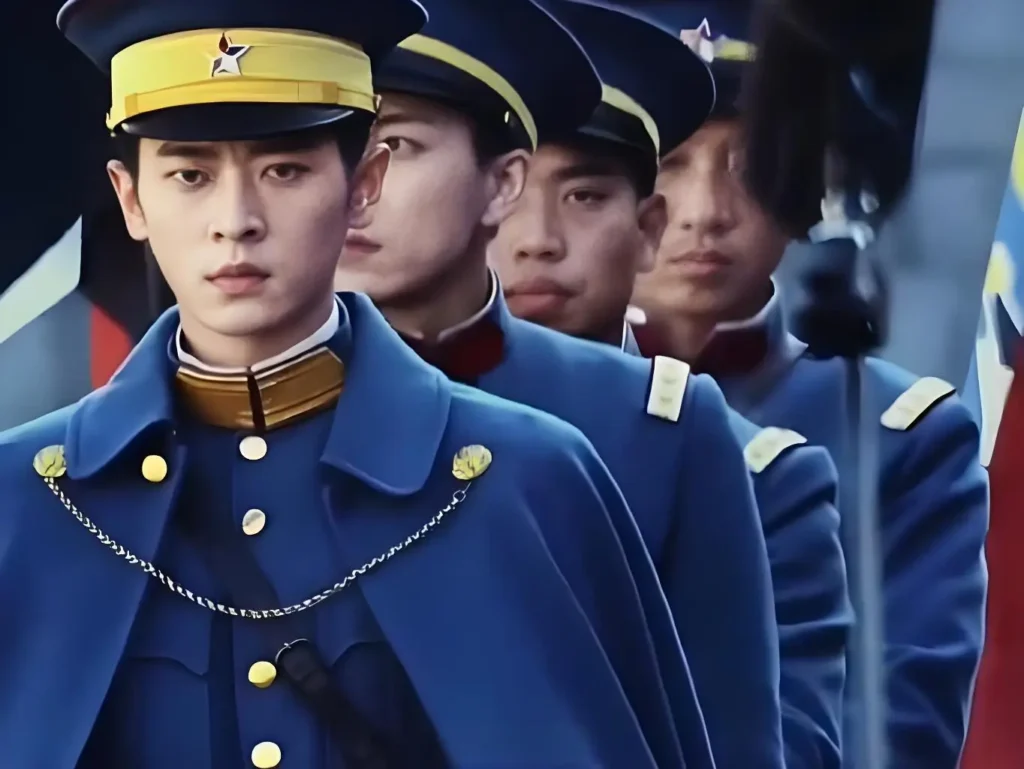
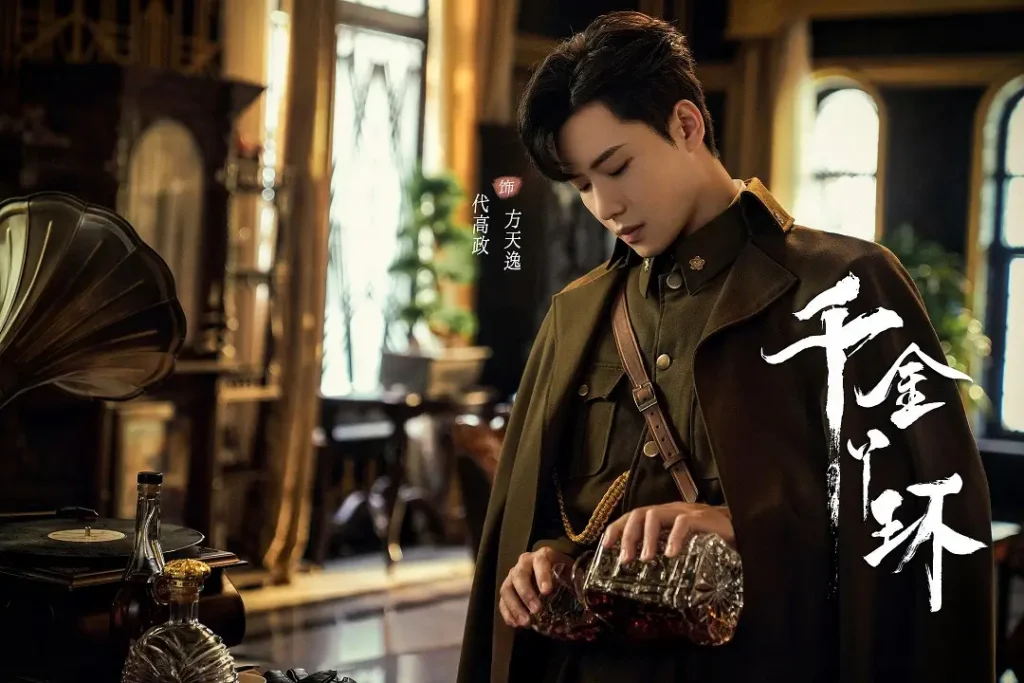
Another title, Yu Dian Qiu, starring Cheng Lei and Xu Ruohan, is adapted from Ling Xi’s “Republican Trilogy,” the same source that inspired Love in the Flames of War. During filming, Cheng Lei’s military styling, along with Zhang Yunlong’s portrayal of his on-screen brother, received positive feedback. The contrasting relationship arcs—one rooted in intense romantic control, the other in restrained companionship—were also well received in early footage.
Meanwhile, Burning Frost into Daylight, starring Wang Yuwen and Tian Jiarui and overseen by producer Guo Jingming, is not centered on military characters. Even so, Tian Jiarui’s limited appearances in uniform became widely circulated among fans, demonstrating the strong visual pull of the “young marshal” image.
Beyond romance, other genres have also tapped into Republican-era military aesthetics. In the adventure series The Nine Gates, adapted from a work by Nanpai Sanshu, William Chan reprises the role of Zhang Qishan after a decade, with his uniformed look once again attracting attention. In Southern Files, Zhang Xincheng and Ding Yuxi similarly appear in Republican-era uniforms, adding to the trend.
Industry professionals generally acknowledge that military styling has become a key promotional asset. Director Yueying notes that one of the core transformations in recent idol dramas lies in heightened visual stimulation, particularly through the leads’ appearance. Within this framework, uniforms function as a powerful aesthetic tool.
That said, the rise of Republican-era “young marshal dramas” cannot be explained by visuals alone. Narratively, these characters increasingly serve as vessels for romantic fantasy. Set against a backdrop of chaos and instability, they amplify themes of power, desire, and fate. The “young marshal” often functions as an exaggerated version of the modern “dominant CEO,” making intense, sometimes coercive, romance dynamics more palatable within a historical context.
Still, Republican-era storytelling comes with inherent constraints. Military figures carry sensitive historical implications, and productions must carefully navigate ideological boundaries. Additionally, such dramas typically require higher production costs while appealing to a relatively narrow audience, making them a less obvious commercial choice than fantasy or costume romances.
In recent years, short-form web dramas have paved the way for this genre’s revival. Titles like Maid’s Revenge demonstrated that Republican-era power romances resonate strongly in lower-tier markets, particularly when driven by heightened conflict and emotionally charged storytelling. These successes have encouraged long-form productions to re-enter the space with greater confidence.
As a result, many recent adaptations significantly revise their source material, minimizing controversial elements while emphasizing patriotism and repositioning female leads as stronger, more autonomous figures. However, this approach has also led to growing concerns about homogenization.
Aesthetically, the Republican era functions not only as a historical period but also as a stylistic framework. Its blend of Eastern faces and Western architectural and fashion influences allows for striking visual compositions and accommodates a wide range of genres—from romance and mystery to fantasy and adventure. Yet without careful design, such visuals risk devolving into what critics often describe as “studio-style” or overly stylized period imagery.
Ultimately, Republican-era “young marshal dramas” are emerging as one possible response to audience fatigue in the idol drama market. At the same time, they present a significant challenge to creators. Whether these works can move beyond familiar aesthetics to deliver genuinely fresh narratives—and avoid slipping into excessive romanticization—will determine whether this trend produces true breakout successes or simply repeats past cycles.

