Recent public appearances by Zhao Jinmai and Yang Mi have reignited discussion around the concept of “youthful appeal” in the Chinese entertainment industry. Although neither event was new in itself, the contrasting fashion choices and audience reactions have offered a revealing case study of how styling strategy, age positioning, and brand alignment intersect in today’s celebrity culture.
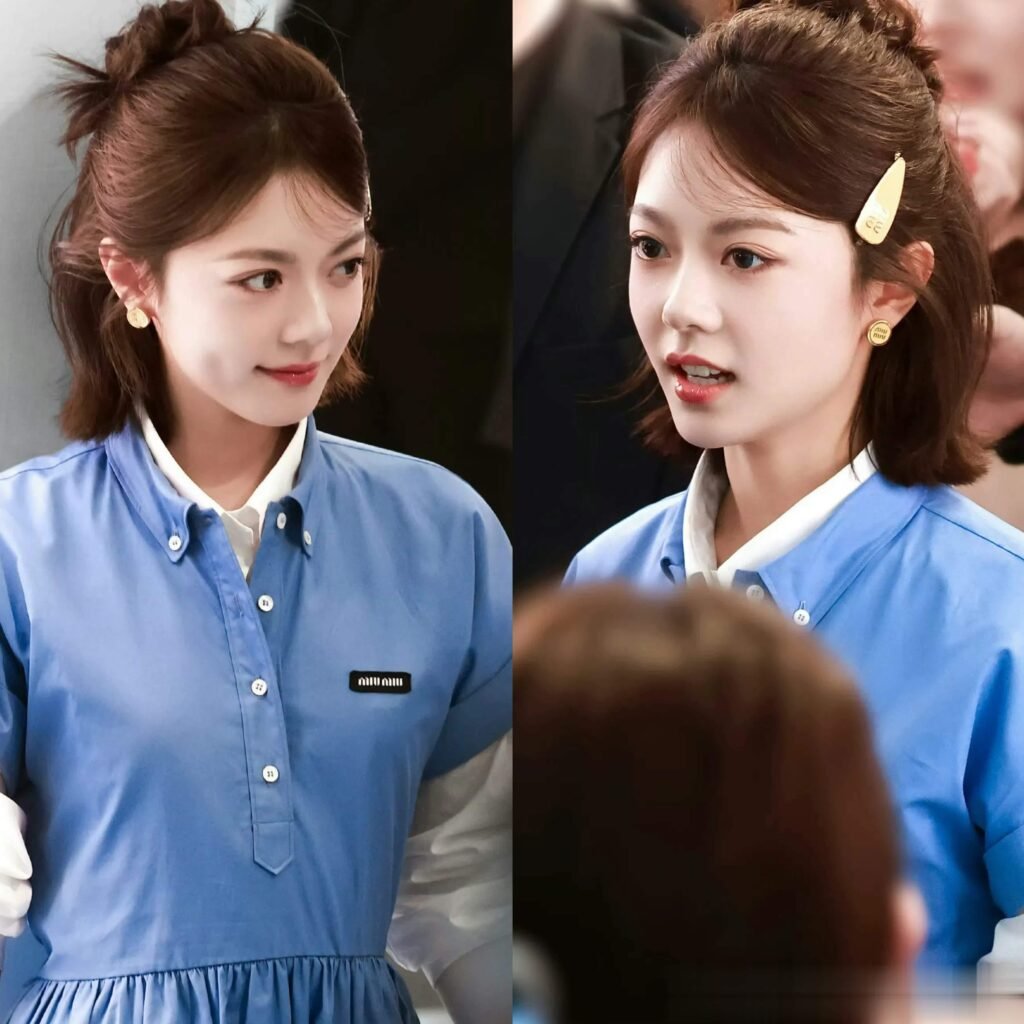
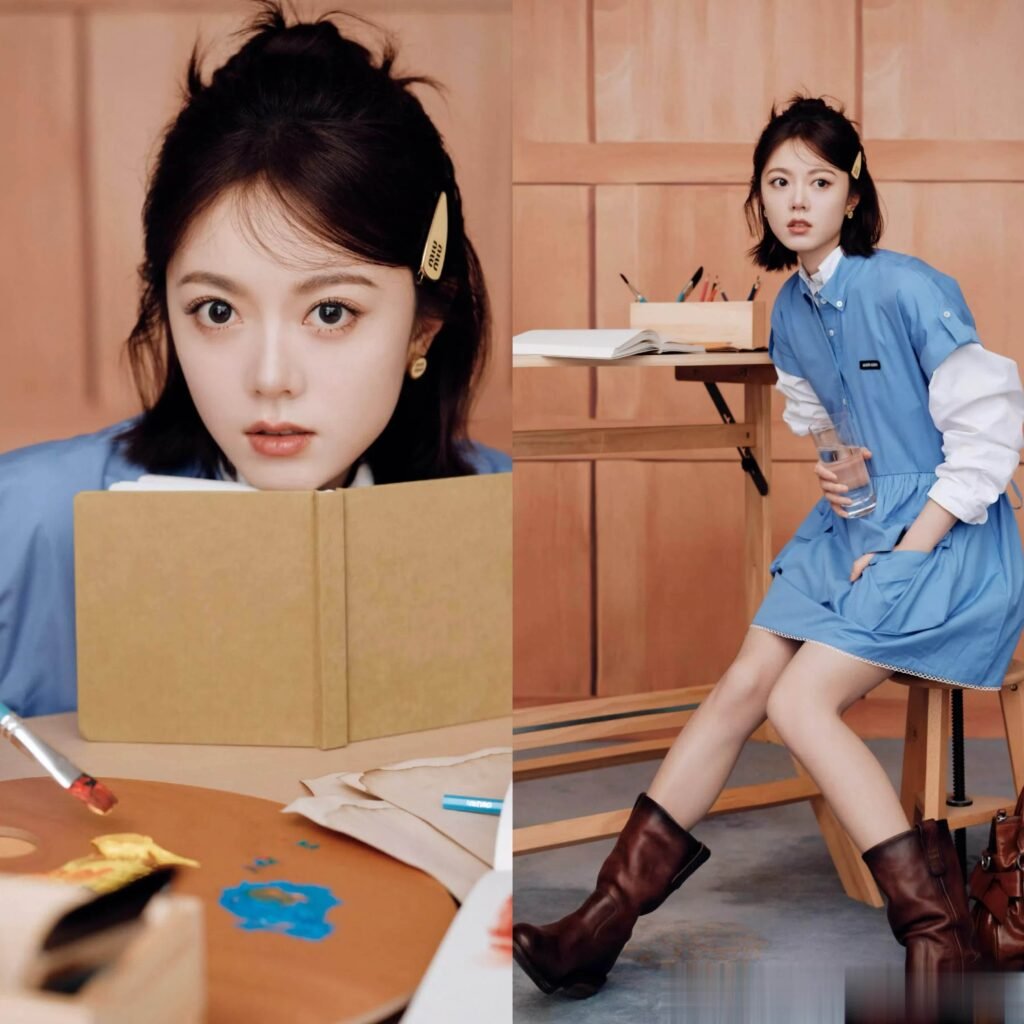
At a recent MIU MIU early spring showcase, Zhao Jinmai appeared in a blue shirt dress paired with a short haircut and minimal makeup. The look was deliberately understated, relying on clean tailoring and soft color tones rather than heavy embellishment. Importantly, the styling did not attempt to exaggerate youthfulness; instead, it aligned naturally with her age and public persona. The absence of excessive retouching in circulating images further strengthened the perception of authenticity. Her smile lines and spontaneous expressions were interpreted not as flaws but as markers of vitality. In this context, “youth” was not constructed through costume symbolism but conveyed through coherence between the actress’s stage of life and her visual presentation. The fashion strategy surrounding Zhao Jinmai emphasized effortlessness, allowing the brand’s campus-inspired setting to complement rather than overpower her image.
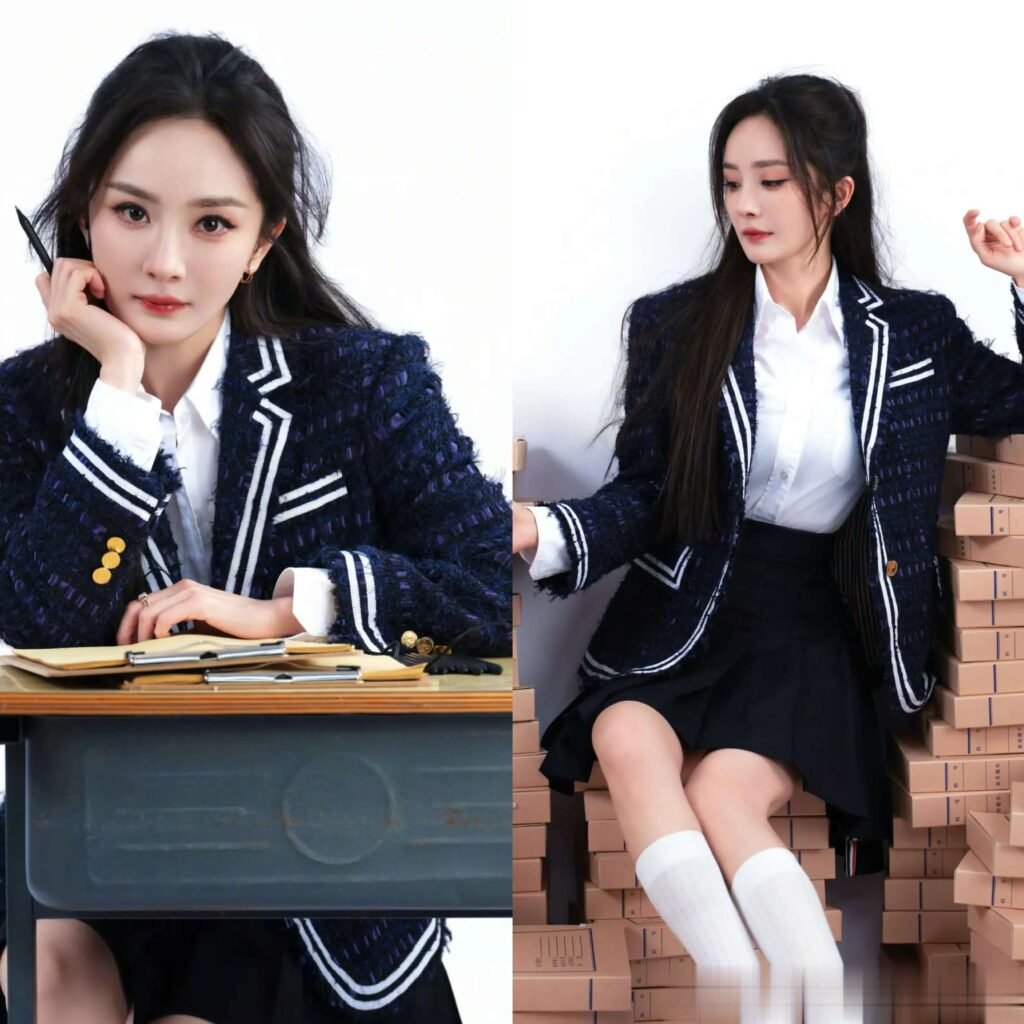
By contrast, Yang Mi appeared at a gaming finals event wearing a plaid mini skirt styled with white knee-high socks, a combination commonly associated with school-inspired aesthetics. From a technical standpoint, the outfit maintained balanced proportions and highlighted her well-maintained physique. However, the stronger reliance on recognizable “schoolgirl” signifiers made the styling feel more performative. When live-stream footage circulated alongside polished promotional images, online commentary shifted toward examining the gap between curated visuals and real-time appearances. The debate did not focus solely on age but on intention: whether the look represented playful reinvention or an insistence on preserving a narrowly defined youthful label.
The divergence between Zhao Jinmai and Yang Mi ultimately reflects two different styling logics. In the case of Zhao Jinmai, youthfulness was embedded in context and personal stage, requiring minimal symbolic reinforcement. For Yang Mi, youthfulness appeared to be emphasized through overt visual cues, which inevitably drew scrutiny in an era when audiences are increasingly sensitive to image construction. The broader conversation suggests that contemporary viewers are less resistant to maturity itself and more critical of rigid aesthetic formulas. As fashion branding evolves, the challenge for established actresses like Yang Mi may lie not in competing with younger figures such as Zhao Jinmai, but in redefining what vitality and relevance look like beyond a single narrative of “girlhood.”

