Beijing street snacks may appear humble, but behind each familiar bowl and plate lies centuries of blended traditions—Manchu, Mongolian, and Han influences interwoven through daily life. From guan chang to mian cha, from chao gan to the distinctive douzhi, every flavor carries the weight of living history.
This article continues to explore the origins and evolution of these foods, revealing Beijing through taste.
How Old Flavors Carry Beijing’s Living Heritage
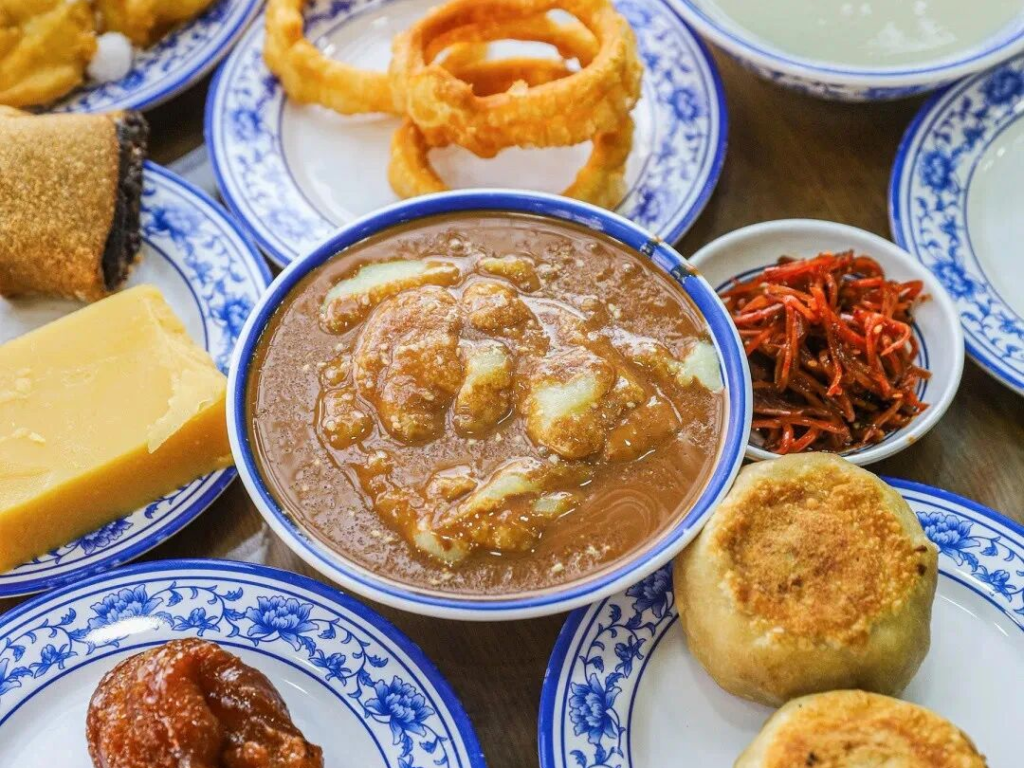
The charm of Beijing cuisine is far more than flavor—it lies in how food reflects rituals, migration, adaptation, and identity. Guan chang preserves the memory of fried deer tail; chao gan evolved from sacrificial meats; mian cha embodies Manchu-Mongolian fusion; the bean-flour cake series originates from Shamanic offerings; while douzhi remains a uniquely Beijing acquired taste.
These dishes endure because Beijing has always known how to turn the ordinary into the meaningful:
to elevate simplicity, to ritualize habit, and to transform custom into heritage.
As the city continues to change, its street foods remain the anchors of local memory—quietly fragrant, deeply rooted, and forever part of Beijing’s cultural heartbeat.
Beyond these quintessential flavors, Beijing’s culinary story continues to unfold.

