The moment an award is secured is often seen as a peak, yet for an actor, it rarely marks an endpoint. For Xiao Zhan, the recent Best Actor recognition has instead opened a new phase—one where industry evaluation and professional trust begin to carry greater weight than the trophy itself.
In the days following the award, discussions within the industry have gradually surfaced, offering a different perspective on Xiao Zhan’s current standing. Reports highlighting comments from directors and insiders have drawn attention, suggesting that beyond public recognition, he is also gaining increasing acknowledgment from within the professional circle.
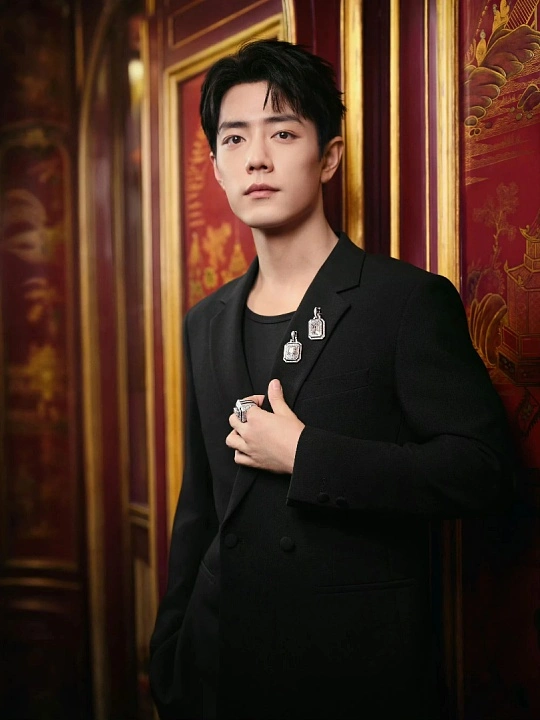
Among these voices, mentions of directors such as Zheng Xiaolong, Tsui Hark, and Yu Zheng expressing interest in potential collaboration have become a focal point of discussion. At the same time, actor Tony Leung Ka Fai has publicly recognized Xiao Zhan’s steady work ethic, while The Legend of Zanghai director Cao Yiwen praised his performance as highly refined and controlled. Whether these statements reflect ongoing discussions or broader industry sentiment, they collectively point toward a growing level of professional confidence in Xiao Zhan.
Such recognition is often considered more substantial than awards themselves. In a production environment where projects involve high budgets and long cycles, reliability has become a key factor. Over the years, Xiao Zhan has maintained a relatively stable professional record, with consistent on-set conduct and limited controversy. This stability, combined with a disciplined approach to performance, contributes to his perception as a dependable lead actor.
Equally important is the trajectory of his acting career. From The Untamed, where he first gained widespread attention, to The Oath of Love and Where Dreams Begin, Xiao Zhan has gradually expanded his range. More recently, his role in The Legend of Zanghai is seen as a further step toward more layered and demanding performances. This progression reflects a shift from early popularity-driven recognition to a more craft-oriented evaluation.
Within the current industry environment, where long-term value is increasingly tied to acting ability and professionalism rather than short-term popularity, such a transition carries particular significance. The interest shown by established figures across different generations suggests that Xiao Zhan is being assessed not only as a public figure, but as an actor capable of supporting complex projects.

At the same time, it is important to distinguish between industry interest and confirmed collaborations. Expressions of intent do not necessarily translate into finalized projects, and future developments will ultimately depend on concrete productions and audience reception. For observers, focusing on completed works remains the most reliable way to assess an actor’s trajectory.
Looking ahead, upcoming projects such as Untitled Spy Project (commonly referred to as Diebao Shang Bu Fengding) and Xiao Cheng Liang Fang are expected to further test Xiao Zhan’s capabilities. These works may serve as the next stage in evaluating how effectively he can sustain and build upon his current position.
Overall, the current moment for Xiao Zhan reflects less a culmination than a transition. The combination of public recognition and emerging industry support suggests that his career has entered a phase where consistency, role selection, and performance depth will play a defining role in shaping what comes next.

