Following the warmth of Second Shot at Love and the dark fantasy appeal of The Judge from Hell, Girls’ Generation’s Sooyoung and Kim Jae Yeong reunite in ENA’s Monday–Tuesday thriller IDOL I. Framed around a murder allegation involving a veteran idol, the drama positions itself as both a suspenseful mystery and a commentary on the unseen costs of idol culture.
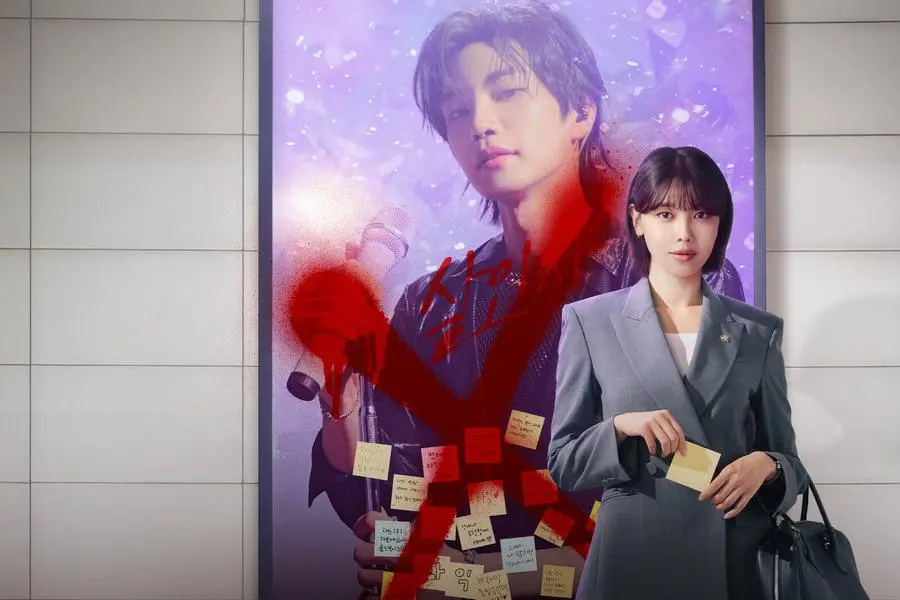
Rather than opening with crime scene shock, IDOL I begins introspectively. A quiet monologue introduces Maeng Se Na, a lawyer whose private fantasies revolve around improbable encounters with her favorite idol. These musings are not framed as comedic exaggerations but as sincere reflections of fandom, grounding her character emotionally before the plot escalates.
Publicly, Maeng Se Na is notorious for defending controversial clients. Early scenes deliberately paint her as morally ambiguous, only to gradually dismantle that perception. Through restrained dialogue with a close associate, the drama establishes her as principled yet disillusioned—someone who understands that truth rarely survives public scrutiny. This layered characterization lends credibility to her role when she later steps into the spotlight of a far more explosive case.
The revelation that Se Na is an intensely devoted K-pop fan adds another dimension. Her fandom is not casual admiration but sustained emotional and financial investment, mirroring the reality of many real-life supporters. This dual identity—as rational legal professional and emotionally committed fan—becomes central to the story’s tension.

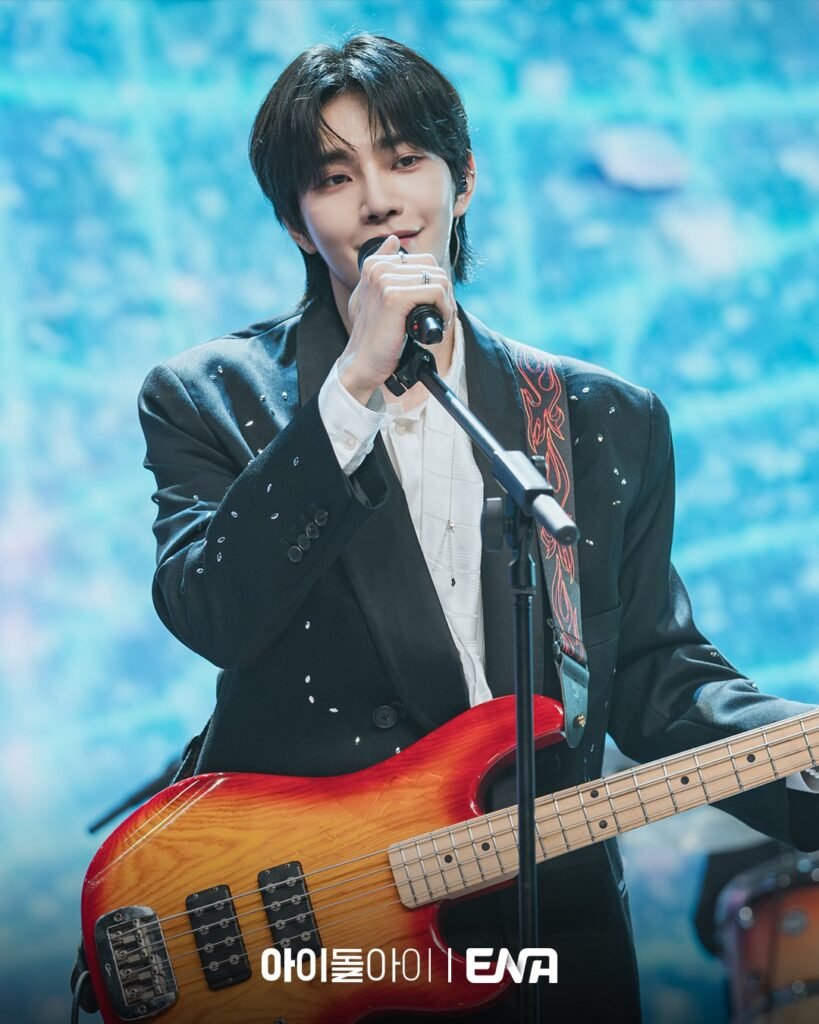
Kim Jae Yeong’s Do Ra Ik is introduced amid luxury and adoration, embodying the fantasy image of a successful idol. That illusion quickly fractures when a sasaeng crosses physical boundaries, reminding viewers how thin the line is between admiration and violation. The drama treats his anger not as a flaw but as a human response, a choice that immediately sets a more grounded tone.
One of the most striking moments comes when Do Ra Ik confronts his agency after repeated invasions of his privacy. His outburst—questioning when he will be allowed to admit pain—captures the emotional exhaustion behind enforced perfection. The scene resonates precisely because it feels uncomfortably plausible.
By episode two, the narrative pivots sharply. A bandmate’s murder places Do Ra Ik under suspicion, and the long-imagined meeting between idol and fan finally occurs—across a table in a police station. From that moment, Se Na’s role transforms from admirer to defender, anchoring the drama’s central mystery.
At its core, IDOL I operates as a murder thriller, but its broader ambition lies in exposing the mechanisms that dehumanize idols. As the story progresses, viewers are likely to watch not only the unraveling of a crime but also the careful renegotiation of boundaries—as idol and fan become client and lawyer, and potentially something more. Whether the drama can sustain this balance without undermining its ethical stakes will determine its lasting impact.

