The relationship between Li Landi and Tian Xiwei has often been a topic of discussion, largely fueled by ongoing friction between their fanbases. While there is no clear public indication of direct conflict between the two actresses themselves, the perception of distance—such as limited interaction in public appearances—has contributed to speculation about an underlying tension.
Part of this narrative can be traced back to earlier industry overlap. During the development phase of The Starry Love (星落凝成糖), both actresses were reportedly associated with the project at different stages. Initial discussions involved Li Landi, followed by later rumors of Tian Xiwei entering consideration, before the role ultimately remained with Li Landi. Although such casting shifts are not uncommon in the industry, they often become focal points for fan discourse, and in this case, appear to have triggered long-term friction between their respective audiences.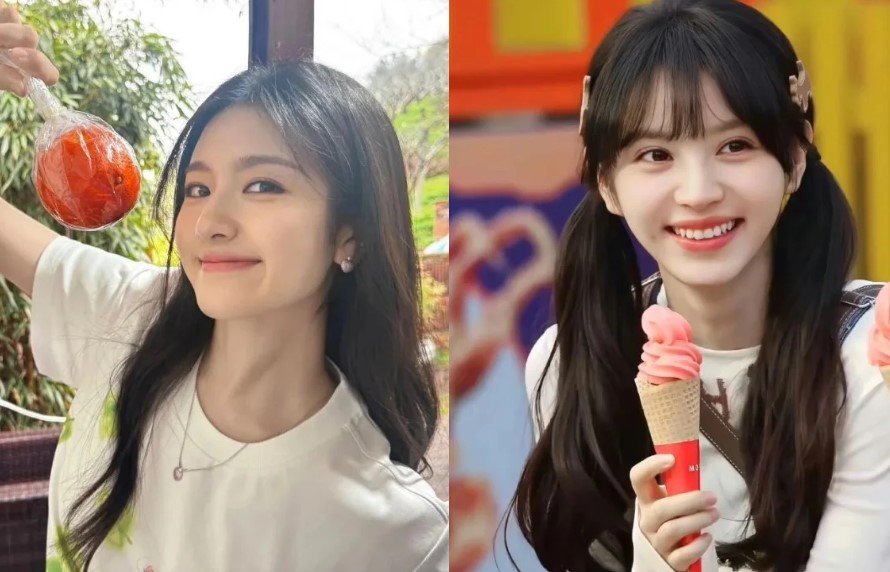
Two Diverging Career Models
Beyond fan dynamics, the comparison between Li Landi and Tian Xiwei reflects two distinct development paths within the same generation of actresses.
Li Landi, who began her career as a child actress, has built her trajectory on a relatively stable foundation. With consistent appearances in both costume and modern dramas, she maintains steady visibility in the market. Her strength lies in her acting fundamentals and adaptability across genres. However, the absence of a definitive breakout hit has kept her positioned in what could be described as a “mid-tier stability zone”—a space that ensures continuity, but has yet to translate into a decisive leap into the top tier.
In contrast, Tian Xiwei represents a more momentum-driven model. With a strong fit for costume romance roles, a bright on-screen image, and a noticeable presence on social platforms, she has rapidly accumulated popularity. Her projects tend to generate higher levels of discussion, allowing her to gain stronger visibility and commercial value within a shorter timeframe.
Strengths and Limitations
The difference between the two becomes clearer when examining their respective advantages and challenges.
For Li Landi, the advantage lies in long-term potential. Her acting base provides room for gradual accumulation, meaning that with the right project, she could transition into a more defined position within the industry. The key variable remains whether she can secure a role that not only performs well, but also leaves a lasting cultural imprint.
For Tian Xiwei, the advantage is immediate impact. Her current trajectory benefits from visibility, audience engagement, and project exposure. However, this model also carries pressure—particularly in terms of sustaining performance credibility. At present, her ability to carry a drama independently is still closely tied to overall project heat, and discussions around her acting continue to shape public perception.
Heat vs. Longevity
At this stage, Tian Xiwei holds a relative edge in terms of popularity, resources, and commercial momentum. Meanwhile, Li Landi maintains a quieter but potentially more stable trajectory, anchored in performance and consistency.
The contrast ultimately reflects two broader industry patterns: one driven by rapid exposure and market responsiveness, the other by gradual accumulation and long-term positioning.
Beyond Comparison
While fan narratives often frame their relationship as competitive, the reality is less direct. Their paths, though intersecting at certain points, are shaped by different strategies and industry positioning.
Looking ahead, the determining factor for both will be similar: the ability to secure roles that redefine their current standing. For Li Landi, that means breaking through the ceiling of steady visibility. For Tian Xiwei, it means translating popularity into sustained credibility.
In that sense, the comparison between them is less about rivalry, and more about how different trajectories navigate the same evolving industry landscape.

