In recent years, the long-standing casting practice known as “playing young”—where actors in their 30s or 40s portray significantly younger versions of their characters—has come under increasing scrutiny. What was once widely accepted is now being questioned, as audiences place greater emphasis on realism and narrative immersion.
The discussion gained renewed momentum with The Glory, where Song Hye Kyo delivered a widely praised performance. In the high school timeline, younger actors portrayed her character, establishing a strong emotional foundation. However, when the story transitioned to her character’s early 20s, the role reverted to Song Hye Kyo, who was in her 40s at the time. For some viewers, this shift created a noticeable disconnect, raising questions about continuity and casting choices.
A similar debate has emerged around Perfect Crown, in which IU and Noh Sang Hyun appear in school uniforms in teaser footage. While IU’s youthful appearance has been considered acceptable by some viewers, the casting of Noh Sang Hyun has drawn more criticism. Many have described the portrayal as unconvincing, arguing that it disrupts immersion rather than enhancing it.
This issue is not limited to a single production. Actors such as Song Joong Ki in Reborn Rich, Son Ye Jin in Thirty-Nine, and Park Min Young across multiple dramas have all taken on significantly younger roles. In many cases, productions rely on styling, lighting, or digital filters rather than casting younger performers, a choice that can compromise visual authenticity.
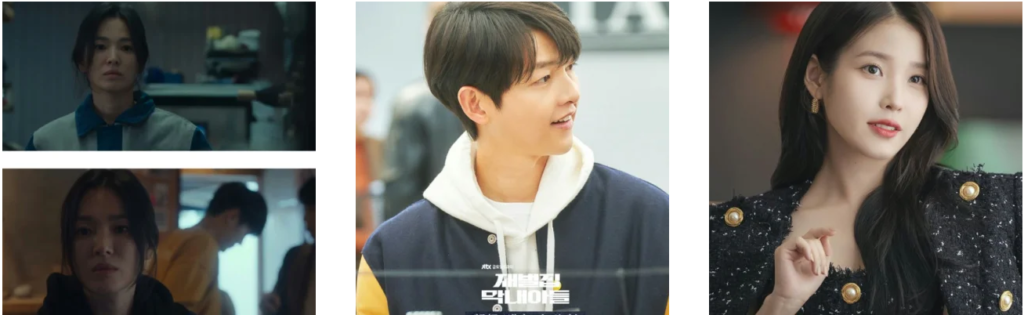
Behind this trend lies a combination of practicality and risk management. Casting younger actors requires additional time, resources, and uncertainty, particularly when early-life scenes carry emotional weight. Established stars, by contrast, provide immediate recognition and marketing value, especially in crucial opening episodes.
However, this approach increasingly clashes with evolving audience expectations. Viewers today are more attentive to visual consistency and narrative believability. When age gaps become too apparent, the illusion of storytelling can break, affecting overall engagement.
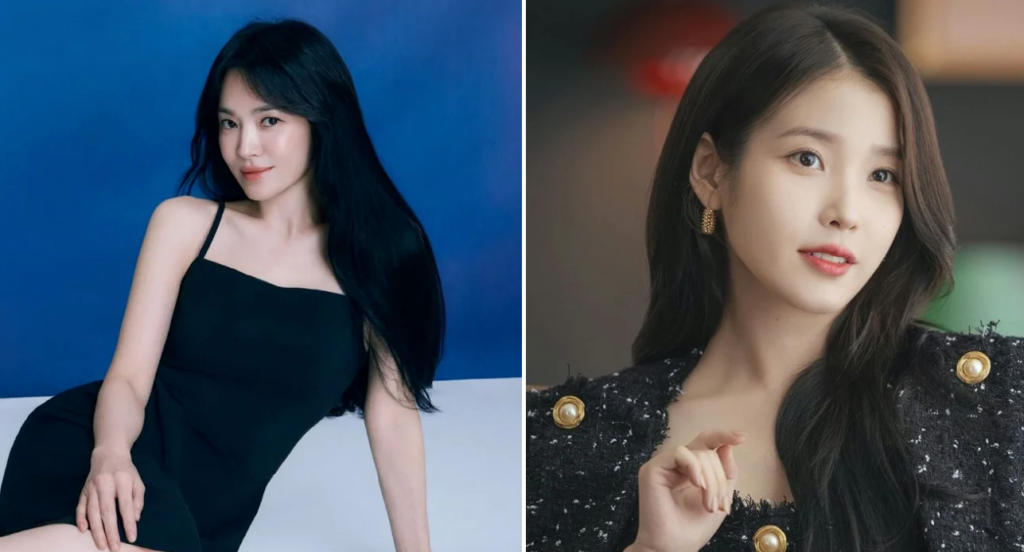
It is important to note that having a single actor portray a character across different life stages is not inherently flawed. In some cases, it helps maintain emotional continuity and ensures consistent character interpretation. The issue arises when the technique is overused or applied without sufficient consideration of realism.
The growing criticism reflects a broader shift in audience priorities. Rather than focusing solely on star power, viewers are now demanding authenticity and coherence in storytelling. From Song Hye Kyo to IU, the conversation has moved beyond performance quality to question whether casting decisions truly serve the narrative.
As the industry evolves, this debate signals a turning point. Audiences are no longer satisfied with familiar faces alone—they are increasingly seeking stories that feel believable from beginning to end.

