A Life That Began in Light
There are women who become famous, and there are women who seem to have been chosen by light itself. Michelle Reis belongs to the latter. Born in Hong Kong in 1970, of mixed Portuguese and Chinese heritage, she entered the public eye at an age when most people are still learning how to see themselves. At eighteen, she won the Miss Hong Kong pageant in 1988, followed by Miss Chinese International, and almost instantly, a narrative was written for her: she was not just beautiful, she was the most beautiful.
The title “最美港姐” is not an official crown, yet it has followed her for decades, as if time itself agreed with the verdict. Her beauty was never merely decorative. It had structure, distance, and a kind of untouchable symmetry that made admiration inevitable but intimacy difficult.

Between Cinema and Myth
Michelle Reis stepped into cinema at a moment when Hong Kong film was at its most luminous. She appeared in works alongside major figures of the industry, moving through genres that ranged from romance to crime dramas. Yet even within the shifting language of film, she remained something slightly apart from the roles she played.
There are actresses who dissolve into characters. Michelle Reis did not dissolve; she refracted. Her presence on screen often carried a quiet awareness of itself, as if the audience was not only watching a character, but also witnessing the burden of being seen. In films such as Fallen Angels and The Legend of the Swordsman, her performances were less about transformation and more about atmosphere. She did not need to dominate a scene; she altered its temperature simply by entering it.
And perhaps that is why her acting was sometimes debated. When beauty reaches a certain threshold, it complicates perception. People no longer ask what you express, but what you represent.
The Gaze That Follows Beauty
To be called “the most beautiful” is not a compliment alone. It is a condition. It shapes how one is observed, remembered, and judged. For Michelle Reis, the public gaze was constant, almost architectural in its permanence. Every role, every appearance, every silence became part of a larger narrative that was never entirely her own.
There is something quietly tragic in this. Not in the dramatic sense of downfall, but in the subtle erosion of privacy. When a woman is elevated to the level of an ideal, she is often denied the freedom to be ordinary. Her life becomes symbolic, her choices interpreted, her emotions translated into headlines.
Michelle Reis lived much of her early life within that frame. Her relationships, her career decisions, even her pauses were read not as personal moments, but as extensions of an image.
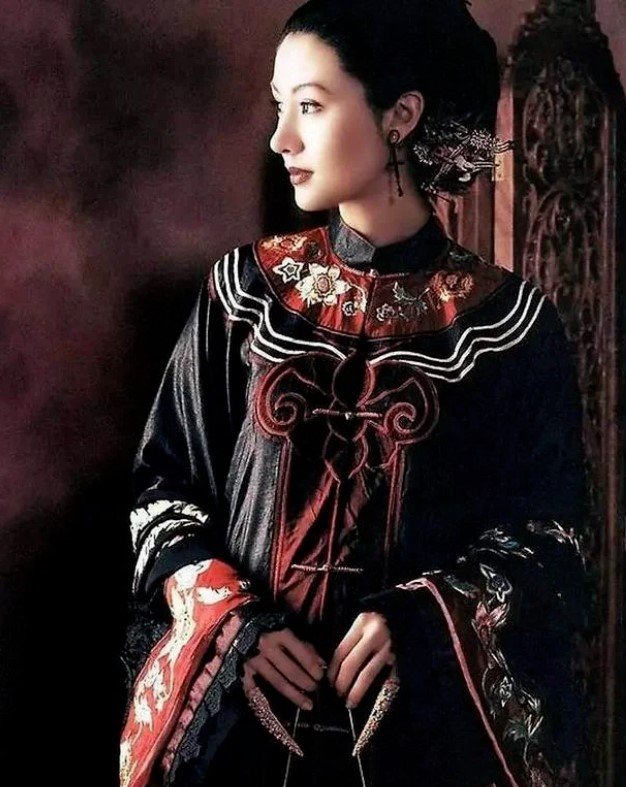
A Different Kind of Ending
In 2008, she married businessman Xu Jinheng, stepping gradually away from the film industry. To some, this was a retreat; to others, a resolution. But perhaps it was neither. Perhaps it was simply a shift—from being seen to choosing how to be seen.
Her later life appears quieter, more contained. Yet the aura has not disappeared. If anything, it has deepened. Time has not diminished her image; it has distilled it. She is no longer the young woman crowned by cameras, but something more elusive: a memory that continues to live in the collective imagination.
On Beauty and Fate
There is a phrase often used in Chinese, 红颜, which carries both admiration and a hint of sorrow. It suggests that beauty is not only a gift, but also a burden shaped by fate. Looking at Michelle Reis, one begins to understand why such a phrase endures.
Her life does not read like a tragedy, nor like a fairy tale. It exists somewhere in between, where privilege and pressure intertwine. She had access to admiration, opportunity, and a form of immortality that few achieve. Yet she also lived under a gaze that rarely softened, rarely forgot.
What makes her story linger is not simply how beautiful she was, but how that beauty was carried. Not loudly, not rebelliously, but with a kind of quiet acceptance.
The Afterimage
Some figures fade when their time passes. Others remain, not because they continue to appear, but because they have already imprinted themselves too deeply to disappear. Michelle Reis is one of those figures.
When people speak of her now, they do not only recall a face. They recall a feeling—of an era, of cinema, of a certain kind of unattainable elegance that seems increasingly rare.
And perhaps that is the final paradox of beauty. It is most powerful not when it is present, but when it becomes memory.

