In recent years, Song Yi has steadily expanded her presence in contemporary Chinese dramas, moving further into leading roles and mainstream visibility. Her performances in modern settings tend to be composed, polished, and emotionally controlled, aligning well with the demands of urban storytelling. Yet, despite this progression, there remains a lingering impression among audiences: no matter how her career evolves, Song Yi still seems most naturally suited to the aesthetics of Republican-era dramas.
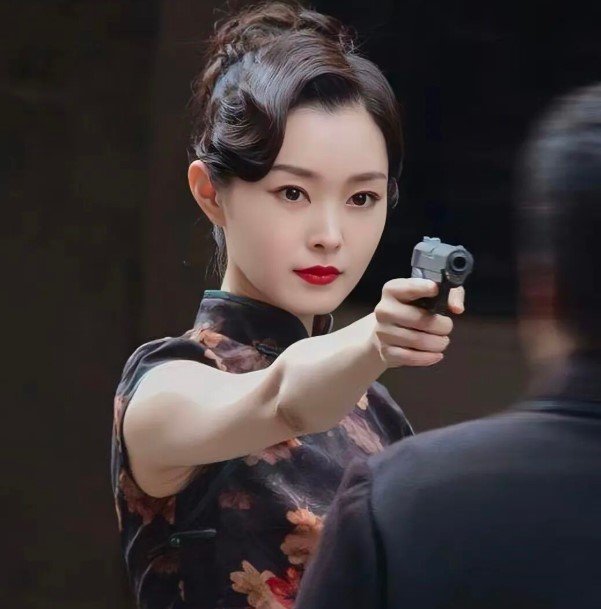
This perception is not rooted in nostalgia alone, but in a clear visual and emotional contrast. In modern dramas, Song Yi’s beauty appears understated—elegant but not immediately striking in a landscape that often favors sharper, more high-impact features. Her performances, while consistently stable, rarely push her image into something distinctly unforgettable. She blends well, but does not always dominate.
However, this very quality transforms entirely within a Republican-era context. In The Disguiser, her portrayal of Yu Manli revealed a rare alignment between actor and setting. The cheongsam silhouettes, soft lighting, and restrained emotional tone did not simply frame her—they completed her. Her presence carried a quiet melancholy that felt inherent rather than constructed, allowing the character to resonate beyond the narrative itself. Yu Manli became more than a supporting role; she became a lasting impression, often remembered as a “white moonlight” figure by viewers.
A similar dynamic can be observed in Love in Han Yuan, where Song Yi’s Lü Yanzhi embodies a softer, more gradual transformation. Unlike the sharp emotional edges of Yu Manli, this role unfolds through subtle shifts in demeanor and awareness. As a sheltered young woman navigating change, Lü Yanzhi reflects another facet of Song Yi’s compatibility with period storytelling: her ability to sustain quiet emotional progression without overstatement.
At the core of this discussion lies Song Yi’s unique screen presence. Born in 1989, she carries a sense of maturity that is neither youthful nor overtly intense, but balanced in between. In modern narratives, this often translates into reliability rather than distinction. Yet within Republican-era settings, the same composure becomes deeply evocative, lending her an almost timeless quality.
Her facial structure further reinforces this impression. With soft contours, balanced proportions, and minimal visual aggression, Song Yi does not overwhelm the frame. Instead, she lingers within it. This is why, in period styling, she appears less like an actress in costume and more like a figure emerging from an old photograph. The effect is subtle, but it leaves a lasting trace.
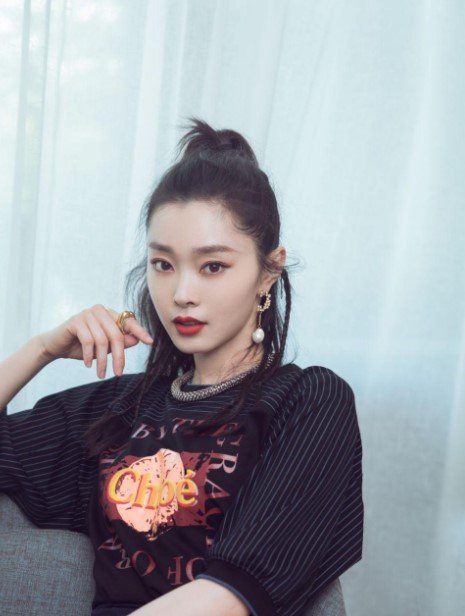
As her career continues to develop across genres, Song Yi demonstrates adaptability and consistency. She is no longer defined by a single role, nor confined to a specific type. And yet, her most resonant image remains tied to a particular aesthetic—one that aligns seamlessly with her natural qualities.
Perhaps that is the most fitting way to understand her trajectory. Song Yi does not depend on the Republican era to remain relevant. But within that era, she becomes something rare: not just convincing, but irreplaceable.

