Aired in 1996 on KBS2, First Love stands as one of the most influential Korean television dramas of the 1990s. Featuring a powerful cast including Bae Yong Joon, Choi Soo Jong, and Lee Seung Yeon, the series achieved remarkable viewership ratings and left a lasting cultural impact. More importantly, it emerged at a time when Korean dramas were beginning to find audiences beyond domestic borders, making it one of the early works that helped shape what would later be known as the Hallyu wave.
At its core, First Love is not simply a romance, but a story about choices—between love and responsibility, desire and reality. Set against the backdrop of a struggling family, the drama follows two brothers whose lives take different paths, reflecting contrasting values and emotional journeys. Within this framework, the love story becomes the emotional anchor of the series, unfolding with a quiet intensity that resonates deeply with viewers.
The romance in First Love is marked by restraint rather than exaggeration. It avoids idealized fantasy and instead presents love as something fragile, often constrained by social expectations and personal sacrifice. The characters are not free to love without consequence; their emotions are shaped by economic hardship, family duty, and societal pressure. This grounded portrayal gives the story its enduring emotional weight, allowing audiences to see themselves reflected in the characters’ dilemmas.
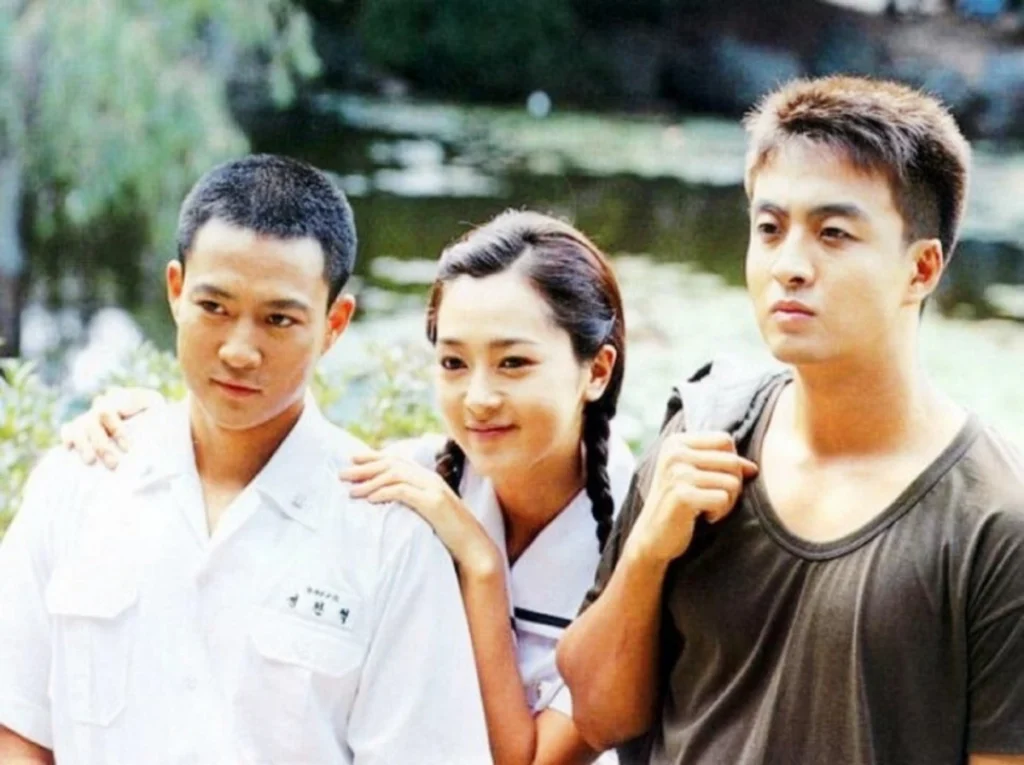
Bae Yong Joon’s performance, in particular, plays a crucial role in defining the tone of the drama. His portrayal captures a sense of quiet devotion and inner conflict, helping to establish the archetype of the introspective, emotionally reserved male lead—a figure that would later become a defining feature of many Hallyu dramas. This role also marked an important early step in his career, laying the foundation for his rise as one of the most recognizable faces of Korean entertainment across Asia.
From a writing perspective, First Love demonstrates a strong narrative structure and careful character development. The script weaves together themes of family, class, and personal ambition without losing emotional coherence. Rather than relying on dramatic twists alone, it builds its impact through gradual accumulation of emotional tension, allowing the story to unfold in a way that feels both natural and deeply affecting.
The influence of First Love extends beyond its immediate success. Its high viewership and emotional storytelling helped set a standard for Korean television dramas at a time when the industry was still evolving. The series contributed to the formation of a narrative style that would later define Hallyu: character-driven stories, emotionally resonant romance, and a focus on everyday struggles elevated through careful storytelling.
Looking back, First Love can be seen as more than just a popular drama—it is a cultural milestone. Through its portrayal of love shaped by reality rather than fantasy, and through performances that emphasize subtlety over spectacle, the series captured something essential about its time. In doing so, it helped pave the way for Korean dramas to connect with audiences far beyond Korea, marking an early and meaningful chapter in the rise of Hallyu.

