The upcoming urban romance Wu Li Qing (雾里青), starring Li Xian and Zhang Jingyi, has drawn attention not only for its casting but also for the nature of its central relationship. One of the most discussed questions surrounding the drama is whether its emotional setup qualifies as a “forbidden love.” Based on currently available information, however, the answer leans toward nuance rather than classification.
Not a Traditional Taboo Romance
At its core, Wu Li Qing does not fall into the category of conventional taboo relationships. There are no clear ethical transgressions such as teacher-student dynamics, extramarital affairs, or familial boundaries. Instead, the drama presents a relationship shaped by difference—particularly in age, life experience, and emotional positioning.
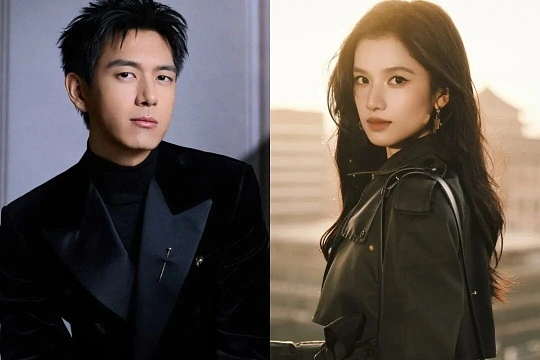
When the two protagonists first meet, they are not on equal footing. The male lead, portrayed by Li Xian, carries a more mature and restrained presence, while the female lead, played by Zhang Jingyi, is still navigating her own path between dependence and self-discovery. This imbalance creates a dynamic that feels emotionally charged, yet carefully contained.
The “Near-Taboo” Atmosphere
It is precisely this imbalance that gives Wu Li Qing its “almost taboo” atmosphere. Viewers may interpret the relationship through the lens of a “mentor-like” or “guiding” connection, which introduces a sense of ambiguity and tension. The emotional distance between the characters—never fully crossing certain boundaries—adds to this perception.
However, this remains a matter of tone rather than substance. The drama does not rely on explicit boundary-breaking, but instead builds tension through what is left unsaid. The relationship exists in a space where closeness and restraint coexist, creating a push-and-pull dynamic that feels both intimate and distant.
A Story About Timing and Choice
More than anything, Wu Li Qing focuses on emotional timing. The connection between the two leads is shaped not only by who they are, but by when they meet and how they choose to respond to their circumstances.
There is a constant negotiation between impulse and control—between the desire to move closer and the decision to step back. This internal conflict becomes the driving force of the narrative, replacing external drama with psychological depth.
A Quiet, Atmospheric Narrative Style
Stylistically, Wu Li Qing leans toward a slower, more introspective mode of storytelling. Rather than relying on dramatic twists or heightened conflict, the series emphasizes mood, pacing, and emotional nuance. Silence, pauses, and environmental details play a key role in shaping the relationship.
This approach allows the drama to explore a more restrained form of intimacy—one that unfolds gradually and often indirectly. The result is a sense of lingering ambiguity, where emotions are felt as much as they are expressed.
Beyond Labels
Ultimately, labeling Wu Li Qing as a “forbidden love” drama may oversimplify what it is trying to achieve. The series is less about crossing boundaries and more about recognizing them—about understanding the limits imposed by circumstance, maturity, and self-awareness.
Its emotional core lies in misalignment: two people who meet at different stages of life, connected yet not fully synchronized. In that sense, Wu Li Qing is better understood as a story of “misplaced timing” and “delayed emotion,” where the tension comes not from breaking rules, but from choosing whether—or when—to follow them.

