After nearly a decade of anticipation, the sequel to Princess Agents (楚乔传) has finally arrived. Yet instead of resolving long-standing emotional threads, Rebirth (冰湖重生) has sparked a wave of criticism almost immediately upon release. What was once a collective sense of unfinished longing—centered around the iconic “ice lake” ending—has, for many viewers, shifted into a more direct form of disappointment.
The original Princess Agents (楚乔传) concluded with one of the most discussed cliffhangers in recent costume drama history: Zhuge Yue falling into the icy lake, his fate left unresolved. Over the years, the idea of “bringing him back” evolved into a kind of shared expectation among audiences, sustained by both memory and speculation. However, when Rebirth (冰湖重生) finally revisits this moment, the resolution feels less like closure and more like dissonance.
One of the most immediate points of contention lies in casting. The character once portrayed with a restrained, cold intensity is now reinterpreted by Li Yunrui, whose version leans toward a softer, more scholarly presence. This shift in tone has led some viewers to feel a disconnect—not necessarily as a question of performance alone, but as a broader issue of character continuity. When a role so closely tied to a specific emotional imprint is recast with a markedly different energy, the transition becomes difficult to reconcile.
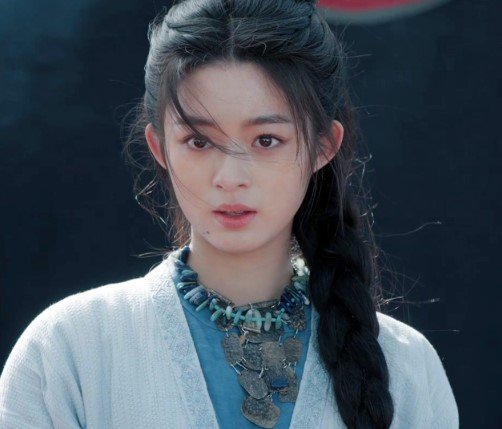
A similar response has emerged around the new portrayal of Chu Qiao. Played by Huangyang Diantian, the character appears noticeably younger, both in appearance and in overall presence. While this casting choice introduces a different interpretation, it also creates tension with the character’s established identity as a battle-hardened figure shaped by war and survival. For some viewers, the gap between narrative expectation and on-screen portrayal becomes particularly visible in action sequences, where the sense of physical weight and decisiveness feels reduced.
Beyond casting, criticism has also focused on the structure of the narrative itself. Compared to the original’s gradual development of relationships and motivations, Rebirth (冰湖重生) has been described as uneven in pacing, with plot progression that feels abrupt and insufficiently grounded. Characters appear to move through events without the same level of emotional buildup, leading to a perception that the story lacks the depth that once anchored it.
Perhaps more significantly, long-time viewers have noted a shift in thematic focus. The original series placed strong emphasis on character growth, particularly through the lens of a female protagonist navigating power, identity, and survival. In contrast, the sequel’s approach to these elements has been perceived as less cohesive, with political intrigue and emotional arcs unfolding in a more fragmented manner. Even the recreation of iconic scenes has drawn criticism, as attempts to revisit familiar moments have struggled to replicate their original impact.
Audience response has reflected these concerns with unusual speed. Within hours of release, early ratings and online discussions were dominated by negative feedback, with many viewers expressing a sense that the sequel fails to justify its long-awaited return. Comparisons between the two works have been inevitable, but it is the contrast in emotional resonance that appears to define much of the reaction.
At the core of this response lies a broader issue: the weight of expectation accumulated over time. For nine years, Princess Agents (楚乔传) existed not only as a completed work, but as an unresolved memory—one that allowed audiences to imagine their own continuation. Rebirth (冰湖重生), by attempting to provide a definitive answer, inevitably replaces that imagined space with a fixed interpretation.
For some viewers, that replacement feels insufficient. The sentiment that “it might have been better left unresolved” reflects not only dissatisfaction with the new series, but also the difficulty of revisiting a story that has already settled into memory.
In this sense, the reception of Rebirth (冰湖重生) is shaped as much by time as by content. It is not simply a sequel being evaluated on its own terms, but one measured against nearly a decade of expectation, attachment, and reinterpretation. And within that context, even a long-awaited return can struggle to meet what has already been built in absence.

