The landscape of Chinese actresses is entering a period of visible transition. As the so-called “85 generation” gradually steps back from dominance and the “90 generation” faces the pressure of transformation, the spotlight is now firmly shifting toward post-95 actresses. In 2026, this group is no longer in a phase of accumulation—they are entering a stage where positioning, output, and timing begin to directly shape long-term trajectories.
Between Breakout and Uncertainty: Tian Xiwei, Wang Churan, Meng Ziyi
Among the emerging contenders, Tian Xiwei, Wang Churan, and Meng Ziyi represent three distinct paths within the same competitive framework.
Tian Xiwei’s recent project Zhu Yu (逐玉) may not have translated into a fully realized breakout in terms of reception, but it has undeniably elevated her visibility. The distinction between “perceived popularity” and “sustained impact” remains relevant here—while the drama’s performance may be debated, it has nonetheless pushed her into a more recognizable tier. The question moving forward lies in consistency. With upcoming projects carrying varying levels of risk, her ability to anchor a role convincingly will determine whether this rise can stabilize into something more enduring.
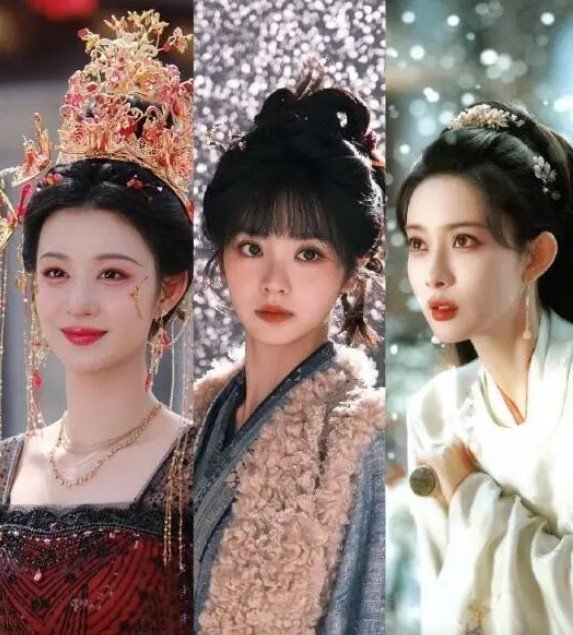
For Wang Churan, the trajectory appears more aggressive. While Cheng He Ti Tong (成何体统) did not achieve explosive success, it maintained sufficient attention to support her upward momentum, particularly in commercial visibility. Her advantage lies in a strong visual identity paired with increasing exposure. Upcoming collaborations, especially those with established production teams, suggest a continued presence in mainstream romantic dramas. However, the balance between visibility and performance depth remains a factor that could influence how far this momentum carries.
Meng Ziyi, by contrast, presents a case where visibility has been driven more by variety shows than by scripted work. Her earlier projects, often completed before her rise in attention, did not fully capitalize on her current position. This year’s lineup, however, reflects a shift toward more tailored opportunities. Whether these projects can convert attention into sustained recognition will depend not only on narrative quality, but on her ability to move beyond surface-level impressions.
Established Yet Pressured: Zhao Lusi, Esther Yu, Bai Lu
Within the same generation, Zhao Lusi, Esther Yu, and Bai Lu occupy a more established tier, though not without ongoing competition.
Zhao Lusi and Esther Yu have long been positioned as parallel figures within the market. Their earlier successes, particularly in fantasy and romance dramas, solidified their presence as leading figures among post-95 actresses. However, their trajectories have not remained static. Zhao Lusi’s recent rebound through Xu Wo Yao Yan (许我耀眼) demonstrates the impact a single well-received project can have in restoring momentum, even after periods of uncertainty. Esther Yu, meanwhile, faces renewed scrutiny following a series of less successful releases, highlighting how quickly perception can shift within this competitive environment.
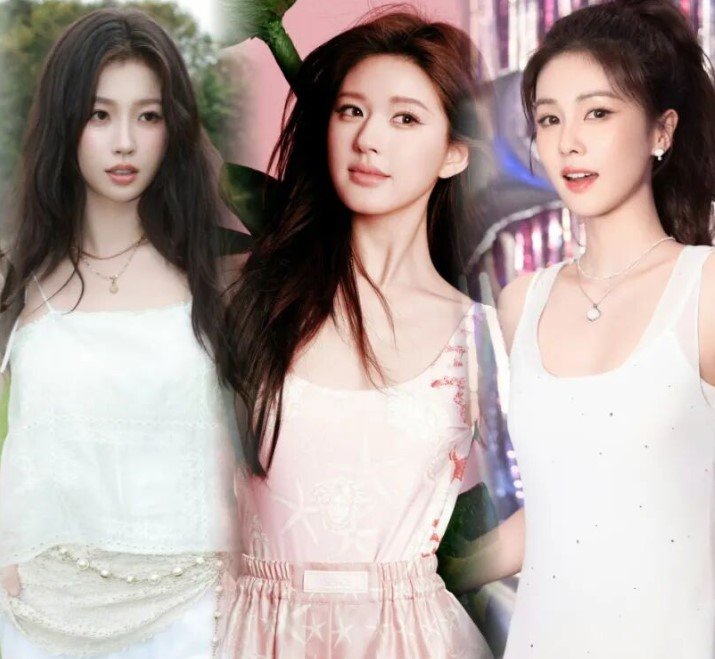
Bai Lu represents a different model—one built on accumulation rather than fluctuation. Her steady output has allowed her to convert earlier controversies into sustained visibility. While not every project generates strong discussion, her consistency ensures continued presence. Notably, her suitability for more grounded, realistic narratives suggests a potential pathway toward broader audience recognition beyond the typical idol drama framework.
Transition and Stability: Song Zu’er, Li Landi, Guan Xiaotong
Another group—Song Zu’er, Li Landi, and Guan Xiaotong—illustrates the intersection between recovery, growth, and repositioning.
Song Zu’er’s recent return to the screen reflects a careful re-entry following earlier disruptions. The reception of her upcoming projects will likely determine whether this return translates into sustained momentum. Her pairing choices and project selection suggest an attempt to balance performance credibility with broader appeal.
Li Landi has experienced a gradual upward trend, supported by projects that generate discussion even amid narrative controversy. Her collaboration with more established performers in upcoming works may serve as a test of her ability to hold her own within more performance-driven contexts.
For Guan Xiaotong, the conversation increasingly centers on transition. While her earlier career included periods of fluctuating focus, recent choices indicate a move toward more varied genres, including period and contemporary dramas. Her strength lies less in peak visibility and more in adaptability, positioning her as a potential long-term contender in more mainstream, “national audience” projects.
Quiet Competition: Zhang Jingyi, Zhang Ruonan, Zhou Ye
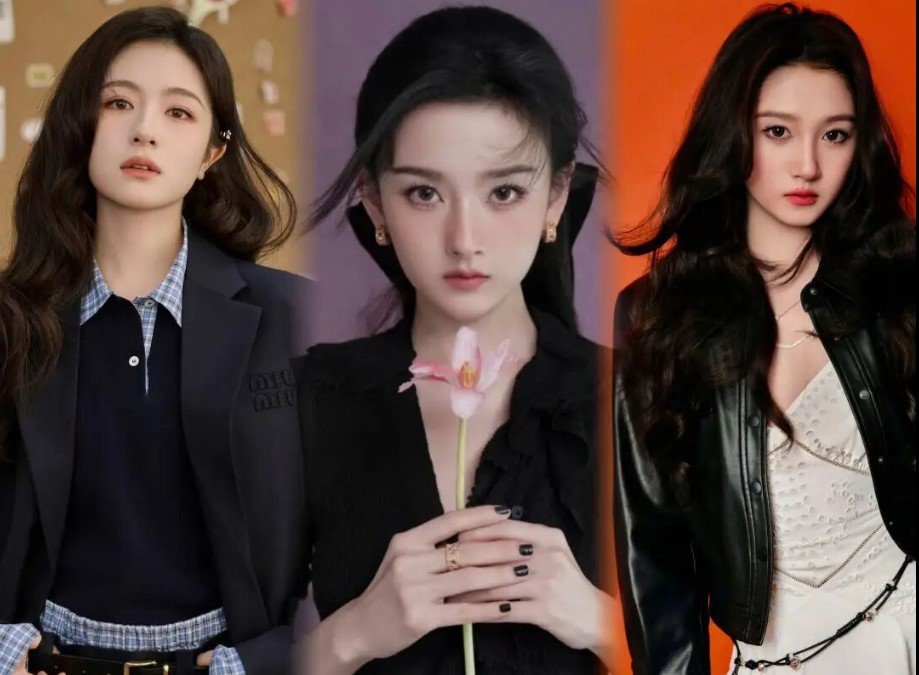
In a more understated tier, Zhang Jingyi, Zhang Ruonan, and Zhou Ye reflect different balances between resource access and audience connection.
Zhang Jingyi benefits from strong project backing and a consistent aesthetic presence, though her public visibility remains relatively subdued. This creates both limitation and opportunity—while her current reach may be narrower, the absence of controversy allows for a more stable, performance-driven trajectory.
Zhang Ruonan presents a contrast. Her projects often generate measurable attention, yet the retention of that attention appears less stable. Her screen image, perceived as soft and approachable, shapes audience reception but may also limit expansion into more varied roles.
Zhou Ye, despite strong resource support, faces ongoing scrutiny regarding performance. Her trajectory illustrates the limits of opportunity when not fully matched by execution, with recent projects highlighting the gap between expectation and delivery.

Edge Players and Alternative Paths
Figures such as Yang Chaoyue, Lin Yun, Lu Yuxiao, Wang Yuwen, and Sun Qian occupy a more fluid space within the hierarchy. Their positions are less fixed, shaped by individual projects rather than consistent dominance.
Among them, Sun Qian stands out for pursuing a more defined direction, focusing on contemporary dramas rather than competing directly within the saturated costume genre. This differentiation may provide a more sustainable path, particularly as audience preferences continue to diversify.
A Defining Window
What becomes clear across these groups is that the current moment is less about emergence and more about consolidation. The post-95 generation is no longer evaluated on potential alone, but on the ability to deliver recognizable, sustained work.
In this environment, resources remain important, but they are no longer sufficient. Audience reception, role selection, and performance credibility are increasingly intertwined. The gap between those who establish a defining work and those who remain in transition may widen quickly.
For many within this cohort, the next few years represent a critical window. Not necessarily for immediate dominance, but for defining a trajectory that can endure beyond the shifting cycles of attention.

