The upcoming drama Ye Gou Gu Tou (野狗骨头), starring Song Weilong and Zhang Jingyi, is expected to premiere in early July. Blending emotional drama with elements of survival and crime, the series presents a layered narrative centered on two individuals bound first by circumstance, and later by a more complicated emotional connection.
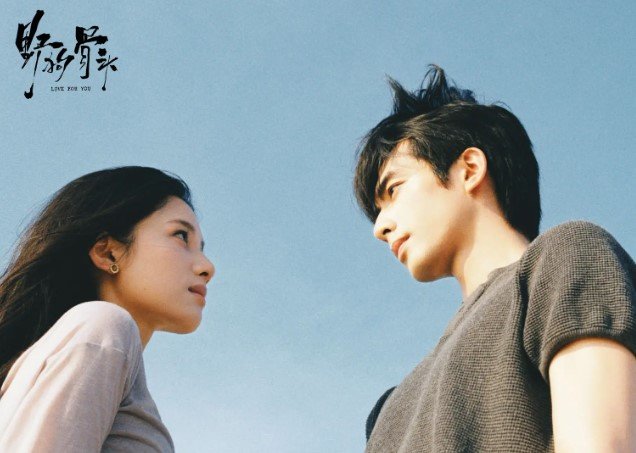
At the heart of the story are Chen Yi, played by Song Weilong, and Miao Jing, portrayed by Zhang Jingyi. Once brought together as non-biological “siblings” through their parents’ remarriage, their relationship is defined early on by proximity rather than choice. However, their lives are soon disrupted by a series of destabilizing events—the death of their father and the sudden disappearance of Miao Jing’s biological mother, who leaves behind unresolved consequences.
Left without support, the two are forced into a harsh environment where survival becomes the primary concern. It is within this bottom-tier social setting that their bond deepens, shaped not by ideal circumstances but by shared hardship.
From Dependency to Emotional Transformation
Chen Yi is characterized as outwardly rebellious and rough-edged, yet internally restrained and quietly protective. His emotional expression is often indirect, shaped by responsibility rather than openness. In contrast, Miao Jing carries a duality—appearing gentle on the surface while maintaining a strong inner will. Her journey moves from reliance to initiative, gradually shifting her role within the relationship.
As they grow together, their dynamic evolves beyond its original definition. What begins as a bond of necessity transitions into a more complex emotional attachment, raising questions about identity, boundaries, and the nature of chosen versus imposed relationships.
Structure and Tone: Fragmented Time, Intensified Conflict
One of the defining features of Ye Gou Gu Tou is its narrative structure. The story opens in the present, with the adult versions of Chen Yi and Miao Jing reuniting under tense circumstances. From there, the narrative moves backward, unfolding their shared past through a reverse chronological framework.
This approach allows the drama to juxtapose outcome and origin—presenting the consequences of their relationship before gradually revealing how it was formed. The pacing is designed to be tight and layered, combining emotional development with elements of suspense and crime.
A Blend of Genres and Emotional Stakes
The series integrates multiple thematic strands, including unconventional family dynamics, crime-related tension, and the realities of grassroots survival. Rather than isolating romance as the central focus, Ye Gou Gu Tou embeds it within a broader context of social and psychological struggle.
The idea of “mutual redemption” runs throughout the narrative. Both characters serve as anchors for each other in unstable circumstances, yet their connection is neither purely supportive nor entirely destructive. This ambiguity becomes a key source of dramatic tension.
Beyond Romance: A Story of Choice and Consequence
Ultimately, Ye Gou Gu Tou positions itself as more than a love story. It is a narrative about how individuals navigate identity and connection when traditional structures—family, stability, and social order—collapse.
By combining a grounded, street-level setting with emotionally complex character dynamics, the drama aims to explore how relationships are reshaped under pressure. The journey from “siblings” to lovers is not presented as a simple transition, but as a process marked by conflict, dependency, and gradual redefinition.
As the story unfolds, Ye Gou Gu Tou invites viewers to consider not only how love forms, but also what it costs—and whether redemption can truly emerge from shared hardship.

