Two decades after Princess Hours (宫) became a defining symbol of modern Korean romantic drama, a new series has emerged with a familiar yet refreshed premise. Perfect Crown (21世纪大君夫人) premiered on April 10, 2026, and quickly drew attention with strong initial ratings, a surge in viewership by its second episode, and an early Douban score of 8.3. In a landscape saturated with formula-driven romances, its ability to generate both nostalgia and novelty has positioned it as one of the most closely watched dramas of the season.
At its core, Perfect Crown (21世纪大君夫人) revisits the fictional framework of a modern constitutional monarchy—an idea that once fueled the success of Princess Hours. The coexistence of royal institutions and contemporary society once again sets the stage for a cross-class love story. Yet, rather than simply replicating a proven formula, the series reshapes its narrative to reflect shifting audience expectations and evolving storytelling priorities.
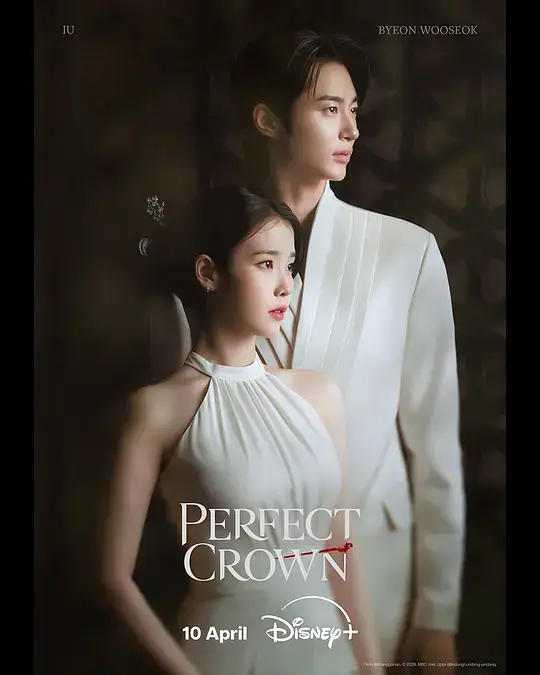
A Shift in Perspective: From Passive Romance to Female Agency
One of the most striking differences between Perfect Crown and its predecessor lies in its reconfiguration of character dynamics. Where earlier royal romances often centered on a “Cinderella” figure entering an elite world through love, this drama places agency firmly in the hands of its female protagonist.
Played by IU, Seong Hee-joo is a chaebol heiress who possesses not only wealth but also sharp intellect and strategic ambition. Despite her privileged background, she remains marginalized within aristocratic circles due to her lack of noble lineage. Rather than accepting this limitation, she confronts it directly, making the bold decision to pursue a marriage with a royal figure as both a personal and calculated move.
Opposite her, Byeon Woo-seok portrays Grand Prince Lee Wan, a man defined by contradiction. While he holds a prestigious royal title, his life is constrained by rigid expectations and political limitations. His status offers recognition but not autonomy, creating a quiet tension between appearance and reality.
This inversion of traditional power dynamics—where the woman commands tangible influence and the man is bound by symbolic authority—adds a layer of complexity to the central relationship. Their “contract marriage” arrangement becomes more than a narrative device; it is a negotiation between two individuals seeking control over their own lives.
Emotional Tension Beneath Strategic Choices
The romantic structure of Perfect Crown follows a “marriage first, love later” trajectory, but with a crucial emotional twist. While Seong Hee-joo approaches the relationship with clarity and intent, Lee Wan’s feelings are rooted in a long-standing, unspoken affection. His quiet admiration, established long before their formal union, introduces a subtle asymmetry that enriches the narrative.
This dynamic creates a layered emotional interplay. The female lead’s directness contrasts with the male lead’s restraint, producing moments of tension that resonate strongly with viewers. His outward insistence on distance, juxtaposed with involuntary gestures of warmth, reveals a character caught between duty and desire.
The result is a romance that balances calculation with vulnerability, offering both immediate emotional gratification and gradual character development.
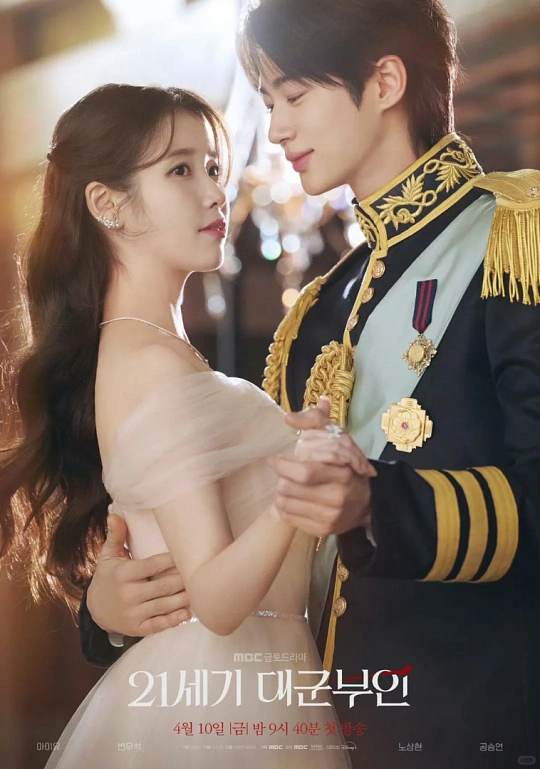
Fast-Paced Storytelling and Audience Engagement
With a concise 12-episode format, Perfect Crown aligns with the industry’s increasing emphasis on narrative efficiency. The series wastes little time establishing its world, introducing key conflicts, and setting multiple storylines into motion.
Within its opening episodes, the drama delivers a series of high-impact scenes that define its tone. Seong Hee-joo’s bold actions—whether confronting powerful elites, navigating corporate rivalries, or directly proposing marriage—reinforce her as a decisive and unconventional protagonist. Her striking entrance at a royal event, marked by confidence and visual flair, encapsulates the drama’s blend of spectacle and character-driven storytelling.
At the same time, the narrative integrates elements of political intrigue, including royal succession struggles and the interplay between corporate and governmental power. These threads expand the scope of the story, positioning it beyond a purely romantic narrative.
Subtext and Social Reflection
Beneath its polished exterior, Perfect Crown (21世纪大君夫人) engages with broader social themes. The protagonists’ respective limitations—wealth without legitimacy and status without autonomy—mirror contemporary concerns about class mobility, institutional barriers, and identity.
The series also touches on issues such as gender expectations and familial hierarchy. Seong Hee-joo’s refusal to conform to passive roles reflects a shift in how female characters are constructed in modern dramas. Her willingness to act decisively, even ruthlessly, signals a move toward more complex and self-directed portrayals of women.
At the same time, the drama hints at deeper critiques of systemic inequality. The use of a contract marriage as a tool for navigating social structures suggests an awareness of the constraints imposed by both tradition and modern institutions.
However, these thematic elements remain, at least in the early episodes, more suggestive than fully developed. Some viewers have noted inconsistencies in the political logic, particularly in how royal authority operates within the constitutional framework. Additionally, the on-screen chemistry between IU and Byeon Woo-seok has sparked mixed reactions, indicating that audience reception may continue to evolve.
Nostalgia Reimagined for a New Era
Ultimately, Perfect Crown stands at the intersection of homage and reinvention. It draws upon a narrative framework that once defined a generation, but reinterprets it through a contemporary lens shaped by changing audience expectations.
Where Princess Hours offered a romantic fantasy rooted in innocence and idealism, Perfect Crown (21世纪大君夫人) presents a more self-aware and strategic narrative. Its emphasis on agency, power negotiation, and emotional complexity reflects a broader shift in the genre.
The drama’s early success suggests that familiar concepts can still resonate when approached with thoughtful adaptation. Whether it can sustain its momentum will depend on its ability to deepen its thematic exploration while maintaining the narrative energy established in its opening episodes.
For now, Perfect Crown (21世纪大君夫人) demonstrates that even a “revisited” concept can feel fresh—provided it evolves in step with the audience it seeks to engage.

