Within the long lineage of adaptations of The Legendary Siblings, few portrayals of Yao Yue have achieved the same level of recognition and lasting impact as that of Yu Li. Often described as the most “classical” and definitive version of the character, her interpretation has come to embody the archetype of the “ice beauty”—a figure defined not only by cold elegance and authority, but by an inner world shaped by obsession, restraint, and emotional fracture. In a genre where strong female characters are plentiful, Yao Yue stands apart, and in Yu Li’s hands, she becomes something more than a villain or a ruler—she becomes a symbol.
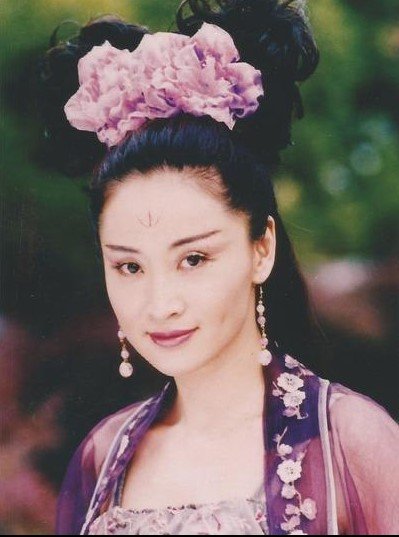
To understand why Yu Li’s Yao Yue in The Legendary Siblings is so often regarded as the most iconic, one must first consider the balance she achieves between surface and depth. At a glance, Yao Yue is the ultimate authority figure, the supreme ruler of Yihua Palace whose will defines the structure of her world. She is composed, distant, and seemingly untouched by ordinary human emotions. Her presence alone commands submission, not through overt intimidation, but through an unspoken certainty that she exists beyond challenge. In contrast to her sister Lian Xing, whose gentleness introduces warmth into the narrative, Yao Yue remains unwavering—like ice that neither melts nor yields.
What distinguishes Yu Li’s performance is the way she constructs this “coldness” without exaggeration. Rather than relying on theatrical intensity, she adopts a restrained approach, allowing stillness to carry meaning. Her gaze is not overtly cruel, but distant—detached to the point of indifference. This subtle detachment creates a far more unsettling presence than overt aggression. In The Legendary Siblings, Yao Yue does not need to raise her voice or display visible anger to assert dominance; her authority is embedded in her composure. This control, shaped by Yu Li’s background in performance and her years of experience across mainland and Hong Kong cinema, gives the character a sense of realism that transcends archetype.
Yet beneath this icy exterior lies the true core of Yao Yue—not coldness, but suppressed emotion pushed to its limits. Her love for Jiang Feng is the defining force that fractures her inner world. When that love is betrayed, it does not disappear; it transforms. What emerges is not simply hatred, but a distorted form of attachment that manifests as control, manipulation, and long-term obsession. Her orchestration of the fates of Xiao Yu’er and Hua Wuque becomes an extension of this unresolved emotion, stretching a personal wound into a decades-long narrative of revenge.
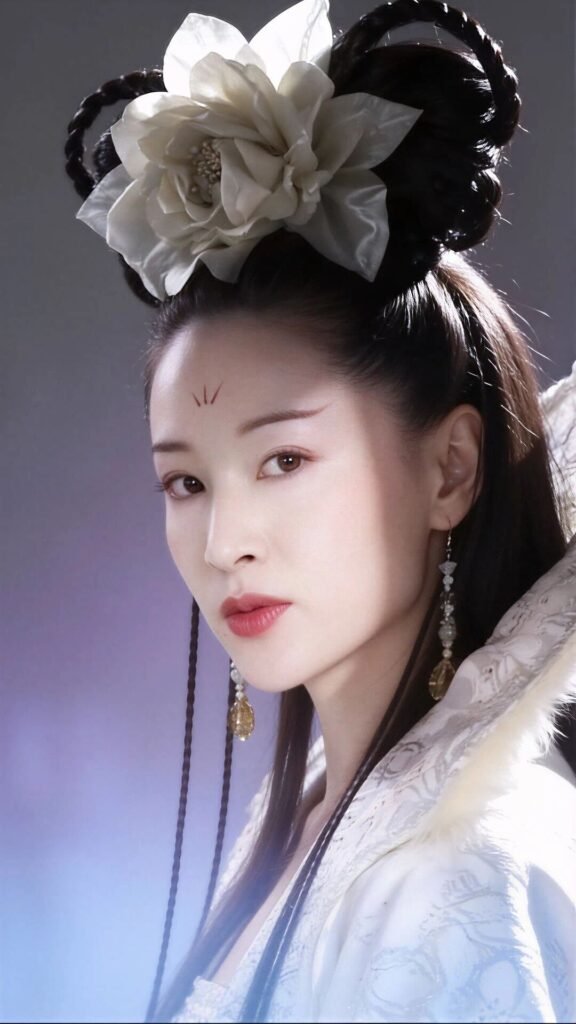
In The Legendary Siblings, this emotional distortion is where Yu Li’s performance reaches its greatest depth. She does not externalize Yao Yue’s pain through dramatic outbursts. Instead, she contains it. The more intense the character’s inner turmoil becomes, the calmer she appears on the surface. This inversion—where composure signals instability—creates a quiet tension that permeates her scenes. It is a performance that trusts the audience to sense what is not explicitly shown, and in doing so, it achieves a level of psychological complexity rarely seen in more overt portrayals.
This duality—between absolute control and internal collapse—is what defines Yao Yue as a character. She governs an entire palace, manipulates lives with precision, and enforces order without question, yet she remains powerless before her own emotions. The more she seeks to control the external world, the more evident her internal fracture becomes. In this sense, The Legendary Siblings presents Yao Yue not as a traditional antagonist, but as a tragic figure—someone whose strength and weakness are inseparable.
Yu Li’s portrayal amplifies this contradiction through visual and emotional contrast. On the surface, her Yao Yue is elegant, composed, and almost untouchable—a figure of refined authority. Beneath that surface lies profound loneliness, shaped by both loss and self-imposed isolation. She rejects vulnerability in order to maintain control, yet it is precisely this rejection that deepens her suffering. The “ice beauty” image, therefore, is not merely aesthetic; it is psychological. It represents a state of being where emotion is not absent, but frozen—preserved in a form that can neither evolve nor disappear.
Part of what makes Yu Li’s Yao Yue in The Legendary Siblings endure across time is the broader context of her career. Born in 1963 in Harbin and trained in the Hunan Song and Dance Troupe, Yu Li developed a performance style rooted in discipline and restraint. Her early work in mainland cinema, followed by a significant period in Hong Kong film during the 1990s, exposed her to different acting demands while reinforcing her preference for controlled expression. This background is evident in her portrayal of Yao Yue, where every movement, every glance, feels deliberate and measured.
Even as her on-screen appearances became less frequent in later years, the legacy of Yu Li’s performances—particularly in The Legendary Siblings—has remained intact. Among the many versions of Yao Yue that have followed, few have managed to replicate the same balance of authority, restraint, and emotional depth. Some lean toward intensity, others toward vulnerability, but Yu Li’s interpretation remains distinctive in its equilibrium.
Ultimately, the reason Yu Li’s Yao Yue is often regarded as the most “classic” version lies in this very balance. She is not defined by a single trait, but by contradiction: cold yet passionate, powerful yet broken, controlled yet fundamentally unstable. In The Legendary Siblings, this complexity is not resolved but sustained, allowing the character to exist as a living paradox rather than a fixed archetype.
Decades later, the image of Yao Yue as portrayed by Yu Li continues to resonate—not because it is the most dramatic, but because it is the most complete. It captures not only the grandeur of power, but the cost of it, revealing that beneath the surface of absolute control lies a reality shaped by longing, loss, and the impossibility of letting go.

