A Character Built on “Medicine” and “Compassion”
In the costume medical drama The Miracle Healers (神医侠侣), Alyssa Chia portrays Chunyu Tiying as a figure defined not by spectacle, but by conviction. Rooted in a family of physicians, the character’s identity is shaped early by exposure to medical practice, gradually evolving into a near-obsessive commitment to healing. Yet the drama does not confine her to a static “healer” archetype. Instead, it traces her movement from familiarity into uncertainty—from the protected environment of her upbringing into a world marked by moral ambiguity, human fragility, and difficult choices.
This transition is central to the narrative structure of The Miracle Healers (神医侠侣). Chunyu Tiying’s journey is not simply about acquiring skill, but about redefining what it means to practice medicine in a world where outcomes are rarely ideal. Each case she encounters extends beyond diagnosis and treatment, forcing her to confront the emotional and ethical dimensions of healing. In this sense, medicine becomes both profession and narrative device—a framework through which the drama explores questions of responsibility, limitation, and consequence.

Beyond Healing: Moral Choice and Emotional Weight
What distinguishes Chunyu Tiying from more conventional heroines is the narrative logic anchored in her profession. She does not wait for events to unfold around her; rather, she initiates action through the act of healing. Each intervention carries weight—not only in terms of plot progression, but as an expression of her evolving values. The patients she encounters are not merely narrative tools, but catalysts that shape her perspective, pushing her toward a more complex understanding of both life and loss.
Importantly, the drama avoids simplifying these encounters into straightforward victories. Chunyu Tiying often operates within constraints—limited resources, uncertain diagnoses, and the unpredictable nature of human behavior. Her decisions, therefore, are rarely absolute. They exist within a spectrum of compromise, where each choice carries potential cost. This layered approach allows The Miracle Healers (神医侠侣) to move beyond the surface-level depiction of “saving lives,” instead presenting medicine as an ongoing negotiation between idealism and reality.
Between Reason and Emotion: A Dynamic Inner Conflict
Alongside her professional journey, Chunyu Tiying’s emotional life introduces another axis of tension. Her relationship with the character portrayed by Vincent Zhao adds complexity without overtaking the narrative. Rather than functioning as a separate romantic thread, the relationship intersects with her development as a healer, creating moments where personal desire and professional responsibility collide.
This interplay between reason and emotion ensures that the character remains in a state of movement. Chunyu Tiying is not defined by a single trait, but by her ability to navigate contradictions. She must remain composed in moments of crisis, yet cannot entirely detach from the emotional consequences of her actions. This balance—between clinical clarity and human vulnerability—forms the core of her character.
Performance: Restraint as a Narrative Tool
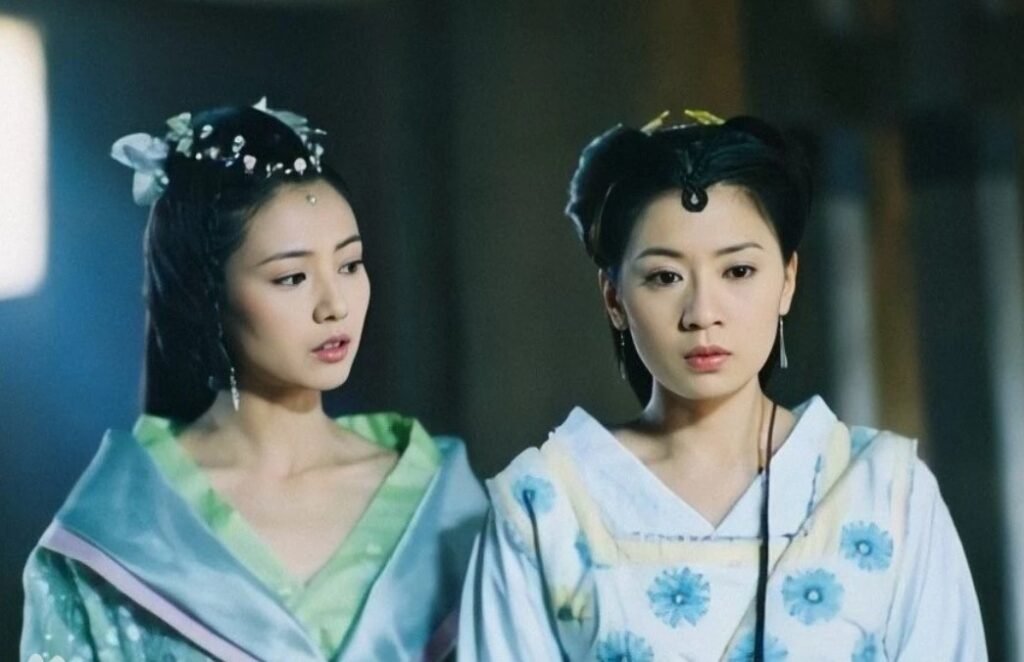
Alyssa Chia’s performance aligns closely with this structural design. Rather than emphasizing dramatic intensity, she adopts a restrained approach, allowing the character’s emotional depth to emerge gradually. Her portrayal avoids overt displays of anguish or triumph, focusing instead on subtle shifts in expression and pacing. This choice reinforces the character’s professional identity, where composure is not only expected but necessary.
In scenes involving life-and-death decisions, this restraint becomes particularly effective. The absence of exaggerated emotion does not diminish the stakes; instead, it heightens them. By maintaining control, Alyssa Chia allows the audience to perceive the underlying tension—the weight of responsibility carried beneath a calm exterior. At the same time, moments of vulnerability are carefully integrated, ensuring that Chunyu Tiying remains recognizably human rather than purely symbolic.
A Different Kind of Heroine
Within the broader landscape of costume dramas, Chunyu Tiying stands apart from characters defined by overt power or dramatic conflict. Her strength lies not in dominance, but in persistence. She does not reshape the world through force, but through repeated acts of care and decision-making. This accumulation of experience—rather than a single defining moment—builds the character’s depth over time.
In The Miracle Healers (神医侠侣), this approach results in a narrative that unfolds gradually, relying on continuity rather than intensity. Chunyu Tiying’s story is not driven by sudden transformation, but by steady evolution. Each encounter adds to her understanding, each choice refines her position, until her identity as both healer and individual becomes fully realized.
Lasting Impression: Warmth Over Sharpness
Ultimately, Chunyu Tiying is not a character designed to overwhelm the audience. She does not rely on sharp dramatic turns or heightened conflict to leave an impression. Instead, her presence lingers through consistency—through the quiet integration of compassion and resilience.
For Alyssa Chia, this role occupies a distinctive place within her body of work. It highlights a performance style that values balance over intensity, and subtlety over spectacle. Rather than dominating the narrative, she sustains it, allowing the character’s emotional and ethical dimensions to unfold with clarity and restraint.
In this way, Chunyu Tiying becomes more than a healer within the story. She represents a different model of strength—one grounded not in power, but in the enduring capacity to care, decide, and continue.

