A broken engagement sets the story in motion, but what follows is far more than a tale of romance denied. In Eternal Happiness (再生缘), the legend of Meng Lijun unfolds as a narrative shaped by intellect, disguise, and emotional restraint—a life lived not in submission to fate, but in negotiation with it. From the waterways of Jiangnan to the grandeur of the imperial court, she moves through shifting identities and precarious choices, constructing a path that is as calculated as it is inevitable. What begins as a personal escape gradually expands into a broader story of power, loyalty, and consequence, where even emperors become entangled in her orbit.
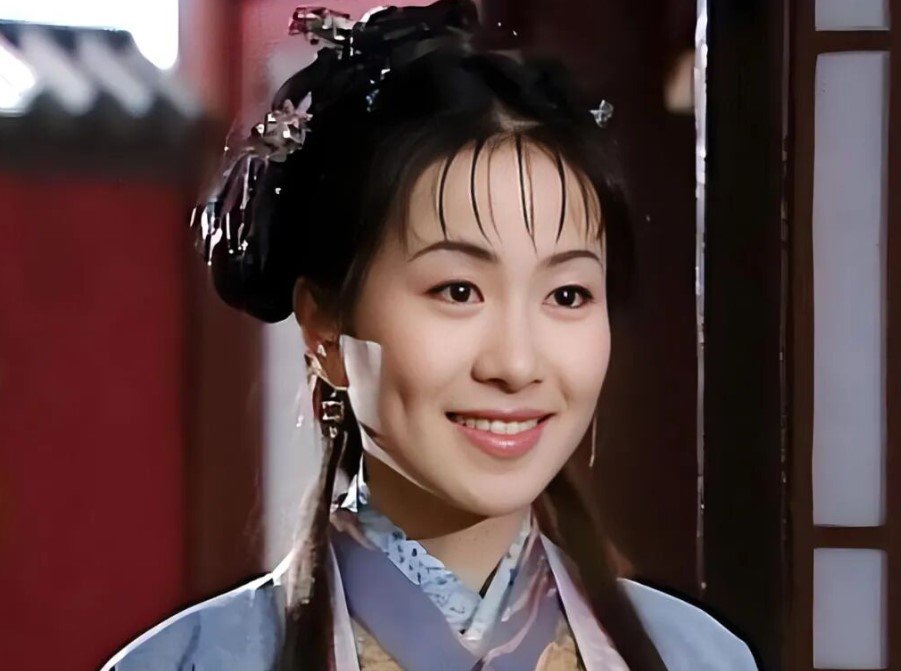
Meng Lijun: A Heroine Beyond Convention
At the center of Eternal Happiness (再生缘) is Meng Lijun, portrayed by Michelle Yip, a character who resists traditional categorization. She is neither a passive romantic heroine nor a purely strategic figure. Instead, she exists in the tension between the two—driven by intelligence, yet shaped by emotion; determined to control her destiny, yet constantly navigating forces beyond her reach.
Her journey begins with a disrupted marriage, a moment that might have confined a more conventional character to tragedy. Instead, Meng Lijun transforms it into a starting point. Through disguise and reinvention, she enters the political sphere, where her intellect becomes her greatest weapon. What distinguishes her is not merely her capability, but her composure—the ability to remain measured even as circumstances grow increasingly complex. In this sense, Eternal Happiness (再生缘) constructs its heroine not through dramatic defiance, but through sustained control.
Performance and Presence: Michelle Yip’s Defining Role
For Michelle Yip, Meng Lijun represents one of the defining roles of her costume drama career. Known for her refined screen presence, she brings a balance of softness and authority that aligns closely with the character’s dual nature. Her performance avoids exaggeration, instead relying on subtle shifts in expression and tone to convey internal conflict.
This restraint becomes particularly effective in court scenes, where Meng Lijun must navigate power structures while maintaining her hidden identity. Michelle Yip does not present the character as overtly dominant; rather, she allows intelligence to emerge gradually, reinforcing the sense that Meng Lijun’s strength lies in strategy rather than force. It is this approach that gives the character longevity—her impact is not immediate, but cumulative.
A Narrative of Strategy, Identity, and Emotional Distance
Structurally, Eternal Happiness (再生缘) operates on multiple levels. On the surface, it is a story of disguise and advancement, following Meng Lijun as she rises within the imperial system. Beneath that, however, lies a more intricate exploration of identity. Each step forward requires a negotiation between who she is and who she must appear to be.
This tension extends into the emotional dimension of the story. Relationships in Eternal Happiness (再生缘) are rarely straightforward. Affection is often entangled with duty, and recognition is delayed or obscured by circumstance. The suggestion that her presence influences not just one, but two generations of rulers, adds another layer of complexity—transforming personal connections into elements within a larger political and emotional framework.
Rather than presenting love as resolution, the narrative treats it as another variable within Meng Lijun’s carefully managed life. Her choices are rarely driven by impulse; instead, they reflect an ongoing calculation, where emotional cost is weighed against long-term consequence.
The Aesthetic of Classical Femininity Reimagined
Visually and thematically, Eternal Happiness (再生缘) draws heavily on classical aesthetics, yet reinterprets them through its central character. Meng Lijun embodies elegance and composure, but these qualities are not ornamental. They function as tools—extensions of her ability to navigate a world structured by hierarchy and expectation.
This approach aligns with Michelle Yip’s broader screen image during her peak years. In addition to Meng Lijun, she portrayed characters such as Yang Lianhua in Gods of Honour (封神榜) and Shangguan Haitang in The Vigilantes in Masks (天下第一), each representing different facets of the “classical heroine” archetype. Yet it is Meng Lijun who most fully integrates intellect, emotional restraint, and narrative agency, making Eternal Happiness (再生缘) a cornerstone of her costume drama legacy.
Between Fate and Choice: The Meaning of “Rebirth”
The title Eternal Happiness (再生缘) suggests more than romantic fulfillment—it implies a second chance, a reconfiguration of destiny. For Meng Lijun, this “rebirth” is not granted, but constructed. Each decision, each disguise, each calculated risk contributes to a life that is continuously rewritten.
And yet, for all her control, the story never fully escapes the pull of inevitability. The relationships she forms, the attention she attracts, and the emotional ties she cannot entirely sever all point to a truth that runs beneath the narrative: that even the most carefully played game cannot eliminate uncertainty.
A Lasting Image
Looking back, Eternal Happiness (再生缘) remains one of the defining works within the genre, not because of spectacle, but because of its central figure. Meng Lijun endures as a character who embodies both aspiration and contradiction—someone who reshapes her destiny while remaining bound to it.
For audiences who first encountered Michelle Yip through her costume roles, the question often becomes one of preference: the gentle devotion of Yang Lianhua, the poised intelligence of Meng Lijun, or the quiet strength of Shangguan Haitang. Yet among these, Meng Lijun stands apart—not as the most dramatic, but as the most complete.
She does not simply live her story. She calculates it, reshapes it, and ultimately accepts it.
And in doing so, she turns a single broken promise into a lifetime of meaning.

