An Overview from a Traveler’s Perspective
Located about 80 kilometers north of Bangkok (Thailand), Ayutthaya was once the thriving capital of the Kingdom of Siam. Today, it stands as a UNESCO World Heritage Site, where the remains of ancient temples and palaces quietly narrate stories of a glorious past. For travelers, Ayutthaya offers a stark contrast to the energy of modern cities. It is not a place of noise or spectacle, but one of reflection, history, and atmosphere.
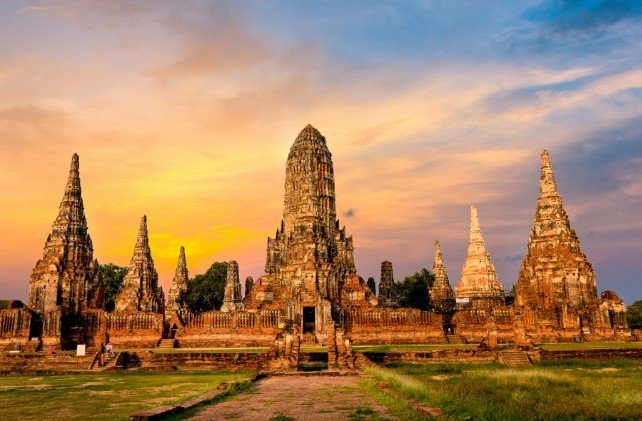
Ruins and Temples: A Journey Through Time
Walking through Ayutthaya feels like stepping into another era. Towering prang structures, weathered brick stupas, and partially restored temples create a landscape that is both majestic and melancholic.
Wat Mahathat is perhaps the most iconic site, known for the Buddha head entwined within the roots of a banyan tree. It is an image that captures the passage of time in a single frame. Wat Phra Si Sanphet, once part of the royal palace complex, showcases rows of elegant chedis that symbolize the grandeur of the former kingdom. Meanwhile, Wat Chaiwatthanaram, located by the river, offers one of the most visually striking temple layouts, especially at sunset when the light softens the ruins into something almost cinematic.
These sites are not merely attractions; they are fragments of history, inviting visitors to observe rather than rush.
Atmosphere: Quiet, Expansive, and Reflective
Unlike bustling tourist hubs, Ayutthaya unfolds slowly. The city is spacious, with ruins scattered across a wide area connected by rivers and small roads. The pace here encourages cycling or leisurely exploration, allowing travelers to move from one temple to another while absorbing the stillness in between.
There is a distinct sense of openness in Ayutthaya. The absence of dense crowds, especially outside peak hours, gives visitors room to engage with the surroundings on a more personal level. It is this calmness that defines the experience as much as the ruins themselves.
Cultural Layers and Living Heritage
Although often described as an ancient city, Ayutthaya is not frozen in time. Monks still reside in active temples, locals go about their daily lives, and small markets operate near historical sites. This coexistence of past and present adds depth to the visit.
Traditional river life remains visible along the Chao Phraya, where boats move slowly past centuries-old structures. The continuity of culture, rather than its preservation alone, is what makes Ayutthaya feel authentic.
Cuisine: Simple, Local, and Distinctive
Food in Ayutthaya reflects its local character. River prawns are a highlight, often grilled and served with rich, flavorful sauces. Boat noodles, a regional specialty, are served in small portions but packed with depth, encouraging visitors to try multiple bowls.
Compared to larger cities, dining here feels more rooted in local habits than in international tourism. Meals are straightforward, yet memorable for their freshness and balance of flavors.
Getting There and Overall Experience
Ayutthaya is easily accessible from Bangkok, typically taking around one to one and a half hours by train, bus, or car. Its proximity makes it ideal for a day trip, though spending more time allows for a deeper appreciation of its atmosphere.
From a traveler’s perspective, Ayutthaya is best suited for those interested in history, culture, and slower travel. It appeals to visitors who value observation over activity, and who find meaning in places shaped by time.
Conclusion
Ayutthaya is not a destination that overwhelms with spectacle. Instead, it invites quiet attention. Among its ruins, the past is not reconstructed but remembered, and the beauty lies in what has endured rather than what has been restored. For those willing to slow down, Ayutthaya offers a rare and contemplative journey into Thailand’s historical soul.

