An Overview from a Traveler’s Perspective
Located in Gyeongju, often referred to as “the museum without walls” of South Korea, Bomun Pavilion sits gracefully by the edge of Bomun Lake. Unlike the fast-paced energy of Seoul, this destination offers a slower, more contemplative travel experience. For visitors, Bomun Pavilion is less about checking off landmarks and more about immersing oneself in atmosphere, where architecture, water, and seasonal changes come together in quiet harmony.
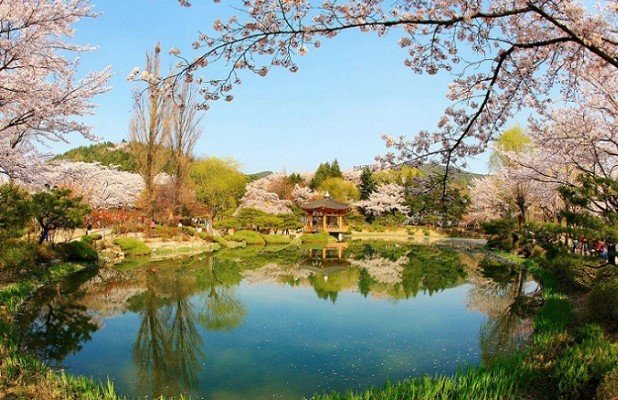
The Pavilion and Its Surroundings: A Scenic Composition
Bomun Pavilion is a traditional Korean-style structure positioned near the lakeside, designed to complement rather than dominate the landscape. Its wooden architecture, curved rooflines, and open structure reflect classic aesthetics rooted in balance and restraint.
The lake itself acts as a natural mirror, reflecting the pavilion, nearby trees, and shifting skies. Walking paths circle the area, making it easy for travelers to explore at their own pace. The scenery does not overwhelm with grandeur; instead, it invites careful observation, rewarding those who take time to notice small details.
Seasonal Beauty: A Place That Changes with Time
One of Bomun Pavilion’s most compelling qualities is how dramatically it transforms with the seasons. In spring, cherry blossoms frame the pavilion in soft pink hues, creating one of the most photographed scenes in Gyeongju. Summer brings lush greenery and a sense of calm, while autumn paints the surroundings in warm shades of red and gold. In winter, the landscape becomes minimal and quiet, offering a different kind of beauty shaped by stillness.
This constant transformation ensures that no two visits feel exactly the same, making Bomun Pavilion a destination worth revisiting.
Atmosphere: Tranquility Over Activity
Unlike major tourist attractions filled with crowds and entertainment, Bomun Pavilion is defined by its calmness. Visitors often come here to walk, take photographs, or simply sit by the water. The absence of loud commercial activity enhances the experience, allowing the natural environment and traditional architecture to take center stage.
Nearby Experiences: Expanding the Journey in Gyeongju
Bomun Pavilion is part of the larger Bomun Tourist Complex, which includes resorts, cultural sites, and recreational facilities. Nearby, travelers can explore historical landmarks such as Bulguksa Temple and Seokguram Grotto, both of which deepen the cultural context of the visit.
This combination of natural scenery and historical richness makes Gyeongju a destination that offers more than a single highlight, encouraging a more layered travel experience.
Travel Tips and Overall Impression
Reaching Bomun Pavilion is relatively easy, with buses and taxis connecting it to central Gyeongju. The area is best explored on foot or by bicycle, allowing visitors to fully appreciate the lakeside environment.
From a traveler’s perspective, Bomun Pavilion is ideal for those who appreciate photography, nature, and cultural aesthetics. It may not appeal to those looking for high-energy attractions, but for visitors seeking calm and visual beauty, it delivers a deeply satisfying experience.
Conclusion
Bomun Pavilion does not rely on scale or spectacle. Its appeal lies in subtlety, in the way it frames nature and invites reflection. In a country known for its dynamic cities, this quiet corner of Gyeongju offers a different rhythm—one that lingers gently in memory long after the journey ends.

