There are feelings in life that never arrive with certainty, never declare themselves, never even ask to be seen. They do not resemble confession, nor do they carry the sharp clarity of heartbreak. Instead, they remain—quietly folded into time, like a page tucked deep inside a book. You may forget it is there, but once you turn back, every word remains intact, as if nothing has truly passed.
Watching You Are My Late Joy (你是迟来的欢喜) feels like unfolding that very page.
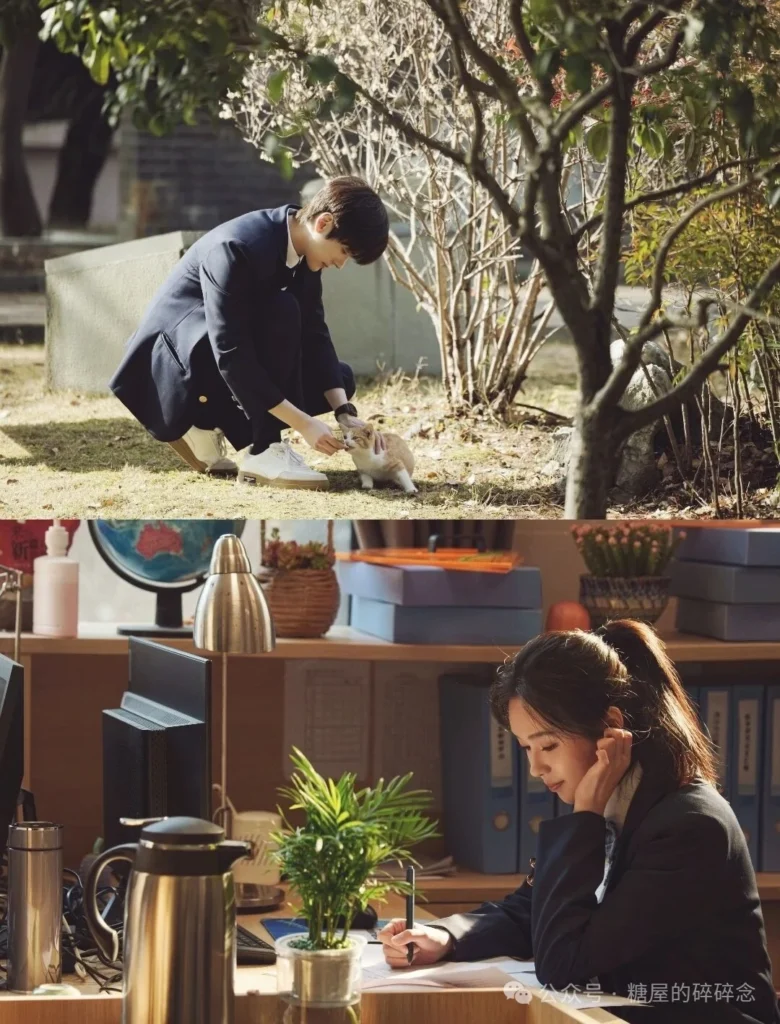
It is not a story that overwhelms at first glance. There is no urgency, no dramatic pull designed to capture attention instantly. Instead, it moves with a kind of softness—almost hesitant—allowing emotion to gather slowly, like something long buried beginning to surface again. What it offers is not intensity, but depth; not immediacy, but accumulation.
The story begins lightly, almost deceptively so. Ruan Yu, a writer, finds herself entangled in a plagiarism dispute after weaving her own experiences into fiction. In seeking to defend her work, she is drawn back into the orbit of someone she once knew—Xu Huaishong, her former crush, and unknowingly, the inspiration behind the male lead in her novel.
What could have remained a quiet memory is suddenly placed back into reality.
Yet what lingers is not the reunion itself, but what follows—the delicate distance, the hesitation, the almost imperceptible steps toward each other. Time has not simply separated them; it has layered them with everything left unsaid. The past is no longer visible, but it is present in every pause, every glance, every unfinished sentence.
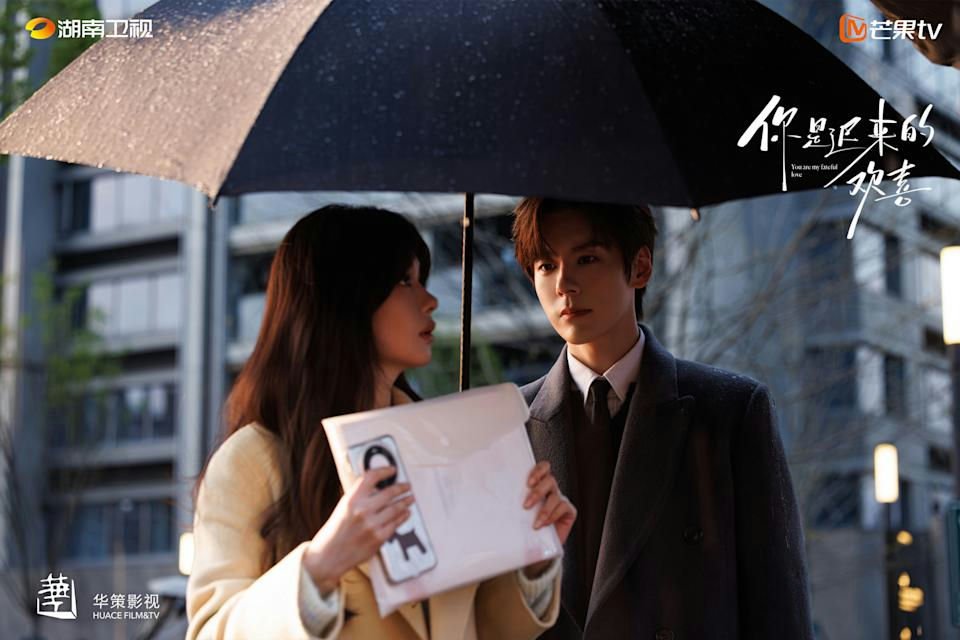
Ruan Yu, as portrayed by Zheng Hehuizi, carries a kind of translucence. Her performance does not push for attention; instead, it allows emotion to move gently beneath the surface. She pauses without explanation, withdraws without resistance, and reveals herself in fragments rather than declarations. There is a quiet persistence in her portrayal of someone who has not fully let go, even if she has learned to live as though she has.
Opposite her, Wei Zheming’s Xu Huaishong exists almost like an echo shaped by time. His performance is restrained, measured, and deliberately incomplete. He does not offer easy answers, nor does he reveal himself too quickly. Yet within that restraint lies something unmistakable—a responsiveness that surfaces in small, almost unnoticed moments. It is precisely because he holds back that each shift, each subtle softening, becomes deeply felt.
Gradually, it becomes clear: this was never a one-sided story.
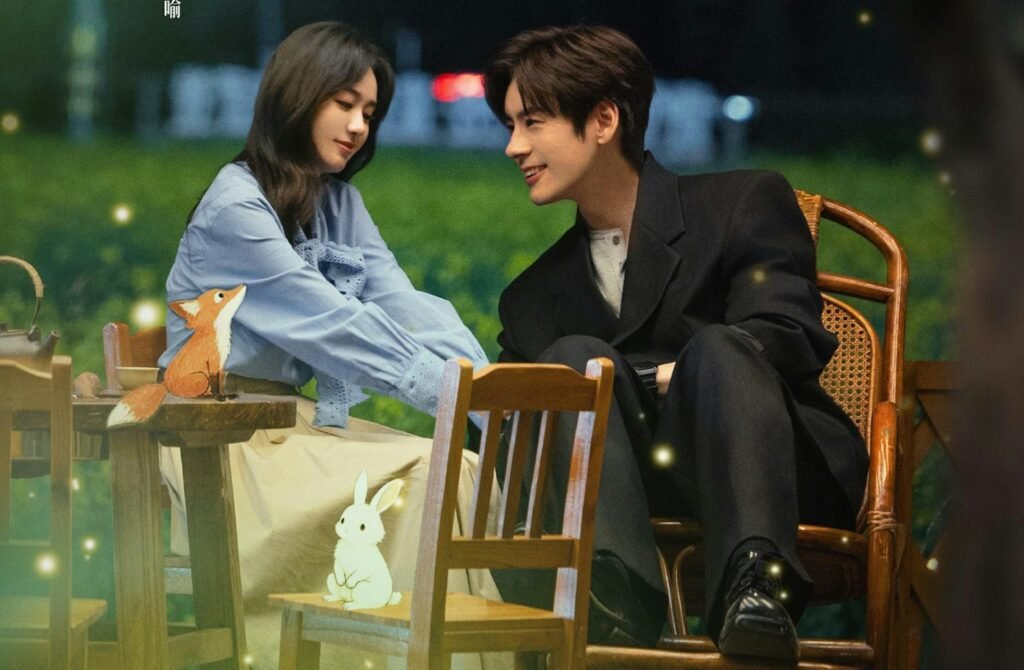
They simply existed in different silences.
She chose not to speak; he chose not to ask. She hid her feelings; he respected the distance. Two emotional threads extended quietly through time, running parallel but never intersecting.
Until, after ten years, they finally do.
Time, in this story, does not erase—it prepares. It carries them forward into a space where they are no longer defined by hesitation, where what once felt impossible can now be faced with clarity. The uncertainty of youth gives way to something steadier, more deliberate. The feelings that once lived in diaries, in fiction, in memory, are no longer confined to the past. They are allowed, at last, to be heard.
This is where You Are My Late Joy (你是迟来的欢喜) finds its gentlest strength.
It does not treat missed timing as an ending, but as a form of quiet continuation. What was left unsaid does not disappear; it waits. Not in longing, but in stillness—until the moment arrives when it can finally take shape.
So when Ruan Yu and Xu Huaishong move toward each other again, the emotion does not feel sudden. It carries weight, history, and the quiet persistence of everything that has endured in silence. It settles, slowly, like something returning to where it was always meant to be.
It feels like a dream—but not the kind that fades upon waking. Rather, the kind that lingers, where every detail remains clear, where you know it truly happened, only later than expected.
Ten years is neither long nor short. It is long enough to teach someone how to let go, and long enough to transform a feeling into something more grounded, more certain. When they meet again, they are no longer the people who once hesitated. They have changed, but what they carry has not.
And this time, they do not miss each other.
In reality, not every quiet love is given such a second chance. More often, feelings remain where they were left, gradually dissolving into memory. But You Are My Late Joy (你是迟来的欢喜) offers another possibility.
That some emotions do not disappear simply because they were never spoken.
That some people, no matter how far they drift, do not truly lose their way back to each other.
They may take a longer road. They may arrive later than expected.
But sometimes, late is not too late.
Sometimes, it is just right.

