If one looks only at outcomes, Chen Duling might appear to be the kind of actress who simply “got better over time”—without a breakout moment, without a dramatic turning point. Yet when viewed across a longer timeline, her past decade resembles something far more deliberate: an ongoing process of self-calibration. Step by step, she tested, adjusted, and refined her path, gradually shaping a rhythm of her own in a trajectory that was never initially expected to lead here.
For many, their memory of Chen Duling begins with a single line.
At a major industry event, she once said, “The moon itself does not shine. Neither do I.” The remark was understated, almost plain, yet it resonated widely. It lacked the polish of a rehearsed speech and instead reflected a calm, rational self-awareness. She did not deny the existence of light, but she understood clearly that it did not originate from her alone.
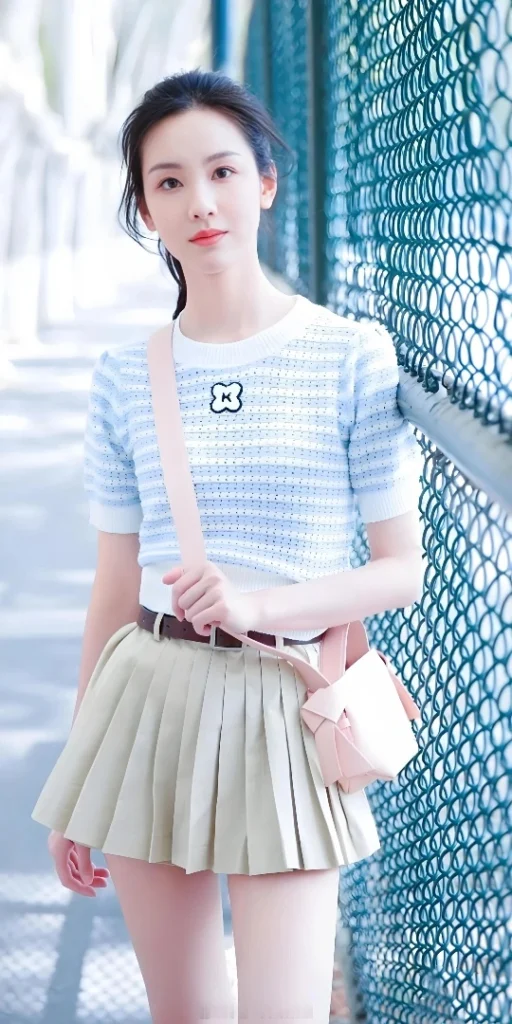
What is less visible is the tension behind that composure—the quiet anxiety of rehearsing her thank-you list repeatedly before stepping on stage, the need to confirm every detail to avoid mistakes. This contrast between outward ease and inward precision has, in many ways, defined Chen Duling’s entire journey. What appears effortless is often the result of careful, persistent effort.
From Being Noticed to Being Redirected
Born in 1993 in Xiamen into an academic family, Chen Duling seemed destined for a completely different future. Her upbringing followed a clear and structured path: growing up in Gulangyu, attending Xiamen Music School, later enrolling in Xiamen No.1 High School, and eventually being admitted in 2012 to Nanjing University of Aeronautics and Astronautics with a strong academic record. Her major—aircraft manufacturing—placed her firmly in the world of equations, materials, and engineering systems.
She excelled there. With a GPA close to 3.9 and meticulously handwritten notes that circulated among classmates, her trajectory pointed toward a future in aerospace rather than the entertainment industry.
The turning point came unexpectedly, through a single photograph.
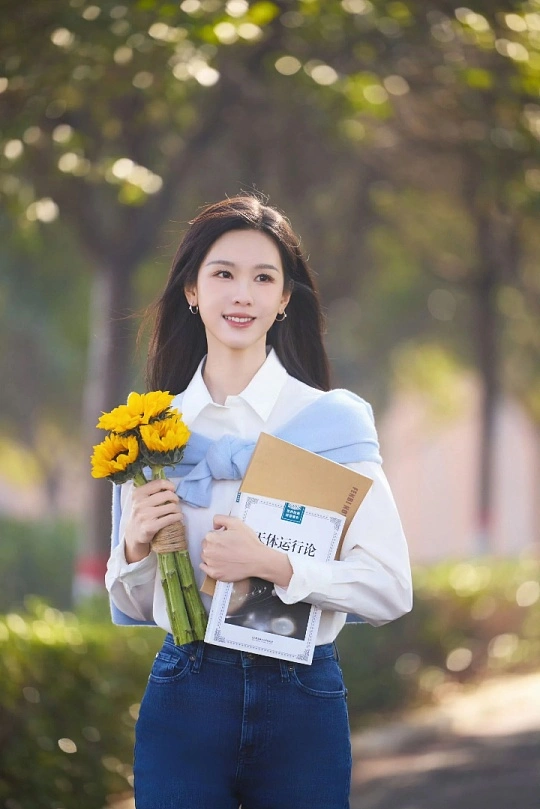
A bare-faced ID photo of Chen Duling was uploaded during her freshman year to a campus beauty ranking. Without styling or embellishment, the image stood out precisely because of its simplicity. She was soon labeled the “campus beauty” of her university, a title that spread rapidly and opened the door to an entirely different world.
Among the opportunities that followed was an invitation from director Alec Su for the film The Left Ear. Her initial response was refusal. Acting was not part of her plan; her world at the time was defined by study and discipline. It was only after repeated communication and reassurance that she agreed to participate, treating it as a temporary experience rather than a career shift.
That tentative beginning shaped her early performances. She lacked technical training, struggled with camera positioning, and even found emotional scenes difficult to execute. Observers once joked that “squeezing out tears was harder for her than solving physics problems”—a light remark that nonetheless captured her starting point accurately. She was not a natural performer; she was, at first, a science student placed in front of a camera.
Facing Doubt and Building Method
Following the release of The Left Ear, which achieved strong commercial results, Chen Duling entered public view and received recognition as a newcomer. Yet this visibility was accompanied almost immediately by criticism. Descriptions such as “wooden beauty” or “lacking presence” became common, reflecting a skepticism that was neither subtle nor restrained.
Rather than responding defensively, Chen Duling approached criticism in a way that mirrored her academic background—by breaking it down. She began compiling what she described as a personal “error log” for acting, documenting feedback from audiences and advice from senior actors. She adjusted her delivery, practiced expressions in front of a mirror, and observed others on set, recording details and reviewing them repeatedly.
To better understand her roles, she wrote extensive character analyses, mapping motivations and behaviors with the same logic she once applied to problem-solving. The process was methodical, even unglamorous, but it proved effective over time.
Her gradual transformation became visible across different projects. In Miracles of the Namiya General Store, she moved away from her early image by portraying a nightclub dancer, preparing through dance training and observation. In Till The End of The Moon, she took on multiple roles, differentiating emotional layers across characters. In Mysterious Lotus Casebook, her portrayal of Qiao Wanwan combined restraint and strength, eventually earning award recognition.
These changes were not the result of a single breakthrough but of sustained accumulation.
Notably, throughout this period, Chen Duling continued her academic commitments, returning to campus to complete her studies even after gaining public attention. When asked why, her answer remained simple: acting was her passion, but her academic background was her foundation. The clarity of that distinction reflects a consistent awareness of balance.
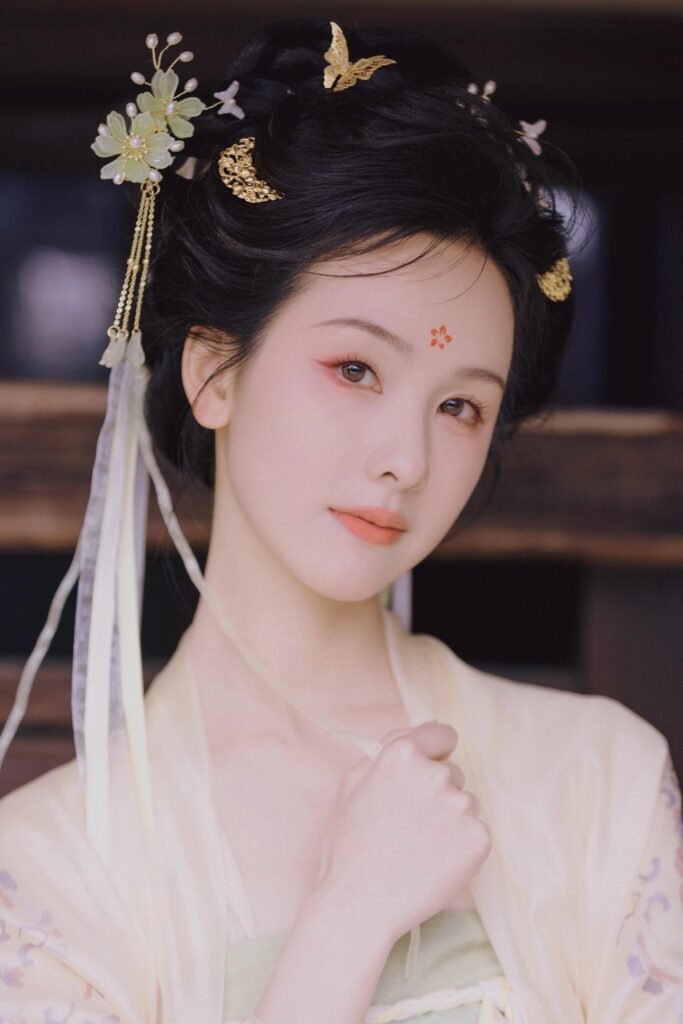
Choosing Authenticity Over Ease
Today, Chen Duling is no longer a newcomer navigating uncertainty. With more than 40 projects and multiple accolades, she has become associated with steady, reliable output. Yet beyond her work, what stands out is her demeanor.
In an industry often shaped by carefully constructed narratives, her expressions remain notably direct. The same line about the moon continues to circulate, precisely because it feels unfiltered. Yet she has openly admitted that moments like that were accompanied by nervous preparation behind the scenes.
This unpolished honesty can make her appear somewhat reserved, even awkward, but it also contributes to a sense of authenticity. She does not actively maintain a perfected image, nor does she rush to redefine herself for broader appeal. At times of rising popularity, she has even chosen to take supporting roles, describing each part as an opportunity to learn.
While her presence in fashion and public appearances has grown stronger, she has not allowed visibility alone to define her priorities.
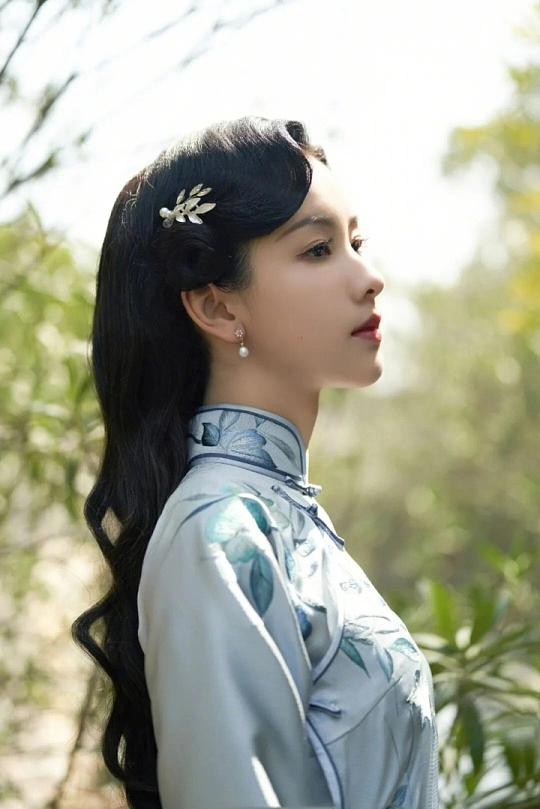
Moving Toward the Center
In recent years, Chen Duling’s trajectory has become more defined. Projects such as Yan Hui Shi marked a shift, placing her in roles that carry greater narrative weight. Instead of functioning primarily as a supporting emotional presence, she began to anchor storylines, requiring more internal consistency and control.
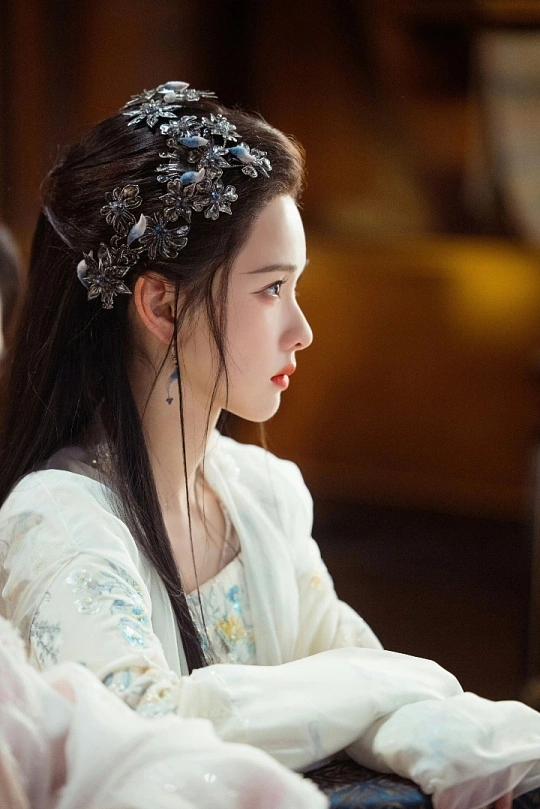
This transition continues with projects like Veil of Shadows (月鳞绮纪), where her role leans more heavily on atmosphere and character presence—areas that align closely with her strengths. At the same time, increased visibility has brought new challenges, including public scrutiny and external discourse that extend beyond the work itself.
These developments signal a shift from participation to centrality. She is no longer simply part of a project; she is increasingly one of its focal points.
A Different Kind of Answer
If there is a way to summarize Chen Duling’s decade-long journey, it is not a straightforward progression from inexperience to skill, but a transition from being defined by others to establishing her own coordinates.
She has not relied on sudden momentum or external advantage. Instead, she has demonstrated a steady awareness of what is temporary and what can be sustained. She does not move quickly, but she rarely deviates.
Perhaps that is why the metaphor of the moon feels fitting.
It does not generate its own light, yet it remains constant, present, and quietly visible over time.

