In the ever-shifting landscape of modern K-pop—where trends evolve rapidly and the spotlight often belongs to idol groups—Lee Ji-eun, known professionally as IU, has carved out a path defined not by noise, but by quiet persistence. Born on May 16, 1993, she is not only a singer and songwriter, but also an actress, steadily establishing herself as one of the most influential solo artists in South Korea.

IU joined LOEN Entertainment (now Kakao Entertainment) in 2008 and made her debut at just 15 years old with her first extended play, Lost and Found. It was not a dazzling beginning, but rather a gentle prelude to a much longer composition. With her distinctive voice, emotional sensitivity, and an increasingly clear artistic direction, she gradually built a presence of her own within a highly competitive industry.
Following Growing Up and IU…IM, IU began gaining attention in the domestic market. However, it was the release of “Good Day,” the lead single from her 2010 EP Real, that truly propelled her into stardom. The song not only topped the Gaon digital charts for multiple consecutive weeks but was also recognized by Billboard as one of the defining K-pop tracks of the 2010s. From that moment on, IU entered a new phase of her career, becoming the nation’s beloved “little sister”—an image that combined innocence, accessibility, and undeniable talent.
In the years that followed, her musical identity evolved significantly. Albums such as Real+, Last Fantasy (2011), and especially Modern Times (2013) marked a turning point, showcasing a more mature and diverse sound. With Chat-Shire, IU took full creative control, writing and composing across the entire project—signaling her transition from performer to true artist. From jazz and folk to bossa nova and indie pop, her music expanded in scope while retaining its emotional intimacy.
Alongside her music career, IU also ventured into acting. Starting with early roles in Dream High, where her performance was still developing, she gradually proved her capabilities over time. Her performances in My Mister (2018) and When Life Gives You Tangerines (2025) earned widespread critical acclaim, solidifying her reputation as a multifaceted artist capable of delivering emotional depth on screen.
With over five studio albums, numerous extended plays, and dozens of chart-topping hits, IU stands out as a rare solo force in an industry largely dominated by groups. She has consistently ranked among Forbes Korea’s most powerful celebrities and has been named Gallup Korea’s most beloved singer multiple times. On Billboard’s K-pop Hot 100, IU holds records for both the highest number of number-one songs and the longest cumulative time at the top—further cementing her enduring influence.
I. Prelude — A Voice Rising Through Quiet Years
1. Early Years: A Beginning Without Spotlight
Born in Songjeong-dong, Seoul, into a family that once faced financial hardship, IU’s childhood was far from defined by comfort or stability. From an early age, however, she showed a clear interest in the entertainment industry, nurturing the dream of becoming a public figure. Despite their limited means, her family supported her by enrolling her in acting classes—small steps that would later shape the foundation of her career.
Life, however, took a difficult turn after she completed elementary school. As her family’s financial situation deteriorated, IU and her younger brother were sent to live with their grandmother in Uijeongbu. For over a year, they endured a life of scarcity, where even basic necessities and the presence of their parents felt distant.

This period left a lasting imprint on IU. It not only shaped her emotional resilience but also instilled in her a quiet strength that would define much of her later journey. Though she rarely saw her parents during that time, she found comfort in her grandmother’s care. In later years, IU would often look back on this chapter as a crucial source of motivation—one that grounded her as she moved forward.
During her middle school years, her passion for singing began to take clearer form. After receiving encouragement from classmates during a school performance, she realized that music was more than just an interest—it was something she wanted to pursue seriously. From then on, she began attending numerous auditions, each one a step toward a distant stage.
The path, however, was anything but easy. She faced rejection over twenty times, endured repeated setbacks, and was even scammed by a fraudulent agency. Yet, she did not stop. Each failure became a note within a larger composition, pushing her forward rather than holding her back.
Before securing a formal opportunity, IU trained at Good Entertainment alongside many trainees who would later become notable artists. In 2007, she signed with LOEN Entertainment and moved back to Seoul to begin structured training. Initially considered for a girl group debut, she ultimately debuted as a solo artist in 2008 after approximately ten months of preparation.
In those pre-debut days, when her family circumstances were still strained, IU once shared that the studio felt like her “second home”—a place where she could eat properly and find a sense of rest. It was within that space that her dream began to feel tangible.
It was also during this time that she was given the stage name “IU,” symbolizing the connection between “I” and “You.” Simple in form, yet profound in meaning, it reflected her desire to bridge the distance between artist and audience through music.
2. First Steps (2008–2009): Before the Spotlight Found Her
In September 2008, after a relatively short yet intensive training period, IU officially debuted with the song “Lost Child,” making her first appearance on the stage of M! Countdown. It should have been a defining moment of arrival, yet reality unfolded differently. Instead of warm applause, she was met with indifference—and even boos—from the audience.
That moment, rather than becoming a triumphant opening, felt like a sudden low note in a melody just beginning to form. Yet IU did not allow it to define her. In later reflections, she described it as a necessary experience—one that taught her how to face pressure, rejection, and the weight of standing alone on stage.
Her debut mini album Lost and Found did not achieve notable commercial success. Still, she received the “Rookie of the Month” award from Korea’s Ministry of Culture, Sports and Tourism. These modest recognitions quietly laid the groundwork for what was to come.
In 2009, IU released her first studio album Growing Up, with the title track “Boo.” Departing from her earlier melancholic tone, the song embraced a bright retro style, marking a clear shift in her public image. With a youthful and charming concept, IU began to move closer to mainstream audiences. Although she later admitted feeling somewhat uncomfortable with this image, the song was well received and helped her gain broader recognition.
Later that year, she released the mini album IU…IM, featuring the track “Marshmallow.” Continuing with a cheerful and playful tone, the song further reinforced her “cute younger girl” image. Its accessible and eclectic sound increased her visibility significantly, even if it did not fully align with her personal artistic aspirations.
Alongside her official releases, IU began contributing to drama soundtracks and appearing on various television programs, gradually expanding her presence in the entertainment industry. Her acoustic cover performances, shared online, attracted considerable attention—revealing a deeper musicality that went beyond her initial image. In those quieter moments, a more genuine and emotionally resonant side of IU began to emerge.
II. The Melody of Youth — When Music Became a Generational Voice
1. The Turning Point (2010–2011): When IU Became a Household Name
The year 2010 marked a defining turning point in IU’s career, as her steady efforts finally began to crystallize into widespread public recognition. It began with the duet “Nagging” (잔소리), released in June in collaboration with Lim Seul-ong of 2AM. Though it debuted modestly on the Gaon charts, the song quickly climbed to number one and remained there for weeks, signaling IU’s growing resonance with the general public.
She continued this momentum through soundtrack contributions such as “Because I’m a Woman” and the collaboration “It’s You” with Sung Si-kyung, both achieving strong chart performances. However, it was not until December 2010, with the release of her EP Real, that IU truly reached a decisive breakthrough.
The title track “Good Day” became a cultural phenomenon. Its bright melody, layered composition, and especially the iconic triple high note climax set a new standard, establishing one of the most memorable moments in K-pop history. More than just a technical feat, the performance highlighted IU’s ability to convey emotion with clarity and nuance. From this point on, she was no longer an emerging artist—she had become a “national star,” with a rapidly expanding audience.
Alongside her music, IU remained active on television, most notably through the variety show Heroes, where she maintained an intense filming schedule for nearly a year. Though physically demanding, this period allowed her to build strong relationships within the industry and broaden her public image.
At the turn of 2010 and 2011, IU made her acting debut in the drama Dream High, portraying Kim Pil-sook—a shy student with a powerful singing voice. The role aligned naturally with her strengths, and her performance, though early in her acting career, was received as sincere and promising.
Her OST “Someday” quickly reached number one on the Gaon Digital Chart, becoming one of her most successful soundtrack releases. Achieving success in both music and acting simultaneously, IU significantly expanded her scope as an entertainer, reinforcing her image as a multifaceted artist.
In February 2011, she released Real+, an extended version of her previous EP. The title track “Only I Did Not Know” showcased a more introspective and emotionally nuanced side of her music. Despite its stylistic shift, the song still topped the charts, demonstrating her consistent appeal.
That same year, IU took a deeper step into songwriting with “Hold My Hand” for the drama The Greatest Love. This marked an important milestone in her artistic evolution—from performer to creator—with the song receiving both commercial success and emotional acclaim.
Toward the end of 2011, IU released her second studio album Last Fantasy, a project widely praised for its musical diversity and production quality. The lead single “You and I” quickly became a major hit, further solidifying her position as one of the leading solo artists in K-pop.
Beyond South Korea, IU also began expanding internationally, particularly into the Japanese market, by signing with EMI Music Japan—marking the beginning of her broader global trajectory.
II. The Melody of Youth — When Music Became a Generational Voice
2. Expansion and Reach (2012): When Her Sound Crossed Borders
In 2012, IU’s journey extended beyond South Korea, gradually reaching a broader international stage. While maintaining strong domestic popularity, she began expanding into the Japanese market. Her performances in Tokyo attracted thousands of fans, demonstrating her growing appeal abroad. Japanese versions of “Good Day” and “You and I” performed well on the Oricon and Billboard Japan charts, marking a promising start to her overseas activities.
That same year, IU held her first solo concert tour, Real Fantasy. The opening shows in Seoul sold out rapidly, reflecting her strong connection with audiences. Spanning multiple cities and concluding with encore performances, the tour marked a significant milestone in her evolution as a live performer.
Her mini album Spring of a Twenty Year Old carried symbolic meaning, representing a transition into a more mature phase of her life and artistry. “Every End of the Day” topped the Gaon Digital Chart, while “Peach” revealed a more personal touch in her songwriting. Notably, the release of a short film instead of a traditional music video highlighted her creative approach to musical storytelling.
Beyond music, IU remained highly visible through television appearances and hosting roles, maintaining a wide public presence. Her achievements earned her major accolades, including “Artist of the Year” and “Song of the Year,” while Billboard recognized her as one of the most notable young artists of the time.
3. Growth and Transformation (2013): When Music and Acting Deepened Her Artistry
If 2012 was about expansion, then 2013 marked a deepening of IU’s artistic identity. She began to establish herself not only as a singer but also as a serious actress.
She took on her first leading role in the long-running drama You’re the Best, Lee Soon-shin!, portraying an ordinary yet determined young woman. Despite initial skepticism regarding her acting abilities, her sincere and steadily improving performance earned positive responses from both audiences and critics. The drama achieved strong ratings, and IU received award nominations, marking a meaningful step forward in her acting career.
In the same year, IU released her third studio album Modern Times, signaling a major shift in musical style. Moving away from her earlier “cute” image, she embraced a more mature and diverse sound, incorporating elements of jazz, swing, bossa nova, and folk. This evolution reflected not only experimentation but also a more refined artistic vision.
Modern Times received critical acclaim and achieved strong commercial success. Several tracks topped music charts, with “The Red Shoes” standing out as a major hit. The album was also recognized by Billboard and other music publications as one of the defining K-pop releases of the decade.
IU also appeared in the drama Pretty Man. Although the series did not achieve high ratings, her performance was still met with positive feedback, indicating steady growth as an actress.
To promote Modern Times, IU held her second solo concert series, once again demonstrating her strong stage presence. The repackage album Modern Times – Epilogue, featuring the track “Friday,” continued her success and sustained her popularity in the music industry.
4. A Subtle Turn (2014): When Music Became Memory Reimagined
In 2014, IU took a refined and introspective turn with the release of A Flower Bookmark, a remake album featuring classic Korean songs from the 1980s and 1990s. Rather than aiming for reinvention, the project felt like a quiet dialogue with the past.
Blending ballad, folk, pop, and rock elements, the album carried a strong sense of nostalgia. It was well received by both the public and critics, with tracks like “My Old Story” and especially “The Meaning of You” achieving high chart rankings.
What stood out was IU’s delicate balance—preserving the emotional core of the originals while subtly infusing her own identity. This approach gradually reshaped her image into that of an artist with refined musical taste, beyond the label of an idol singer.
That same year, she held a small-scale concert series, Just One Step… That Much More, creating an intimate atmosphere with limited seating. The shows sold out quickly, and her live performances—featuring her own instrument playing—offered a more personal musical experience.
IU also performed at KCON in Los Angeles, marking her first stage in the United States, where she received strong attention as a solo artist.
Meanwhile, collaborative tracks such as “Not Spring, Love, or Cherry Blossoms” continued to perform well, reinforcing her strong chart presence.

5. Identity and Trials (2015–2016): When Artistic Voice Took Shape
In 2015, IU returned to television with The Producers, portraying a cold and aloof top singer—a role that contrasted with her real-life image. Though initially met with mixed reactions, her performance gradually gained appreciation.
That same year, she released Chat-Shire, a pivotal project in which she took full creative control. The album reflected her personal thoughts and experiences as she matured, with the title track “Twenty-Three” topping the charts.
However, Chat-Shire also sparked controversy, particularly surrounding the track “Zezé.” Despite her public explanation and apology, the issue remained widely debated. Still, musically, the album was highly regarded and is often considered one of her most defining works.
She embarked on the Chat-Shire tour, performing across multiple cities and expanding into markets such as China and Taiwan, where ticket sales remained strong.
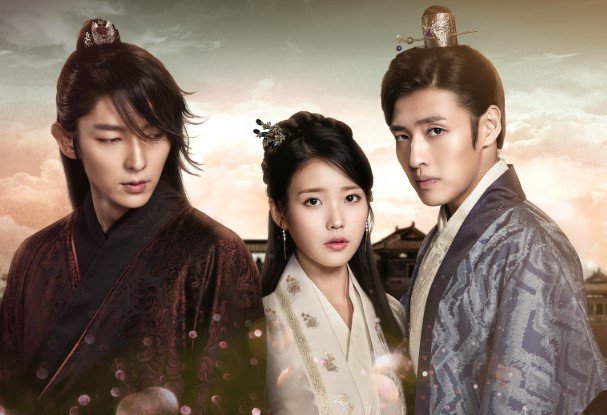
In 2016, IU starred in Moon Lovers: Scarlet Heart Ryeo. While the drama received mixed reviews domestically, it achieved major success internationally—especially in China—significantly boosting her global recognition and adding to her acting experience.
6. Peak and Refinement (2017–2018): When Art Found Its Full Voice
In 2017, IU reached a defining peak in her career with the release of her fourth studio album Palette. Rather than a collection of experiments, the album stood as a fully realized work, with IU taking the lead in songwriting, production, and conceptual direction. Palette felt like a quiet self-reflection—an artist looking back, no longer at the beginning, but with a clear understanding of her identity.
Tracks such as “Through the Night,” “Palette,” and “Can’t Love You Anymore” achieved strong chart success. Among them, “Through the Night” stood out as one of IU’s most enduring songs, praised for its emotional sincerity and understated delivery.
Beyond commercial success, Palette earned major accolades, including “Album of the Year” and “Artist of the Year.” Critics widely acknowledged her ability to tell personal stories through music, recognizing her evolution from idol to a fully realized artist with a distinct voice.
That same year, IU released A Flower Bookmark 2, continuing her reinterpretation of classic songs. The album was well received, further reinforcing her reputation for musical depth and refined taste.
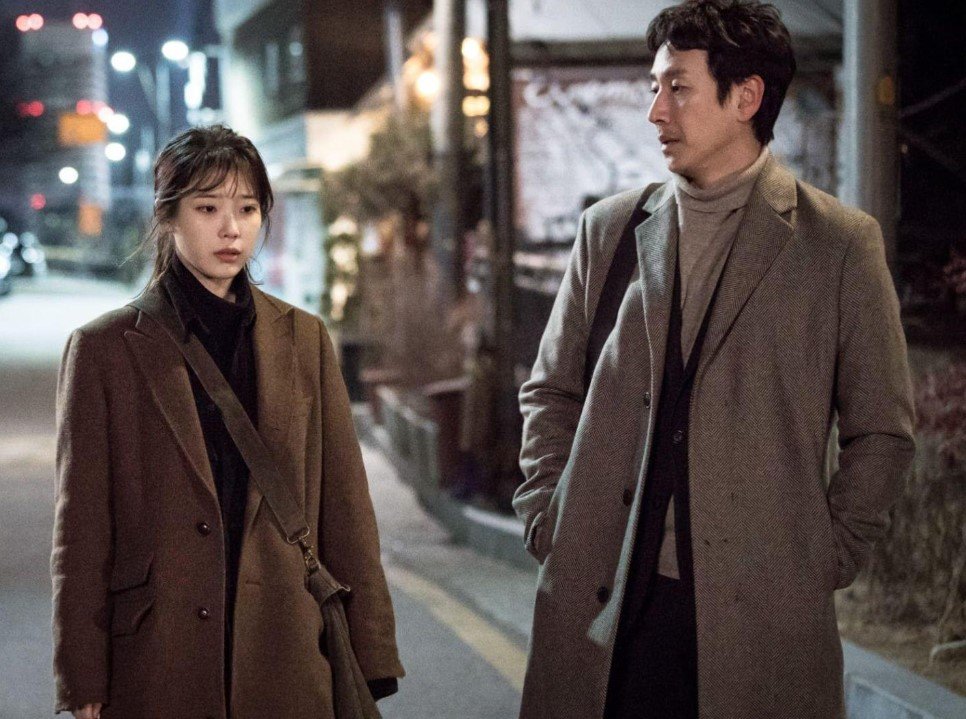
In 2018, IU delivered a breakthrough performance in the drama My Mister. Portraying Lee Ji-an, a character marked by emotional wounds and inner complexity, she demonstrated a restrained yet powerful acting style. The role earned widespread critical acclaim and marked a significant milestone in her acting career.
Also in 2018, IU released “Bbibbi” to commemorate her 10th debut anniversary. With its unique sound and strong personal message, the song quickly topped the charts. It stood as a clear artistic statement—one that captured the essence of IU’s identity after a decade in the industry.
III. A Symphony of Time — Toward Lasting Artistry
1. Deepening (2019–2021): When Expression Settles into Identity
By 2019, IU’s work began to move beyond single disciplines, expanding fluidly between music and acting. In Netflix’s anthology Persona, she portrayed multiple characters across four distinct narratives, each revealing a different emotional register. This structure allowed her not only to perform, but to explore performance itself as a form of expression.
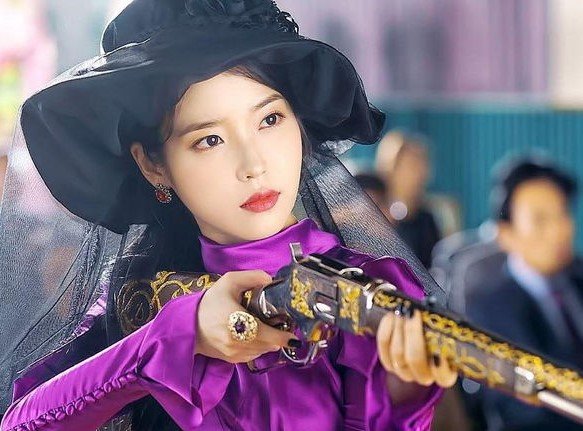
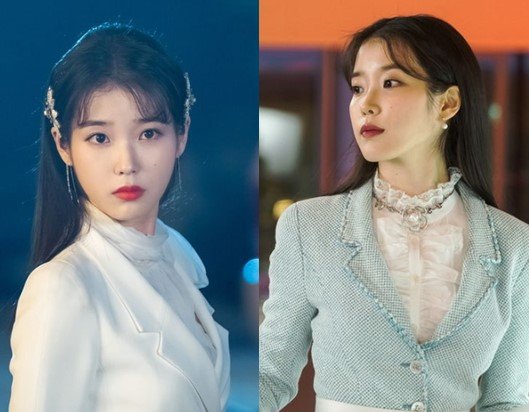
That same year, Hotel Del Luna brought her into wider mainstream recognition. As Jang Man-wol—a character both distant and emotionally layered—IU delivered a restrained yet nuanced performance, grounding a fantastical story in human complexity.
Musically, Love Poem reaffirmed her strength in emotional storytelling. The title track achieved a “perfect all-kill,” reflecting both commercial power and artistic consistency.
In 2020, “Eight,” her collaboration with Suga, extended this emotional landscape into themes of youth and memory. Its success across international charts demonstrated her ability to resonate beyond language and geography.
By 2021, Lilac arrived as a quiet conclusion to a chapter of youth. The album balanced brightness with reflection, while later releases such as “Strawberry Moon” and Pieces maintained her steady presence in the music scene.

2. Global Expansion (2022–2024): When Her Name Crossed Borders
In 2022, IU entered a new cinematic space with Broker, directed by Hirokazu Kore-eda. Her performance, subtle and grounded, received critical praise and marked a deeper engagement with film as an art form.
That same year, she became the first Korean female artist to headline a concert at Seoul Olympic Stadium—an achievement that symbolized not just scale, but enduring influence.
In 2023, she remained active through Dream and various musical collaborations, continuing to move between formats without losing momentum.
By 2024, The Winning and “Love Wins All” reaffirmed her presence, while her first world tour expanded across Asia, Europe, and North America. This marked a structural shift in her career—from national prominence to global reach.
3. Sustained Success (2025–Present): When Longevity Becomes the Standard

In 2025, IU’s performance in When Life Gives You Tangerines marked a defining moment in the later phase of her acting career. Rather than relying on overt emotional intensity, she demonstrated a quiet command of nuance—allowing silences, micro-expressions, and restrained dialogue to carry the weight of the narrative. Critics widely noted that her performance no longer bore the trace of an artist seeking validation; instead, it reflected a performer deeply aware of her own rhythm and emotional vocabulary. The awards and acclaim that followed did not feel like breakthroughs, but rather affirmations of a craft that had already reached a state of internal coherence. At this stage, IU was not expanding outward to prove versatility—she was refining inward, sharpening the edges of an identity long since established.
Her musical project A Flower Bookmark 3 further reinforced this sense of artistic maturity. Continuing the series known for reinterpreting classic Korean songs, IU approached the album less as a nostalgic exercise and more as a dialogue between past and present. Her voice, now richer and more controlled, carried an added sense of distance—transforming familiar melodies into reflective meditations rather than simple tributes. The arrangements leaned into subtlety, often stripping back excess to foreground emotional texture. In doing so, IU demonstrated an evolving relationship with time itself: no longer revisiting the past to rediscover it, but to reinterpret it through lived experience.
At the same time, her large-scale fan events began to shift in tone and structure, revealing an artist increasingly interested in reciprocity rather than performance alone. These gatherings were no longer defined solely by spectacle or carefully curated stages; instead, they became spaces of shared presence, where communication felt less hierarchical and more conversational. IU’s ability to dissolve the boundary between performer and audience—without diminishing her artistic authority—highlighted a rare balance. She maintained her position as a central figure on stage while simultaneously inviting her audience into a more equal emotional exchange, fostering a sense of collective participation.
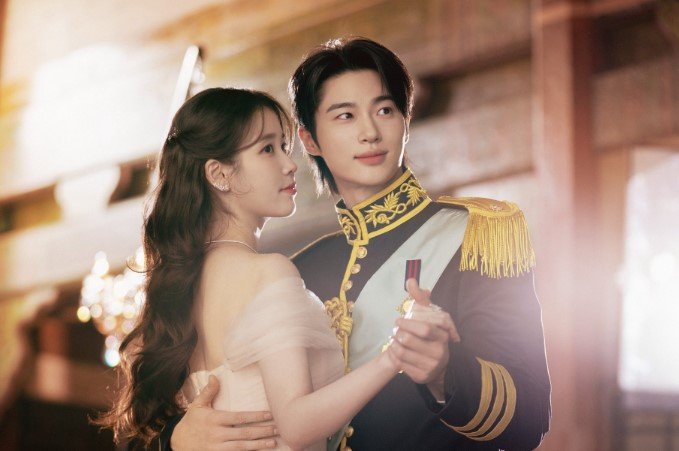
By 2026, IU is widely regarded as one of the most enduring and influential figures in Korean music and entertainment. This recognition is not anchored in any single era-defining hit or role, but in the continuity of her evolution. Across music, acting, and public engagement, she has cultivated a career that resists fragmentation—each phase building organically upon the last. What distinguishes IU is not merely longevity, but the consistency of intention that underpins her work. In an industry often driven by reinvention for its own sake, she stands as an artist who evolves without losing coherence, proving that true influence is not measured by isolated peaks, but by the sustained integrity of an artistic journey.
4. Achievements and Influence: When Numbers Tell a Story
With over a decade in the industry, IU has accumulated more than 100 awards from over 200 nominations, including multiple Daesangs.
Her recognition extends beyond music into acting, placing her among the few artists who have succeeded across both fields. Repeated inclusion in Forbes Korea’s power rankings further reflects her broader cultural impact.
5. Personal Life: Distance as a Form of Clarity
Outside the spotlight, IU has maintained a relatively private personal life. Her relationships, though public at times, have been handled with restraint.
Her continued philanthropic efforts, often carried out quietly, add another dimension to her public presence—one defined not only by visibility, but by consistency.
IV. Coda — A Symphony Still Unfolding
Looking back, IU’s career is not defined by sudden peaks, but by sustained progression. Through careful choices and quiet persistence, she has remained steady within an ever-changing industry.
Her significance lies not only in success, but in continuity.
And perhaps most importantly, the symphony that bears her name has never truly concluded—it continues, measured and enduring, in time.

