In an industry often defined by early debuts and carefully groomed trajectories, Jin Ki-joo stands apart as a rare exception. Her journey into acting did not begin under studio lights or within the walls of a performing arts school, but in lecture halls filled with algorithms, in corporate offices driven by data, and in newsrooms chasing real-world stories.
Her path, winding yet purposeful, reflects not hesitation—but evolution.
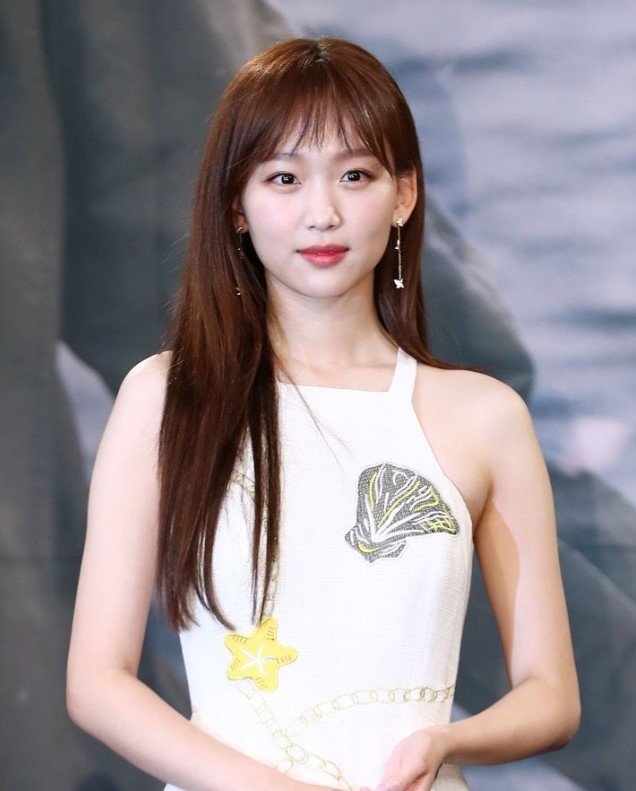
From Circuits and Code to Questions of Identity
Born in 1989 in Seoul, Jin Ki-joo pursued a degree in Computer Engineering at Chung-Ang University, a choice that signaled both intellectual rigor and a conventional roadmap toward stability. After graduation, she joined Samsung SDS as an IT consultant—an achievement many would consider a destination rather than a starting point.
For three years, she navigated the structured rhythms of corporate life. Yet beneath the surface of spreadsheets and systems, there was a growing dissonance—an unarticulated sense that her life, though secure, was not yet aligned with her inner voice.
Instead of suppressing that instinct, she listened.
A Second Beginning: Journalism and the Search for Voice
Leaving behind a prestigious corporate position is never an easy decision, but Jin Ki-joo chose uncertainty over predictability. She entered the world of broadcast journalism, becoming a reporter for SBS (G1).
Here, she encountered stories not as abstractions, but as lived experiences. The transition from engineering to journalism sharpened her sensitivity to human emotion, nuance, and narrative—qualities that would later define her acting.
This phase of her life was not a detour. It was preparation.
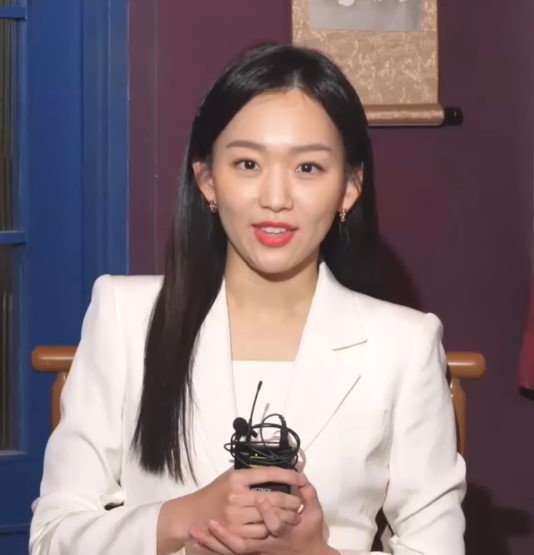
The Moment of Turning: A Door Opens in 2014
In 2014, Jin Ki-joo entered the Super Model Contest and won a prize, marking her first formal step into the entertainment industry. What began as an experiment soon transformed into a calling.
Unlike many who enter acting through long-term training systems, she arrived with a different set of tools:
a mind trained in logic, a voice shaped by journalism, and a life already lived beyond the narrow confines of celebrity culture.
A Late Debut, A Different Rhythm
Rather than chasing immediate recognition, Jin Ki-joo built her career quietly, role by role. Appearances in Moon Lovers: Scarlet Heart Ryeo, The Good Wife, and Splash Splash Love allowed her to absorb the grammar of performance.
She was learning—not just how to act, but how to listen.

2018: The Year of Emergence
If her early years were about accumulation, 2018 was about revelation.
In Misty, she delivered a compelling supporting performance that hinted at her potential. In Little Forest, she embodied a quiet, grounded character whose simplicity concealed emotional richness, earning critical acclaim.
In Come and Hug Me, Jin Ki-joo delivers what can be considered a defining performance in her career—a role that demands not only emotional depth, but also restraint in the face of overwhelming trauma. Her character exists at the intersection of past violence and present longing, carrying the psychological scars of a childhood tragedy while attempting to build a life that feels both normal and emotionally sustainable.

What stands out in her portrayal is the quiet intensity she brings to the role. Rather than externalizing pain through overt dramatization, Jin Ki-joo internalizes it, allowing trauma to surface in controlled, almost fragile ways—through hesitant speech, guarded expressions, and moments of silence that feel heavier than dialogue. This approach gives the character a sense of lived-in realism, as if the emotional wounds are not being performed, but remembered.
Her chemistry with her co-star is also grounded in this restraint. The romance does not unfold as a conventional melodrama, but as a slow, careful negotiation between two people shaped by the same tragedy. Jin Ki-joo captures this dynamic with remarkable sensitivity, balancing vulnerability with an underlying strength that prevents the character from collapsing into passivity. She is not merely a victim of circumstance, but someone actively choosing to confront her past, even when doing so risks reopening old wounds.
Crucially, the performance evolves. As the narrative progresses, subtle shifts emerge—her gaze becomes steadier, her voice more assured, her emotional responses less defensive. These changes are not abrupt, but cumulative, reflecting a gradual process of healing rather than a dramatic transformation.
In Come and Hug Me, Jin Ki-joo proves her ability to anchor a story not through spectacle, but through emotional precision. It is a performance defined by what is withheld as much as by what is expressed—measured, intimate, and deeply affecting.
From this point on, Jin Ki-joo was no longer an outsider. She was a presence.
Expanding Horizons: Versatility as Identity
The years that followed saw her exploring a wide spectrum of genres and characters.
In The Secret Life of My Secretary, Jin Ki-joo did far more than simply step into the conventions of romantic comedy—she demonstrated a finely tuned control over rhythm, tone, and duality in performance. Her character exists in a delicate balance between ordinariness and constructed perfection: at once an unassuming, slightly awkward office worker, and at other times a poised, almost idealized figure within the framework of mistaken identity.

What elevates her performance is the precision with which she navigates this dual structure. Rather than relying on exaggerated comedic beats, she builds contrast through subtle modulation—minute shifts in gaze, carefully timed pauses in dialogue, and small but deliberate changes in posture. These micro-adjustments allow her to differentiate layers of identity without ever breaking the emotional continuity of the character.
Equally significant is her restraint. Where many romantic comedies lean into overt expressiveness, Jin Ki-joo opts for a more grounded approach, allowing humor to emerge organically from situation and character rather than performance excess. This results in a portrayal that feels both charming and believable, sustaining audience engagement without sacrificing emotional authenticity. Her “precision” lies not only in execution, but in judgment—the instinct to know exactly how much is enough.
In contrast, Homemade Love Story situates Jin Ki-joo within a vastly different narrative environment—one defined by duration, gradual development, and emotional accumulation. As a long-form family drama, the series demands not immediate impact, but endurance: the ability to sustain and evolve a character across an extended emotional timeline.
Here, her performance reveals a different strength—consistency. Rather than relying on dramatic peaks, she constructs a continuous emotional arc, ensuring that each transition feels earned and organically connected to what came before. Her character undergoes multiple phases—wounded, resilient, uncertain, and eventually more self-assured—and Jin Ki-joo renders these shifts with careful calibration, avoiding abrupt or unmotivated changes.
Particularly noteworthy is her handling of understated moments. In scenes devoid of overt conflict or dramatic intensity, she maintains a quiet emotional presence that gradually deepens the audience’s understanding of the character. It is in these restrained spaces that her performance resonates most strongly, allowing emotion to accumulate rather than erupt.
If The Secret Life of My Secretary highlights her agility and comedic sensibility, Homemade Love Story underscores her stamina and control within long-form storytelling. Together, these performances reveal a unifying principle in Jin Ki-joo’s acting: a conscious, deliberate command of emotional scale—whether navigating the brisk tempo of romantic comedy or the धी, unfolding cadence of a family drama.
From 2021 onward, Jin Ki-joo’s career choices reveal a clear and deliberate shift. Rather than consolidating a single, successful screen image, she actively moves across genres and narrative frameworks, testing the elasticity and limits of her own performance. At this stage, she is no longer merely “fitting into roles,” but continuously reshaping how she is perceived as an actress.

In the film Midnight, her performance can almost be understood as an exercise in “de-verbalized” acting. Portraying a deaf woman means relinquishing one of an actor’s primary tools—dialogue—and relying instead on the body, perception, and spatial awareness. Here, Jin Ki-joo demonstrates remarkable control: her alertness to space, her instinctive reactions to danger, and the gradual accumulation of fear and survival instinct under extreme pressure are all conveyed through gaze, breath, and physical rhythm. This kind of performance, grounded almost entirely in non-verbal expression, demands not only technical precision but also a refined sense of emotional density. She succeeds in making the character intensely present—even in silence.
By contrast, From Now On, Showtime! offers an entirely different performative register. With its fantasy elements, the character is no longer bound strictly by realism, requiring a balance between credibility and stylization. In this context, Jin Ki-joo adopts a lighter, more flexible rhythm. Her performance allows for moments of controlled exaggeration and tonal play, yet remains anchored in a coherent emotional logic. This prevents the role from slipping into mere caricature, maintaining a sense of groundedness within a heightened narrative world.
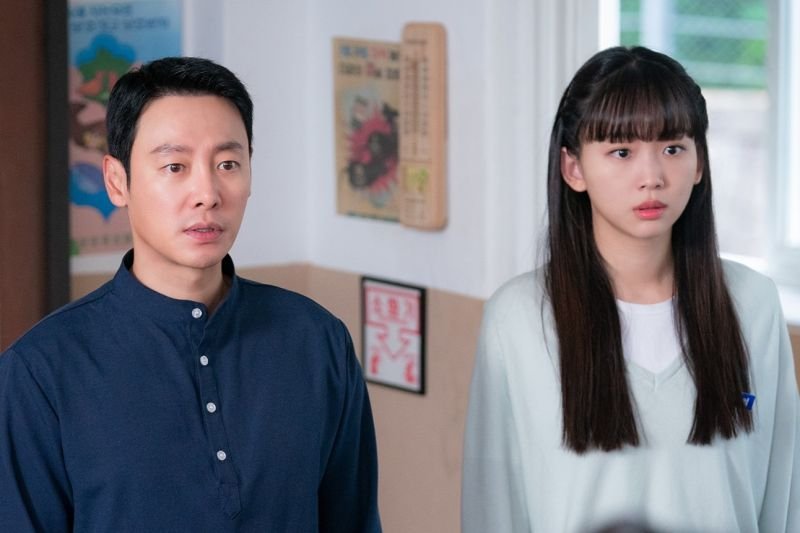
In My Perfect Stranger, the time-travel premise introduces an added layer of complexity. The character exists simultaneously in the present while being constantly pulled by the past, creating a dual temporal tension that must be sustained internally. Jin Ki-joo approaches this not through overt dramatic contrasts, but through subtle emotional calibrations. Small shifts in expression and tone signal psychological dislocation, allowing the audience to perceive temporal dissonance without relying on heavy narrative cues. This inward, restrained approach preserves emotional authenticity beneath the genre framework.
Meanwhile, Uncle Samsik places her within a dense historical and political narrative. In such a setting, characters often function not only as individuals but as reflections of broader socio-political forces. Accordingly, Jin Ki-joo’s performance becomes more measured and restrained. She minimizes overt emotional fluctuation, opting instead for a controlled, deliberate presence that allows the character to exist convincingly within a complex structural world. This demonstrates her ability to adapt to large-scale storytelling without losing nuance.
As for Undercover High School, it represents yet another extension of her range. With its stronger genre conventions and entertainment-driven tone, the challenge lies in balancing realism with stylization. Here, her performance negotiates that boundary carefully, ensuring the character remains believable while still aligning with the heightened narrative energy.
Across all these works, the unifying principle is not genre, but intent—the refusal to repeat.
Rather than reinforcing a single successful persona, Jin Ki-joo consistently disrupts audience expectations. She moves from silence to expressiveness, from realism to stylized storytelling, from intimate character studies to narratives shaped by historical weight. Each transition is not arbitrary, but a recalibration of her acting method.
For this reason, her growth does not rely on a singular “breakthrough moment,” but emerges through a series of deliberate, seemingly divergent choices. She resists easy categorization, and it is precisely within this fluidity that her range—and her long-term artistic potential—continues to expand.

The Strength of an Unconventional Journey
What defines Jin Ki-joo is not merely her filmography, but the path that shaped it.
Engineering taught her discipline.
Corporate life taught her structure.
Journalism taught her empathy.
And acting became the space where all these elements converged.
Her performances often carry a subtle realism—a sense that she understands the weight of ordinary lives, because she has lived one herself.
Conclusion: The Grace of Taking the Long Way
Jin Ki-joo is not the kind of actress who arrives in a blaze of instant recognition.
Her growth unfolds differently—quietly, gradually, almost imperceptibly at first. It is a journey shaped not by sudden leaps, but by accumulation: each role, each decision, each moment of hesitation and recalibration layering upon the last. There is a deliberateness to her path, as if every step forward is both a question and an answer in motion.
She began as a student of engineering, grounded in logic and structure. She moved into the corporate world at Samsung, where stability and predictability defined the rhythm of daily life. Then she stepped into journalism, learning to observe, to listen, to understand the texture of human experience. From there, she entered modeling—a space of visibility and form—before finally arriving at acting, where all these fragments converged.
Hers is not a straight line, but a path that bends—again and again—through uncertainty, reinvention, and quiet resolve.
And yet, it is precisely through these turns that she finds her direction.
Each deviation, each moment of departure from the expected, becomes not a detour but a necessary reorientation. What may appear, from the outside, as hesitation or delay is, in truth, a process of alignment—of moving closer, step by step, to something that feels authentic.
The story of Jin Ki-joo is therefore not merely one of career transition, but of possibility itself.
It suggests that passion does not always arrive early, fully formed and undeniable. Sometimes it emerges slowly, after other lives have already been lived. It suggests that a path need not be linear to be meaningful, nor efficient to be true.
There is, in her journey, a quiet reassurance:
That it is possible to begin again.
That uncertainty does not negate direction.
And that even a winding road, if walked with persistence, can still lead—inevitably, almost gently—toward where one is meant to be.

