Within the vast constellation of Korean film and television, Ha Ji-won has always remained a presence that resists simple definition. She carries the radiance of a star, yet continually dissolves herself within her roles, distilling emotion and lived experience into performances that are at once restrained and deeply affecting.
Over more than two decades, she has never settled into a single image, but has instead reshaped herself through each transformation, each role becoming a quiet act of redefinition. Between stardom and authenticity, between strength and vulnerability, what she presents is not a contradiction, but a delicate equilibrium—one that borders on an art form in its own right.

I. A Career Written in Persistence: From Over a Hundred Failures to the Spotlight
In an industry where the spotlight often illuminates only those who have already arrived, the journey of Ha Ji-won began in spaces rarely seen. Before she ever stepped in front of the camera, she endured more than a hundred failed auditions—knocking on doors that never opened, watching opportunities pass in silence without leaving a trace.
Within this quiet repetition of rejection and persistence, a foundation gradually took shape. She was not a star chosen by chance, nor elevated by a singular moment of fortune, but an actress forged through time—through trial, error, and endurance. While still in high school, she was discovered when an entertainment company noticed her photograph at a studio. Yet what followed this moment of chance was not ease, but a long and uncertain path.
Her decision to study Film and Television at Dankook University was more than an academic pursuit—it was a way of grounding herself amid doubt. Those early years, marked by the absence of defining roles, would later reveal themselves as the most formative period of her career.
From the very beginning, her path did not follow the logic of luck, but a quieter rhythm—measured, persistent, and deliberate. It is the journey of someone who continually defines herself, and of an actress who never stopped learning, even before the spotlight truly found her.
II. Early Years: Moving Across Genres in Search of a Voice
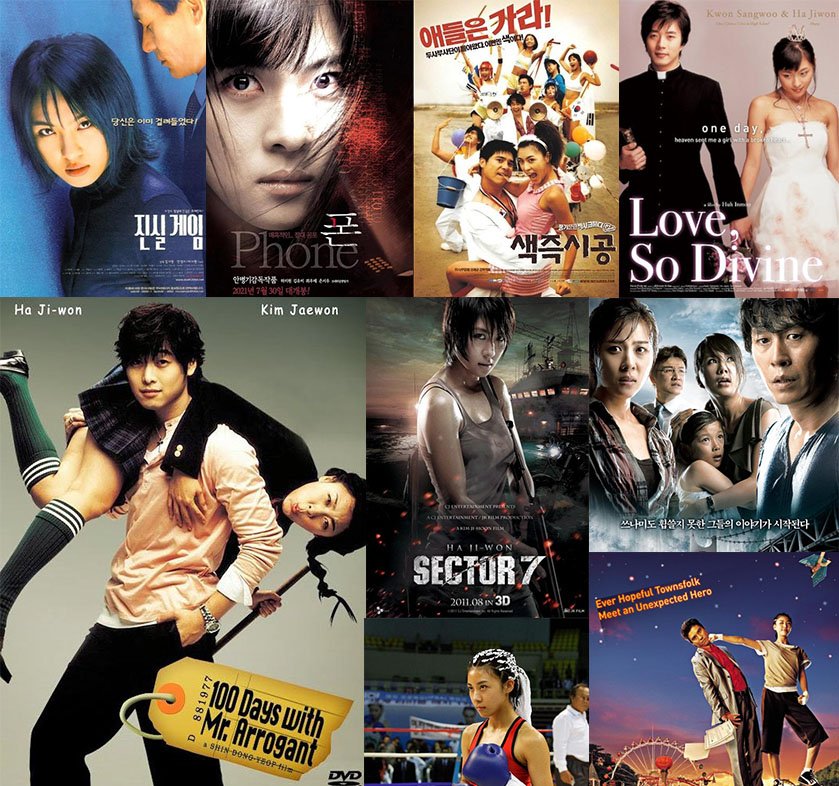
In the early years of her career, Ha Ji-won did not arrive at a defining role all at once, but moved through a prolonged period of exploration. Debuting in 1996, she spent years in supporting roles, appearing across various projects where her personal imprint remained indistinct.
During this time, she navigated different genres as if searching for her own artistic contour. From the rebellious student in School 2, to emotionally layered roles in Secret, and into film with Truth Game and Ditto, each performance functioned as a test—not only of audience reception, but of her own evolving craft. Early awards acknowledged her potential, yet they did not crystallize a clear identity.
It was not until Phone (2002) that her name entered broader public consciousness. The film’s success earned her the title of “horror queen”—a powerful recognition, yet one that also carried limitation.
For it remained a label rooted in genre rather than a fully realized artistic identity. At this stage, she stood between possibilities, not yet confined to any singular form—and it was precisely this openness that allowed for the transformations that would follow.
III. “Damo”: The Moment an Image Begins to Take Shape
If the years before had been a search, Damo became a true turning point—not only in visibility, but in the emergence of a distinct artistic identity for Ha Ji-won.

As Chae Ok, she portrayed a woman defined by discipline and action, yet shaped equally by emotional restraint and internal conflict. The character existed not only through movement and duty, but through suppressed feelings and an underlying sense of tragedy.
The drama’s success extended beyond ratings into early online engagement, marking a significant moment in audience interaction. Alongside major awards, it was the first time she left a clear and lasting impression on the public imagination.
From this role, a direction emerged: women who are strong, yet emotionally complex. Not passive figures awaiting rescue, nor invulnerable symbols of strength, but individuals suspended between resilience and vulnerability.
In that balance, an image was born—quietly, but with lasting consequence.
IV. When Strength Becomes Language: The Formation of a Signature Image
Following Damo, Ha Ji-won did not simply repeat success, but expanded it—each role becoming a variation on a shared core.
In What Happened in Bali, she entered a space of emotional extremity. As Lee Soo-jung, she was drawn into a web of desire, ambition, and choice, where emotions became layered and unstable. The drama’s near-40% ratings and major awards underscored her ability to excavate emotional tragedy with depth and precision.

With Hwang Jini, she opened another dimension—one where allure was inseparable from intellect and autonomy. Her portrayal transformed the courtesan into a figure of agency, earning her a Daesang and expanding her image into that of a woman who not only endures, but chooses.
In Secret Garden and The King 2 Hearts, this image entered modern and political spaces. Gil Ra-im embodied physical resilience and emotional nuance, while Kim Hang-ah represented discipline and rational control within a complex geopolitical context.
Across these roles, a pattern emerged: women with professions, voices, and agency. Through variation, her image evolved into a recognizable signature—a new model of female protagonists in Korean drama.
V. At the Peak: When Character Becomes Icon

After years of gradual formation, Empress Ki marked a moment where a role did not simply succeed—it redefined her position.
In Empress Ki, Ha Ji-won delivers not merely a leading performance stretched across an epic narrative, but the construction of one of the most complex and authoritative female figures in Korean television. Ki Seung-nyang emerges not as a fixed character, but as a trajectory—beginning from a position of marginalization, disguising herself as a man to survive, and gradually moving toward the center of power as empress.
What distinguishes this role is not the ascent in status itself, but the fact that each step forward is marked by choice and consequence. The character embodies strategic intelligence and control over power, yet remains caught between ambition and personal emotion. Rather than presenting her as an invulnerable figure of strength, Ha Ji-won shapes Ki Seung-nyang as a character capable of conflict and vulnerability, allowing her strength to feel grounded and human.
From an acting perspective, the role demonstrates a clear evolution over time. Early stages are defined by physicality and decisiveness, reflecting her identity as a fighter. As the narrative progresses, movement gives way to control—expressed through gaze, stillness, and presence. In its final phase, performance becomes increasingly restrained, with emotion conveyed through silence and subtle shifts rather than overt expression. This gradual transformation forms a continuous and coherent arc.
The impact of the role extends beyond awards, including the Daesang and the drama’s international success. More significantly, it marks a point of convergence in Ha Ji-won’s career—where star power and acting craft cease to operate separately. Ki Seung-nyang thus stands not only as a defining role, but as an enduring icon, embodying a rare balance between authority and emotional depth.

The drama’s international success and her Daesang win marked a convergence rarely achieved—where stardom and acting craft ceased to exist as separate identities.
At this point, she was no longer simply portraying a character; the character itself became part of her lasting image—an icon shaped by both authority and emotional depth.
VI. Beyond the Peak: Expanding Range and Deepening Craft
Rather than repeating her success, Ha Ji-won chose to expand.
In film, Haeundae established her presence within large-scale commercial cinema, while Closer to Heaven revealed a deeply internal performance, earning her Best Actress recognition. These works affirmed that she was not confined to television, but capable of commanding the cinematic space as well.
At the same time, her approach to roles became increasingly immersive. In As One, she trained like a professional athlete; in The King 2 Hearts, she mastered a North Korean dialect to embody the role from within.
These choices reveal a defining trait: a commitment not merely to performance, but to total embodiment. She emerges here not only as a star, but as an actress shaped by discipline, immersion, and an uncompromising dedication to her craft.
VII. A Stage of Maturity: When Strength Becomes Stillness
As her career matured, her performances grew quieter, yet deeper.
In Hospital Ship, she portrayed a doctor defined by rational restraint; in Chocolate, a character shaped by emotional healing; and in Pawn, a presence grounded in calm maturity. These roles no longer needed to assert strength—it was already assumed.
Her acting shifted toward minimalism, where silence, rhythm, and subtle expression carried more weight than action.
In this transition, a quiet transformation took place: from a warrior figure to an emotional storyteller—one who no longer needs to display strength, yet continues to embody it.
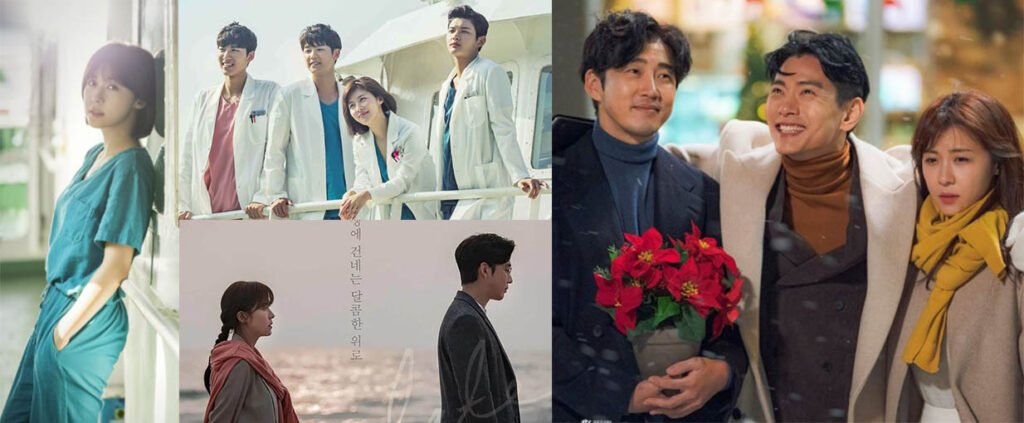
In Chocolate, Ha Ji-won presents a portrayal that stands in quiet contrast to her earlier, more forceful roles. Moon Cha-young is not defined by action or authority, but exists within a softer emotional landscape—one shaped by memory, loss, and the slow process of healing.
Marked by childhood trauma, Cha-young grows into a character who embodies both gentleness and resilience. Rather than confronting the world through force, she engages with it through empathy—expressed in her cooking, her care for others, and her connection with those standing at the threshold between life and death. Her development unfolds gradually, without dramatic turning points, mirroring the subtle rhythm of emotional recovery.
Ha Ji-won’s performance here is defined by restraint. She strips away overt expression, relying instead on gaze, breath, and silence to convey emotional depth. Even in scenes devoid of dramatic peaks, the performance retains weight, as emotion accumulates organically rather than being imposed.
Moon Cha-young is not a character who demands immediate attention, but one who reveals herself over time—her depth becoming clearer the longer one observes. This role marks a significant shift in Ha Ji-won’s acting approach: from roles driven by action and power to a more minimal, internally focused form of expression.
Here, strength is no longer measured by control over the world, but by the capacity to listen, to endure, and to heal. In that shift, both the character and the actress move closer to a more enduring and profoundly human form of presence.
VIII. An Unfixed Image: The Key to Longevity
What sustains Ha Ji-won is not a single defining role, but a continuously evolving image.
Three qualities remain constant: strength, independence, and emotional depth. Yet they are never repeated in identical form, instead reshaped across time and context.
She avoids repetition, evolves steadily, and maintains a balance between commercial appeal and artistic integrity.
It is this balance that allows her to endure—not as a fleeting phenomenon, but as a lasting presence within the industry.

IX. Ha Ji-won After 2020: From Mainstream Dominance to Selective, Mature Reinvention
Since 2020, Ha Ji-won’s career has no longer maintained the same dense pace as in earlier years, yet it continues to present notable highlights that clearly reflect a shift in her project selection and personal image.
In 2020, she returned to the big screen with Pawn (also known as Dambo), a film with strong emotional and family-oriented themes. The movie quickly surpassed one million admissions within just a week of its release, demonstrating her enduring appeal among general audiences. This project also marked a subtle transformation in her screen image, as she began to focus more on emotional depth rather than the action-driven roles she had long been associated with.
During the following period of 2021–2022, Ha Ji-won did not frequently appear in major film or television productions. Instead, she maintained public visibility through personal activities such as magazine shoots, public events, and occasional variety show appearances. This slower pace signaled a strategic shift in her career, as she gradually prioritized selectivity over quantity in choosing projects.
Another notable development is her expansion into the field of visual arts. She has engaged in painting and organized art exhibitions, revealing a new, highly personal and creative direction. This evolution has helped shape her image as a multidisciplinary artist, extending beyond the boundaries of acting.
At the same time, the international foundation she previously established continues to offer potential opportunities for global expansion, although no major international project has prominently materialized during this period.
Overall, from 2020 onward, Ha Ji-won has entered a phase of stability and transformation. Rather than pursuing a high volume of projects, she has focused on maintaining her status, broadening her range of activities, and cultivating a more mature, diverse, and sustainable image.

From 2025 to 2026, her trajectory continues along the path established after 2020: fewer projects, but a stable presence and a stronger emphasis on personal and artistic pursuits.
During this period, she has not had many television or film works that generated immediate large-scale buzz comparable to Empress Ki or Secret Garden. Instead, her activities have centered on maintaining her image and carefully selecting projects rather than maximizing on-screen frequency. This approach aligns with her position as a veteran actress who has already reached a stable point in her career.
Notably, she has continued to develop her work in visual arts, including painting and personal exhibitions. This is no longer a mere experimental endeavor but has gradually become a serious component of her artistic identity, further reinforcing her image as a multi-disciplinary artist.
In addition, she remains visible through events, endorsements, magazine features, and other public activities. Her image in this phase leans toward maturity, elegance, and symbolic presence, rather than the explosive energy typically associated with a mainstream television star in earlier years.
In terms of direction, her international connections—particularly her signing with a Hollywood agency—remain a potential gateway, though no major new global project has made a significant impact during 2025–2026.
Overall, her recent career phase can be seen as a period of stability and self-redefinition. She is no longer competing through the sheer number of works or constant visibility, but instead focuses on maintaining her standing, carefully selecting roles, and expanding into other creative fields. This trajectory is characteristic of many actresses of her generation as they transition into a more mature stage of their careers.
During 2025–2026, although Ha Ji-won does not appear as frequently as in her peak years, she still has notable activity, most prominently the television drama Climax, which aired on ENA in 2026. In this work, she portrays Chu Sang Ah, a former top actress who becomes entangled in a web of power and ambition after marrying a prosecutor. The character is psychologically complex, moving away from idealized portrayals and instead exploring the gray areas of ambition,利益, and betrayal.
Compared to her earlier strong and action-oriented roles, this performance requires layered emotional expression, high intensity, and more daring acting choices. Her appearance in Climax clearly illustrates her current direction: no longer pursuing purely mainstream projects, but shifting toward psychologically heavy, mature, and realistic narratives.
Therefore, despite her reduced frequency of appearances, she continues to leave a distinct mark as a veteran actress, selecting roles based on depth rather than visibility. This is also why her recent phase is sometimes perceived as “quiet,” when in fact it represents a deliberate transition toward a more refined and selective approach to acting.

Conclusion: Beyond a Career, A Reimagining of Women On Screen
Looking back, her journey unfolds not merely as a successful career, but as a continuous transformation—from failure, to star, to symbol. Each stage builds upon the last, forming an image of rare depth and endurance.
She does not simply portray strong women; she expands how they are understood on screen. Her characters possess agency, contradiction, and the right to define their own paths.
Her influence extends beyond performance, shaping how female figures are imagined within popular culture.
And perhaps that is why her career does not follow a straight line, but a curve—constantly shifting, continuously renewing, and always opening toward new possibilities.

