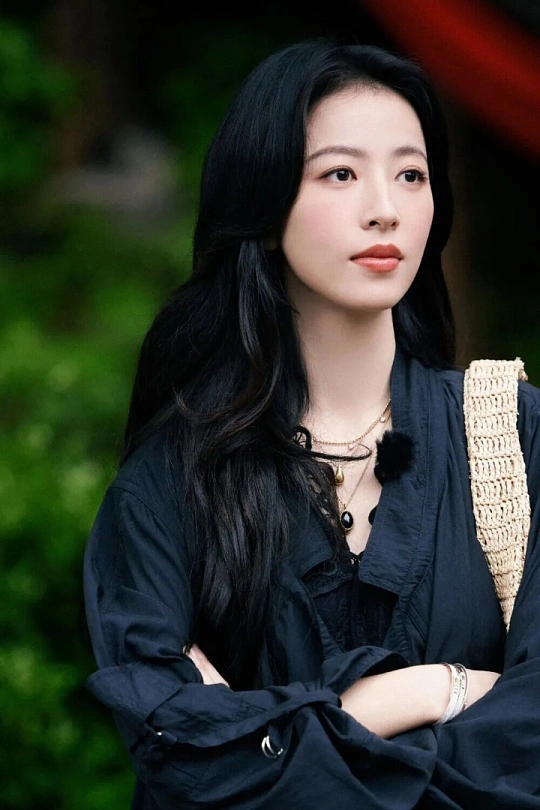
In the vast and ever-moving tide of China’s contemporary film and television industry, there are always a few names that do not arrive with noise, yet gradually settle into the audience’s memory. They do not rely on exaggerated labels, nor do they depend on manufactured buzz or traffic. Instead, they move almost silently—allowing time, roles, and experience to overlap—until their presence becomes undeniable.
Zhou Yutong is precisely such an actress.
Her path does not follow the familiar narrative of sudden fame. Rather, it resembles a slowly extending curve—one that begins in obscurity and gradually takes shape through accumulation. From nearly overlooked supporting roles to performances that audiences can now clearly remember, her growth has never been dramatic or deliberately sensational. Yet within this restraint and authenticity, she has built a texture that is difficult to replicate.
Her performances rarely strike with immediate brilliance. Instead, they linger. It is often only upon a second or third viewing that their depth begins to unfold—when emotion emerges through detail, when a character takes form through breath and silence. Only then does the audience realize: she has not “pushed,” yet she has already arrived.
This ability is not merely the result of technique. It is something shaped over time—by lived experience, by temperament, and by a quiet, persistent understanding of emotion.
And perhaps, to understand this fully, one must begin with her childhood.
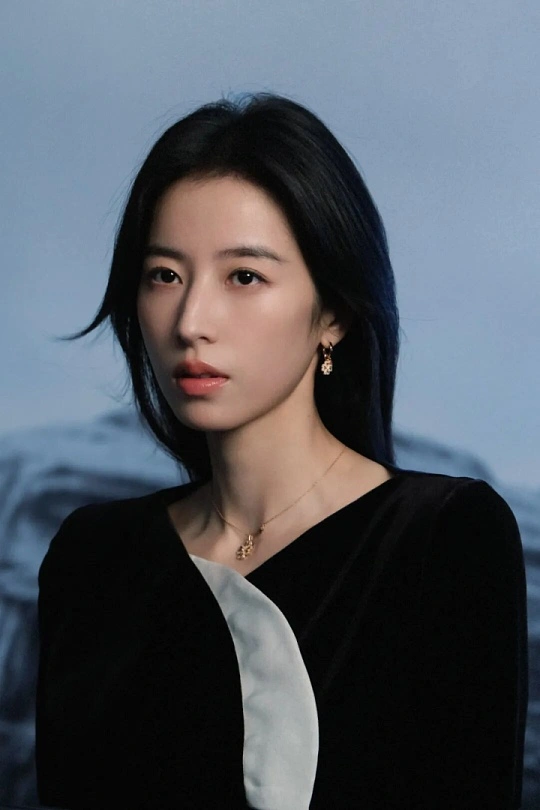
Chapter One: The Beginning of Fate — Growing in Silence
Zhou Yutong was born on September 21, 1994, in Huainan, Anhui Province—a city with a distinctly unassuming character. It is neither loud nor ostentatious, but grounded in a rhythm where industry and daily life intertwine in quiet continuity. In many ways, this environment provided the tonal foundation for her later temperament: not eager to express, yet constantly perceiving.
Yet more influential than the city itself was her family.
At the age of four, her parents separated. At that age, a child may not fully understand the concept of divorce, but can unmistakably sense a disruption—an invisible shift in the structure of the world. From that point onward, her life moved away from the narrative of a “complete” family.
She grew up with her mother, within the context of a single-parent household.
Such an upbringing often leaves a dual imprint. On one hand, it fosters independence at an earlier stage. On the other, it cultivates sensitivity—a heightened awareness of emotional nuance. Zhou Yutong clearly belongs to the latter.
She was not an outwardly expressive child. Instead, she leaned toward observation—of people, of surroundings, of emotions that remained unspoken. What begins as instinct in childhood gradually becomes something else over time: a refined capacity for perception.
And acting, at its core, is precisely that—the recreation of what has first been observed.
In fragments of interviews and scattered reflections, one can glimpse her way of understanding emotion. It is not direct or explosive, but something that accumulates slowly, then flows naturally. She does not rush to express; but when she does, there is weight to it—something grounded, something real.
This is inseparable from her upbringing.
A single-parent household does not necessarily imply absence, but it does often introduce complexity at an earlier stage. It requires a child to develop self-regulation, to construct identity without excessive reliance, to understand the world through quieter means.
There are no clear milestones in such a process. It deepens gradually, almost imperceptibly.
And when she later stepped into formal acting training, these seemingly unrelated life experiences became her most unique resources.
An Overlooked Beginning: A First Experience That Was Not Gentle
In 2013, Zhou Yutong appeared in Balala the Fairies: The Movie, officially entering the entertainment industry.
On the surface, it was an ordinary beginning—a children’s film, a newcomer stepping onto a set. But for her, the experience was far from light or encouraging.
She later admitted that she once avoided recalling that period.
In a studio filled with hundreds of people, she was simply one face among many. There was little guidance, little attention. She wore uncomfortable wigs, endured physical discomfort, and yet, lacking both experience and the confidence to speak up, chose silence.
That silence was not mere endurance. It was the silence of someone who had not yet learned how to claim her voice.
For a young actor just entering the profession, such an experience can easily distort one’s perception of the industry. She began to feel fear—not of acting itself, but of the uncertainty surrounding it, of not knowing her place within it.
She did not know what she was doing. Nor did she know whether she should continue.
From today’s perspective, this moment might seem insignificant. But within its original context, it was a crossroads. To move forward meant to continue despite doubt; to step back meant potentially leaving the profession altogether.
Zhou Yutong chose to move forward.
But this choice was not driven by grand conviction. It was quieter than that—something unspoken, yet persistent. She did not rush to define herself, nor did she allow one negative experience to negate all possibilities.
This reveals another facet of her character: she moves slowly, but she does not easily give up.

Between Academia and Reality: Relearning Acting
After this initial confusion, structured education provided her with a new pathway.
At the Shanghai Institute of Visual Arts, majoring in Performance, she encountered acting in a systematic environment for the first time. Unlike the unpredictability of a film set, the classroom offered method, discussion, feedback—and perhaps most importantly, a space where mistakes were allowed.
Here, acting was no longer about completing tasks. It became something that could be analyzed, understood, and reconstructed.
She began to realize that acting was not imitation, nor simply the expression of emotion. It was a form of re-creation grounded in understanding. An actor must enter the logic of a character—not merely replicate surface emotions.
This shift in perception was crucial.
It allowed her to move beyond passive execution and into active inquiry. Why does a character act this way? Where does emotion originate? How does one remain truthful before the camera?
These questions have no fixed answers. But through continuously asking them, she began to develop her own approach to performance.
It is worth noting that during this stage, she did not rush into the competitive market. Instead, she built her foundation at a slower pace.
At the time, such slowness may have seemed inefficient. But in retrospect, it provided the stability that would later define her career.
From Personality to Performance: A Consistent Inner Logic
If one traces her acting style back to its origins, a clear pattern emerges: she is not drawn to theatricality, but to naturalism.
This inclination mirrors her personality.
In life, she does not seek to display herself. She is more attentive to internal experience than external evaluation. She enjoys dance, yoga, and swimming—activities that emphasize inward awareness rather than outward projection.
She also writes poetry.
Occasionally, fragments of her writing appear on social media. They are simple, unadorned, yet carry emotional residue. They do not feel constructed, but rather like something that has quietly overflowed.
This mode of expression parallels her acting.
She does not rely on exaggeration. Instead, she allows emotion to unfold gradually through detail. This approach asks more of the audience—it requires patience, empathy, and lived experience.
But once understood, it creates a resonance that is far more enduring.
Chapter Two: Before Being Seen — Accumulating Weight at the Margins
If 2013 marked her entry, then 2015 became the moment she was first “seen.”
Yet even this visibility did not arrive as a sudden spotlight. It emerged gradually, through layers of roles.
She did not begin with leading roles. Instead, she started from characters with limited screen time—roles constrained in space, yet demanding in presence.
And it was precisely within these constraints that she began to shape her identity as an actress.
If the year 2015 marked the moment Zhou Yutong began to be “seen,” then what followed was not an immediate ascent, but a careful, layered emergence. Visibility did not arrive all at once. Instead, it formed through a sequence of roles—each limited in scale, yet meaningful in accumulation.
She did not step directly into the center. She remained, for a time, at the margins. But it was precisely within these margins that she learned how to exist within a frame—how to create presence even when narrative space was minimal.
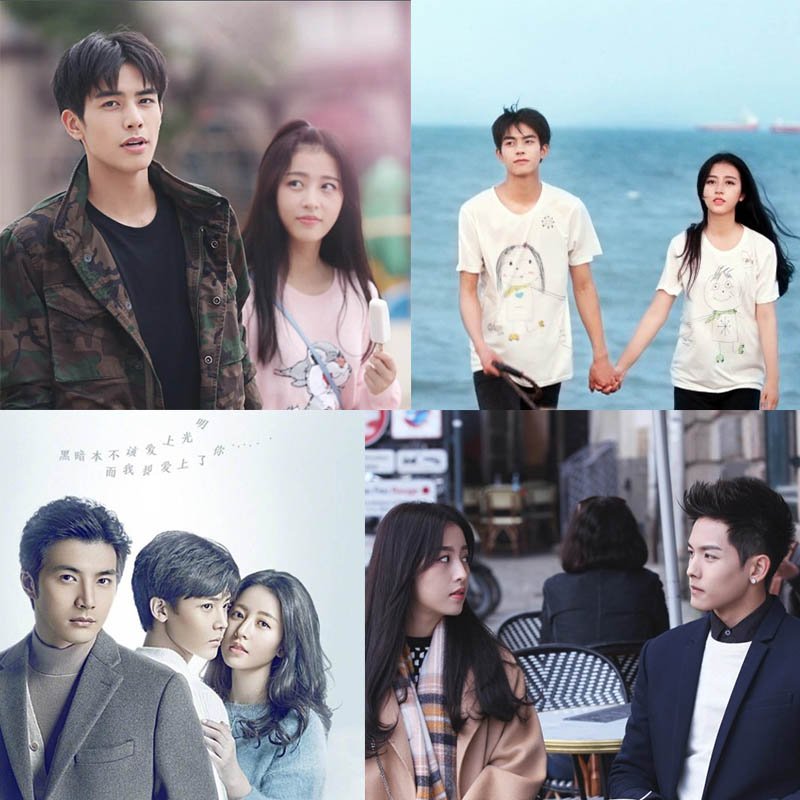
The First Outline: Being Remembered in Limited Space
On January 8, 2015, the film Miss Granny was released.
It was a commercially oriented production, starring Yang Zishan and Luhan, with a light tone and brisk rhythm. Within this structure, Zhou Yutong’s role as Xiao Mei—the lead vocalist of a rock band—was far from central.
Yet it was here that something began to take shape.
Xiao Mei is not an overtly expressive character. She carries a sense of distance—neither warm nor eager to please. Her detachment is not arrogance, but a kind of boundary, a quiet refusal to be easily accessed.
Zhou Yutong did not exaggerate this quality. She did not amplify the character’s “coolness” through stylization. Instead, she chose a restrained approach—reducing emotional fluctuation, limiting facial expression, allowing stillness to define presence.
And through that restraint, the character became distinct.
Despite limited screen time, Xiao Mei left behind a clear impression. Audiences began to refer to her as the “cool senior,” a label that, while simple, signaled something important: she had been noticed.
More significantly, this role allowed Zhou Yutong to realize a fundamental truth—
An actor’s impact does not depend on the length of a role, but on the authenticity of its presence.
Historical Context: Stability Within Structure
In February of the same year, Love Through a Millennium aired.
Here, she played Ying Yue, a female guard operating within a historical narrative framework. Compared to Xiao Mei’s modern urban sensibility, Ying Yue belonged to an entirely different expressive system—one shaped by discipline, loyalty, and emotional restraint.
Period dramas often impose formal constraints. Dialogue, gesture, and emotional expression tend toward stylization, and inexperienced actors can easily become confined within these conventions.
Zhou Yutong did not attempt to break these structures. Instead, she worked within them—seeking subtlety in detail rather than disruption.
Ying Yue is, by nature, an inward character. Her loyalty is expressed through action rather than speech; her emotions move quietly beneath the surface. Zhou Yutong responded by minimizing performative traces—allowing pauses, glances, and controlled movement to carry meaning.
At the time, this approach may not have drawn immediate attention. But it established something foundational:
She was developing a habit of building characters from within, rather than decorating them from the outside.
Youth and Emotion: Experimenting with Inner Rhythm
Later that year, she took on a leading role in the web drama Seventeen Blue, portraying A Jiu.
This marked a shift into youth-centered storytelling—a genre often driven by heightened emotional expression. Themes of growth, pressure, and identity typically manifest through visible conflict and overt feeling.
Yet once again, Zhou Yutong resisted excess.
Rather than pushing emotion to the surface, she allowed it to accumulate gradually. A Jiu’s struggles were not presented as isolated moments of intensity, but as a continuous undercurrent—something persistent, quietly shaping behavior and perception.
The audience was not moved by dramatic peaks, but by a sustained sense of realism.
This approach revealed an emerging direction in her acting:
She was not interested in manufacturing emotion. She was interested in allowing it to occur.
In the short term, this method may appear less striking. But over time, it proves far more durable.
An Industry in Transition: The Difficulty of Remaining Undefined
Around 2015, the Chinese entertainment industry was undergoing rapid transformation.
“Traffic” and visibility were becoming dominant forces. New actors were often required to establish clear, marketable identities quickly—labels that could be easily recognized and disseminated.
Within this environment, Zhou Yutong occupied an ambiguous position.
She did not fit neatly into conventional categories. She was neither the typical “sweet” heroine nor fully aligned with the “cold and glamorous” archetype. Her performances were understated, her presence unforced.
For a time, this lack of definition made her harder to market.
But ambiguity also carries a different kind of potential. It allows space—for experimentation, for movement across genres, for the gradual formation of identity without premature constraint.
Zhou Yutong chose this path.
Rather than conforming to a fixed image, she continued to explore.
Chapter Three: From Exploration to Recognition (2016–2017)
If 2015 was the year of initial visibility, then 2016 to 2017 became a period of increasing recognizability.
The defining characteristic of this phase was not certainty, but adjustment. She was testing boundaries, refining methods, and slowly clarifying her artistic direction.
Touching Reality: Between Exposure and Depth
In 2016, she appeared in the campus web drama Addicted.
Though not a central role, the series’ popularity brought her increased exposure. More importantly, it placed her within a broader audience field—an essential step in transitioning from anonymity to recognition.
That same year, she took on a more complex role in the film One Night Only, portraying a marginalized woman named A Sue.
Characters of this type are often reduced to symbols—defined by hardship, positioned as emotional catalysts within someone else’s story.
Zhou Yutong approached the role differently.
Rather than emphasizing tragedy, she focused on humanity—on kindness, hesitation, courage, and the faint persistence of hope. She resisted the temptation to dramatize suffering, choosing instead to reveal the character as an individual rather than a type.
This marked an important development.
She was beginning to demonstrate the ability to find authenticity within predefined narrative structures.
Wider Reach: Establishing Audience Recognition
In 2017, Searching for the Past aired.
Her role as Ye Yin—a character with a bright and optimistic temperament set within a fantasy framework—presented a contrast to her earlier restrained portrayals.
Yet even within this lighter tone, she maintained emotional grounding. She did not reduce the character to surface liveliness. Instead, she ensured that even within a fantastical narrative, the emotional logic remained intact.
The series surpassed 500 million views within a month, marking her first large-scale audience reach.
For the first time, she was widely recognized.
Time and Distance: Expanding Emotional Scale
That same year, she starred alongside Song Weilong in Long For You, playing Xue Ji—a character that transcends ordinary human temporality.
Such roles present a unique challenge: balancing abstraction with relatability. Too much emphasis on the “concept,” and the character becomes distant; too much realism, and the narrative loses its distinctive tone.
Zhou Yutong’s solution was to slow everything down.
She reduced overt dramatic tension, allowing emotion to unfold through rhythm and gaze. Xue Ji’s feelings were not immediate—they felt accumulated, shaped by time itself.
The result was a character both distant and gentle, carrying a quiet emotional weight.
A Defining Moment: When a Role Truly “Stands”
If previous works contributed to accumulation, then Cambrian Period marked a moment of true establishment.
Her portrayal of Tang Yin—a character defined by contradiction and emotional complexity—required a careful balance between rationality and impulse.
Handled poorly, such a character could easily appear inconsistent.
Zhou Yutong avoided this by focusing on transitions.
She did not emphasize conflict through intensity, but through gradual shifts. When the character was rational, she tightened her expression; when emotion surfaced, she allowed it to expand progressively rather than erupt suddenly.
This “gradient” approach made the character feel real.
The series achieved both high viewership and strong reception, and Zhou Yutong gained widespread recognition.
From this point onward, she was no longer simply a promising newcomer.
She became an actress capable of carrying complexity.
From Ambiguity to Clarity
Between 2015 and 2017, Zhou Yutong’s trajectory moved from indistinct presence to recognizable identity.
She did not rely on a single defining role. Instead, she constructed herself gradually—across genres, across characters, across emotional registers.
Her strengths became increasingly evident:
She does not rely on emotional outbursts.
She excels in detail and rhythm.
She prioritizes character logic over external effect.
At the time, these qualities did not align with the fastest route to fame.
But they laid the foundation for something more enduring.
If the years prior had been defined by exploration and gradual recognition, then around 2018, Zhou Yutong entered a different rhythm—one less concerned with proving possibility, and more focused on understanding construction. It was no longer a question of what she could play, but how a character should be built from within.
This shift did not arrive with obvious intensity. There was no single moment of rupture, no dramatic turning point. Instead, it unfolded quietly, almost imperceptibly, as if something within her method had realigned.
From Representation to Inquiry: Rethinking the Character
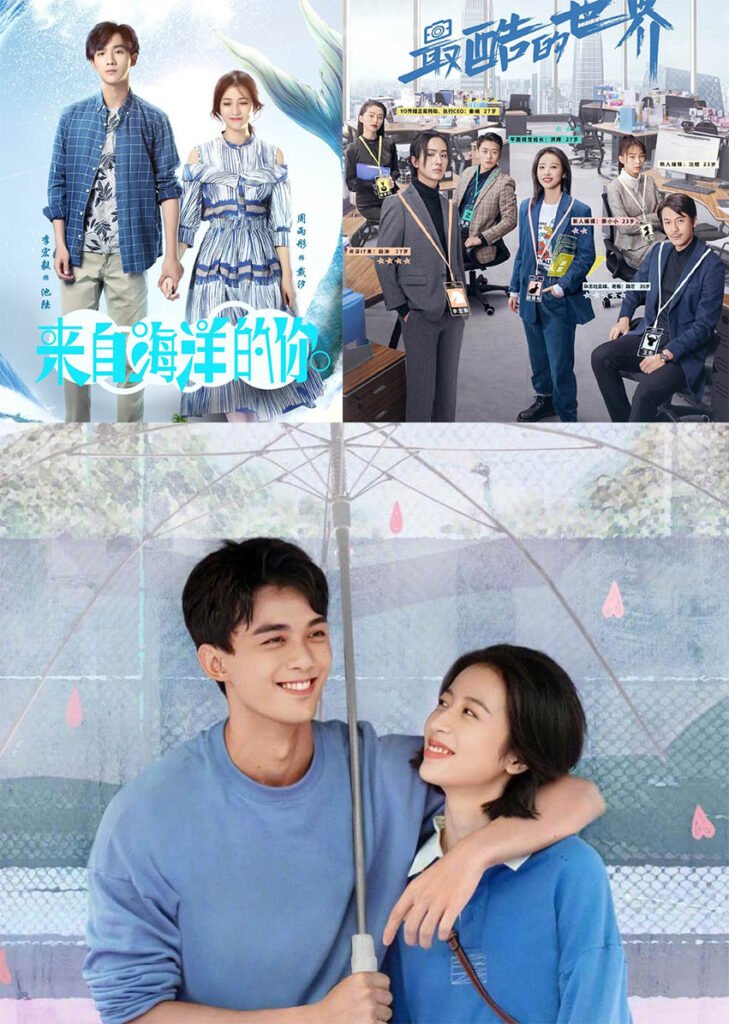
My Love from the Ocean emerged within this context.
The character Dai Xi, shaped by a fairy-tale framework—a mermaid, a figure of innocence and purity—might easily have been approached through surface qualities alone. The role itself already carried predefined attributes: gentleness, naivety, emotional clarity.
Yet Zhou Yutong did not stop at resemblance.
Under her interpretation, Dai Xi’s innocence was not static. It changed. It responded. It was gradually reshaped through contact with the world. From initial unfamiliarity, to the slow recognition of human emotion, to the hesitation and uncertainty that accompany loss—these transitions were not exaggerated, but quietly layered.
The audience might not be able to identify the precise moments of transformation, but they could feel the movement.
The character was not preserved within her original design; she was allowed to grow.
This reveals a deeper principle in Zhou Yutong’s acting at this stage:
She was no longer asking how to “appear” as a character, but why the character becomes who they are.
Zhao Jian: The Emergence of Clarity
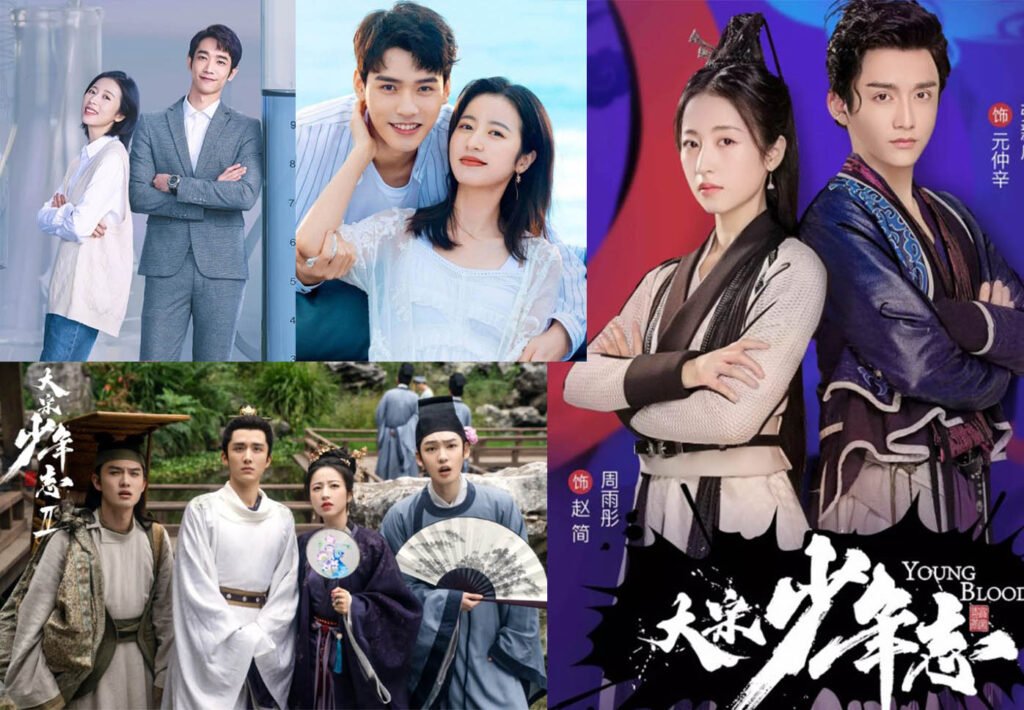
In 2019, Young Blood aired.
The character Zhao Jian marked a moment of clarity—not only for audiences, but for Zhou Yutong herself.
Zhao Jian does not conform to traditional expectations of a historical female lead. She is not driven primarily by romance, nor does she rely on softness to create emotional connection. Instead, she stands as a figure of composure—rational, observant, and consistently aware of her own position within a complex world.
Yet what makes the performance remarkable is not the strength of the character, but the way that strength is expressed.
Zhou Yutong does not amplify it.
She does not raise her voice, nor does she intensify her emotional display. Instead, Zhao Jian’s strength emerges through stillness—through pauses in speech, through the steadiness of her gaze, through decisions made without hesitation.
This creates a different kind of authority.
It is not forceful, but stable.
And because it is rooted in internal logic rather than external display, it becomes believable.
Over time, Zhao Jian transcended the narrative itself. She became a presence—something audiences continued to reference, discuss, and remember beyond the plot.
This marks a subtle but important shift:
The connection between actor and character had deepened.
Zhou Yutong was no longer simply performing roles. She was allowing them to exist.
Breaking the Archetype: Control and Fracture
In 2020, Begin Again introduced another transformation.
Lu Fangning, a CEO accustomed to control, represents a familiar archetype within contemporary drama: decisive, composed, emotionally distant.
Such characters are often defined by consistency—by the maintenance of power across all aspects of life.
Zhou Yutong chose otherwise.
She allowed instability to enter the character.
While Lu Fangning remains controlled in her professional environment, her emotional life reveals hesitation, misjudgment, even awkwardness. This imbalance does not weaken the character; it humanizes her.
Because real individuals do not sustain uniformity across all contexts.
Zhou Yutong does not attempt to resolve this contradiction. She lets it remain.
This willingness to allow fracture—to let a character exist without perfect coherence—becomes one of her most important artistic developments.
It signals a movement away from control toward openness.
The Turning Point: Disappearing into Reality
The most decisive shift arrives in 2021, with Remembrance of Things Past.
Qiao Xichen is not a dramatic character. She does not carry an extraordinary narrative. She is, instead, an ordinary individual navigating urban life—work, relationships, pressure, and the search for meaning.
And precisely because of this, the role becomes extraordinarily difficult.
The portrayal of “ordinary life” demands a different kind of precision. Audiences recognize it instantly; any artificiality becomes immediately visible.
Zhou Yutong responds by reducing her presence.
She lowers emotional expression, softens delivery, and allows many potentially “highlighted” moments to pass without emphasis. Qiao Xichen’s emotions are not displayed—they are glimpsed.
She hesitates before speaking. She pauses in thought. Sometimes, she says nothing at all.
And within these silences, the character becomes real.
Zhou Yutong does not attempt to move the audience. Instead, she allows recognition to emerge naturally.
Emotion gains weight precisely because it is not forced.
The suppressed feelings that remain unspoken eventually surface in quieter moments—mirroring the rhythms of real life, where collapse rarely occurs at the peak of conflict, but in the stillness that follows.
Through this performance, Qiao Xichen becomes more than a character.
She becomes a vessel—something through which audiences recognize fragments of their own lives.
This marks a transformation not only in Zhou Yutong’s career, but in how she is perceived.
She is no longer simply an actress who performs well.
She is an actress who understands.
And once this trust is established, it endures.
Consistency Across Difference
In the same year, Zhou Yutong appeared in multiple projects: Medical Examiner Dr. Qin: Silent Evidence, The Coolest World, and When Love Meets Science.
These works differ in genre and tone—some more rational, some closer to everyday life, others lighter in emotional texture.
Yet across all of them, she maintains a consistent internal approach.
She does not rush to foreground herself, nor does she allow characters to lose grounding. She moves between types without losing direction.
This ability—to remain stable within variation—defines her work during this period.
A Rhythm of Becoming
By the end of 2021, something essential had shifted.
Zhou Yutong was no longer searching for validation.
She had accumulated representative roles. She had developed a method. More importantly, she had earned trust—from audiences, from the industry, and from herself.
But rather than accelerating, she maintained her pace.
Her growth did not become faster. It became steadier.
She no longer relied on a single role to define her. Instead, she constructed a rhythm—moving from one character to another, each adding depth without erasing what came before.
This rhythm is neither rapid nor slow.
But it is continuous.
After Remembrance of Things Past, something subtle yet decisive had already taken place. Zhou Yutong no longer needed to prove that she could act. In a sense, she had completed a quiet confirmation—not through labels or external declarations, but through audience intuition.
People began to believe that she could make a character feel alive.
This kind of trust is not easily formed, nor is it quickly lost. It accumulates slowly, and once established, it becomes the most stable foundation an actor can have.
And so, the question that followed was no longer how to be seen, but how to continue.
Between Roles: The Space of Breathing
Many actors, upon reaching such a point, choose acceleration—taking on more projects, increasing exposure, consolidating popularity.
Zhou Yutong appeared to choose otherwise.
She did not rush to fill time. Instead, she left space between roles.
This space was not emptiness, but something closer to breath. It allowed her to step out of one character before entering another—to prevent overlap, to preserve clarity, to ensure that each role remained distinct.
This rhythm reflects a deeper discipline.
She does not treat acting as continuous output, but as a process that requires intervals—moments of withdrawal as much as moments of expression.
Reality Without Performance: Presence in Variety
In 2022, she appeared in the variety program First Job: Forensic Season.
Here, she was no longer performing a role. The camera captured her as she was—observing, listening, responding.
Interestingly, her presence in this context did not differ dramatically from her acting style.
She did not rush to speak, nor did she seek the center of attention. She remained attentive, offering responses at appropriate moments, maintaining a sense of distance without disengagement.
This continuity suggests that her screen persona is not constructed, but aligned with her actual temperament.
She retains boundaries.
She participates, but does not overextend. She allows herself to be seen, but does not depend on being seen.
In an industry that often rewards constant visibility, such restraint is rare.
Roles Without Hierarchy: The Value of Connection
Also in 2022, she appeared in the film I Really Dislike Long-Distance Relationships, in a special role.
It was not a character that required her to carry the entire narrative. Yet she approached it with the same steadiness.
For Zhou Yutong, the scale of a role seems less important than the connection it establishes.
Whether central or peripheral, she maintains a consistent level of attention—ensuring that each character exists fully within its given space.
This reflects a shift in perspective.
She is no longer measuring roles by prominence, but by integrity.
A Softer Control: Letting Characters Breathe
In 2023, Nothing But You arrived as a quiet yet meaningful continuation in Zhou Yutong’s trajectory—less a departure from what came before, and more a deepening of it. Where earlier roles had already revealed her sensitivity to emotional nuance, this performance seemed to operate with an even greater sense of ease, as if the process itself had become more internalized, more instinctive.
Liang You’an stands at a different point in life compared to Qiao Xichen. She is no longer defined by the uncertainties of early adulthood, yet neither has she reached a state of resolution. Instead, she exists within a more layered reality—one shaped by professional responsibility, emotional entanglement, and an increasing awareness of self. Her challenges are less about discovering direction, and more about sustaining balance.
This shift in life stage requires a different kind of performance. The emotions are no longer sharp or immediate; they are diffused, often intertwined, sometimes contradictory. Decisions are not made in moments of clarity, but negotiated over time.
Zhou Yutong responds to this complexity with a notable change in rhythm. Her performance appears more relaxed—less visibly structured, less concerned with precision in the conventional sense. But this relaxation is not a loosening of craft. On the contrary, it reflects a deeper level of control, one that no longer needs to announce itself.
She does not actively “shape” every gesture or line. Instead, she allows the character to breathe. Liang You’an pauses mid-thought, circles back on her own words, hesitates in moments that might otherwise demand certainty. There are instances where she seems to contradict herself—not as inconsistency, but as an honest reflection of how people often exist, caught between competing impulses.
This openness introduces a different kind of realism. The character does not move in a straight line; she shifts, adjusts, reconsiders. Her emotional state is not fixed, but fluid—changing subtly across scenes, sometimes without clear resolution.
Liang You’an is not a “solved” character. She does not arrive at a definitive answer, nor does she neatly resolve her internal conflicts. She remains in motion—still searching, still negotiating her place within her own life.
And Zhou Yutong does not attempt to resolve that search on her behalf.
She resists the impulse to guide the audience toward a conclusion, or to frame the character within a clear arc of transformation. Instead, she allows the process to unfold organically, trusting that meaning will emerge not from resolution, but from continuity.
This marks a significant evolution in her approach to acting.
She is no longer working toward an endpoint—no longer shaping characters into completed forms that can be easily understood or summarized.
She is allowing them to remain open.
And in that openness, there is a quiet honesty—one that reflects not only the character’s journey, but the nature of life itself.
Redefining Limitation: Strength Within Imperfection
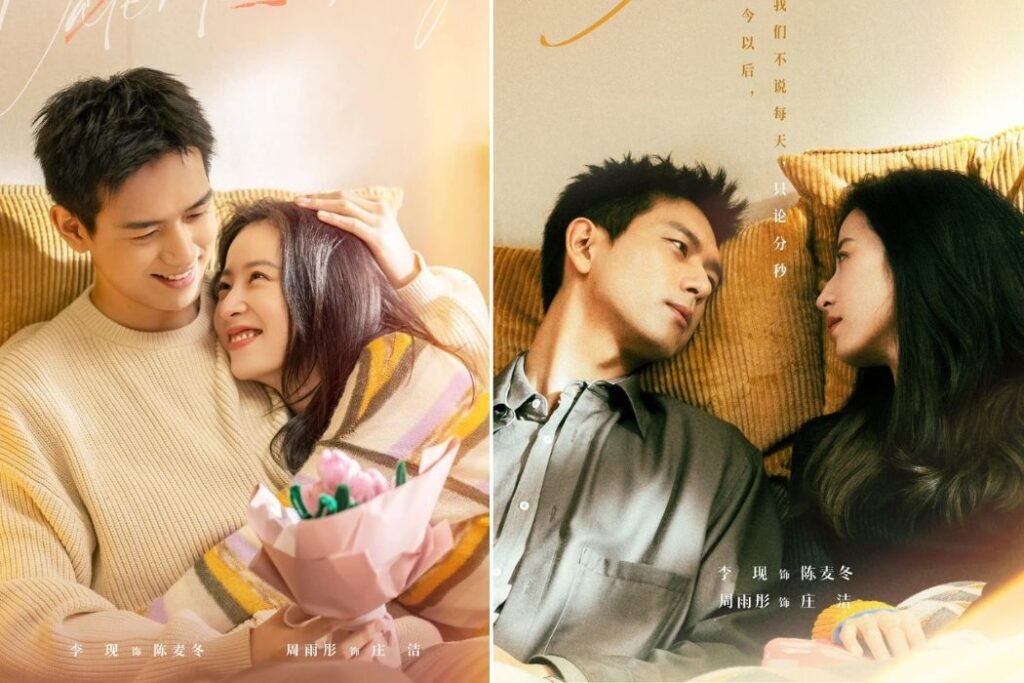
In 2024, Will Love in Spring marked yet another subtle transformation in Zhou Yutong’s evolving body of work—one that did not rely on visible reinvention, but on a deeper recalibration of perspective. The shift was not in scale, but in sensitivity: a more refined understanding of how to approach a character whose identity might easily be overshadowed by a single defining condition.
Zhuang Jie is a woman living with a physical disability. In many narrative frameworks, such a characteristic risks becoming the center of gravity—something that absorbs the entirety of the character’s existence. It can be exaggerated for emotional effect, framed as tragedy to evoke sympathy, or softened into inspiration to create a sense of uplift. In each case, the individual is reduced, consciously or not, to a narrative function.
Zhou Yutong resists all of these tendencies.
Her performance begins from a different premise—not “how to portray disability,” but how to portray a person who happens to live with it. This distinction, though subtle, changes everything. It shifts the focus away from representation as spectacle and toward existence as continuity.
She does not deny the presence of limitation. The physical reality is there—in movement, in posture, in the small adjustments required by daily life. But these elements are never isolated or amplified beyond proportion. They are integrated into the character’s rhythm, becoming part of her lived experience rather than its defining headline.
More importantly, Zhou Yutong allows Zhuang Jie to retain the full spectrum of human behavior. She laughs—not as a symbol of resilience, but because something is genuinely amusing. She hesitates—not because of her condition, but because uncertainty is part of being human. She struggles, but her struggles are not singular; they are layered, intersecting with work, relationships, and self-perception. She hopes—not in defiance of limitation, but alongside it.
This coexistence is crucial.
The disability exists, but it does not consume. It shapes certain aspects of her life, yet it does not dictate her identity in totality. The character is not framed as someone “overcoming” her condition, nor as someone defined by it. Instead, she simply continues—moving through the ordinary textures of living.
What makes this portrayal particularly striking is its refusal to guide the audience’s emotional response. Zhou Yutong does not ask for pity, nor does she insist on admiration. She leaves space—allowing viewers to encounter the character without predetermined conclusions. In doing so, she restores a sense of equality between the character and the audience.
Zhuang Jie, as a result, emerges not as a narrative device, but as a person with agency. She makes choices. She carries contradictions. She exists beyond the boundaries of any single interpretation.
And it is precisely this refusal to reduce—to simplify, to categorize, to overdefine—that gives the performance its quiet strength. It does not announce itself. It does not seek to impress.
Yet it remains—steady, grounded, and deeply human.
Visibility Without Performance: Life Beyond Roles
During this period, Zhou Yutong also appeared more frequently in public contexts—variety shows, events, cultural programs.
Yet even here, her approach remains consistent.
She does not construct an exaggerated persona. She does not actively generate spectacle. Instead, she reveals fragments of her life—writing poetry, listening to jazz, practicing dance and yoga.
These fragments do not form a curated image. They remain partial, open-ended.
And in this openness, they echo her acting.
She does not seek to define herself completely.
She leaves space—for interpretation, for change, for growth.
Multiplicity: Holding More Than One Self
In 2025, 180 Days Restart Plan further demonstrated her evolving craft.
Taking on dual roles, she portrayed two distinct identities within a single narrative—characters separated not only by personality, but by time itself.
Rather than relying on overt differentiation, she worked through subtle variation.
Speech patterns shifted. Emotional timing changed. Even silence carried different weight.
These distinctions were not immediately obvious, yet they accumulated—allowing the audience to perceive two fully independent individuals.
This ability reflects a culmination of her development.
She is no longer simply entering roles.
She is capable of sustaining multiple internal logics simultaneously.
A Stable Trajectory: Growth Without Disruption
Alongside these works, Zhou Yutong continued to receive recognition—awards, nominations, industry acknowledgment.
Yet her trajectory remains distinct.
She has not experienced the dramatic peaks and falls that often accompany rapid fame. Instead, her career forms a steady line—gradual, continuous, resilient.
In an environment increasingly defined by speed and visibility, this steadiness stands out.
It is not the most spectacular path.
But it is one of the most enduring.
2026 and Beyond: Becoming a Constant Presence
By 2026, Zhou Yutong’s presence within the industry has become almost natural—so integrated into the rhythm of contemporary Chinese screen culture that it no longer feels like an arrival, but a continuation. She is not introduced; she is expected. Not anticipated with noise, but recognized with quiet certainty. Her name appears, and with it comes a particular kind of trust—one that does not depend on promotion or anticipation, but on the consistency of what she brings.
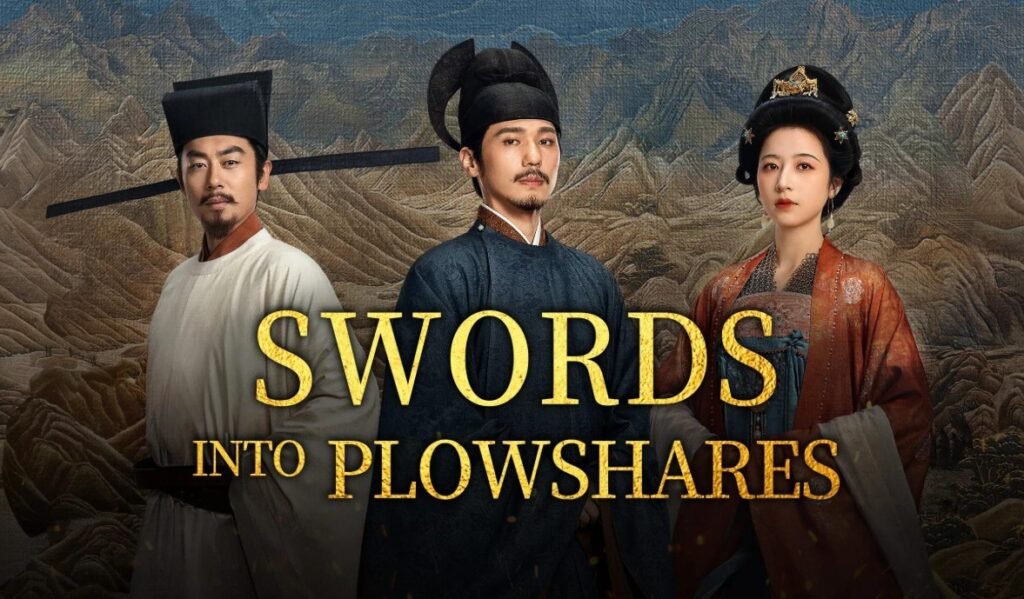
From television dramas such as Tai Ping Year to films like Ma Teng, Don’t Go, and through her steady presence at stage performances, cultural events, and public gatherings, her career unfolds in a way that feels neither rushed nor calculated. She moves from one project to another with a sense of internal pacing, as though guided less by external demand and more by an awareness of timing—when to step forward, when to pause, when to let a role settle before taking on the next.
There is no visible urgency in her trajectory. She does not accumulate works for the sake of visibility, nor does she rely on constant exposure to maintain relevance. Instead, each appearance—whether on screen or in public—feels measured, almost deliberate in its restraint. Even her participation in cultural events carries the same tone as her acting: attentive, composed, and quietly present rather than performative.
This steadiness creates a rare kind of continuity. While many careers fluctuate with cycles of attention, Zhou Yutong’s path appears less affected by such external shifts. She is not absent, yet never overwhelming; not distant, yet never overexposed. She exists in a balance that allows her to remain visible without becoming consumed by visibility itself.
What emerges from this is not just a professional position, but a state of being within the industry. She no longer stands at its edges, nor does she need to push toward its center. The question of “belonging” has already been resolved—not through declaration, but through time.
She no longer needs to assert her place.
She occupies it.
An Identity Without Fixation
Looking back across her entire trajectory, one striking fact emerges:
Zhou Yutong has never rushed to define herself.
She has not confined herself to a single type of role, nor has she maintained a fixed public image. Instead, she moves between characters, gradually refining her understanding of both performance and self.
Her acting remains open.
She does not seek final answers, nor does she aim for a definitive endpoint. What matters to her is whether, within each role, she can find something real.
And perhaps this is the most enduring connection she shares with her audience.
They do not remember her because of one character alone.
They remember her because, across time, her presence has become familiar—quiet, unforced, yet consistently there.