In the Chinese drama The Lead (主角), Liu Hongbing, played by Dou Xiao, is one of the most important emotional figures in Yi Qin’e’s life. More than just a romantic interest, he represents desire, obsession, vanity, and the emotional instability that surrounds fame and admiration. Through his relationship with Yi Qin’e, the drama explores not only love and betrayal, but also the loneliness and vulnerability hidden beneath the brilliance of a celebrated performer.
As one of the central supporting characters in the series, Liu Hongbing’s role carries multiple dramatic functions. He is both a passionate admirer and, eventually, Yi Qin’e’s first husband. His presence significantly shapes her emotional trajectory, while also intensifying the themes of helplessness and emotional sacrifice that run throughout the story.
Unlike the restrained and fragile Feng Xiaoxiao, Liu Hongbing enters Yi Qin’e’s world with overwhelming intensity.
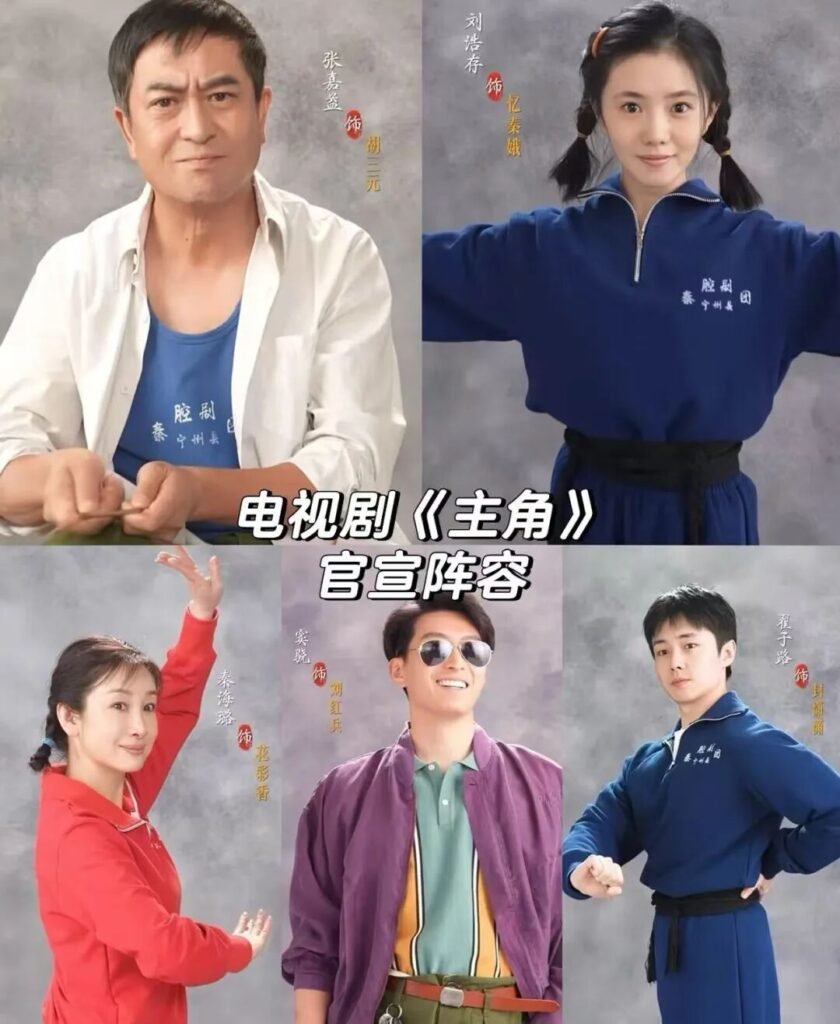
Born into privilege as the son of an official, Liu Hongbing embodies the image of a wealthy, confident playboy. He is young, energetic, fashionable, and emotionally impulsive — the kind of man who pursues what he wants without hesitation. In many ways, he represents a newer social atmosphere and changing era mentality that sharply contrasts with the more traditional emotional world surrounding Qin Opera performers.
His pursuit of Yi Qin’e is aggressive and relentless, almost to the point of obsession.
Within the drama, Liu Hongbing becomes fascinated by Yi Qin’e not only as a woman, but also as a symbol. By the time he enters her life, she has already begun attracting admiration and attention because of her growing reputation on stage. His pursuit therefore reflects both genuine emotional desire and the intoxicating allure of fame itself.
As his feelings intensify, Feng Xiaoxiao — who loves Yi Qin’e in a quieter and gentler way — gradually retreats. Eventually, Yi Qin’e herself makes the painful decision to abandon Feng Xiaoxiao and choose Liu Hongbing instead.
That choice becomes one of the most significant emotional turning points in her life.
What makes the relationship especially tragic is that this marriage is not purely forced upon her by circumstance. Unlike many other hardships in Yi Qin’e’s life, this is a decision she actively makes herself. In part, she marries Liu Hongbing to prove her own innocence and dignity amid surrounding pressures and gossip. Yet the very relationship she chooses eventually becomes a source of deep emotional destruction.
After marriage, Liu Hongbing’s infidelity shatters their relationship.

His betrayal not only destroys the trust between them, but also leaves lasting emotional scars on Yi Qin’e. The collapse of their marriage becomes one of the clearest examples in The Lead of how emotional dependence and public admiration can ultimately turn into pain and humiliation.
Through Liu Hongbing, the series also reflects the complicated relationship between performers and public attention during periods of social change. As Yi Qin’e rises to greater fame, the people around her increasingly project their own desires, fantasies, and ambitions onto her. Liu Hongbing’s obsession therefore symbolizes more than romance — it represents the way a celebrated female figure can become trapped under the weight of admiration itself.
This is why his character functions as both lover and threat.
His passion appears romantic at first, but gradually reveals something far more possessive and destructive. The more intensely he pursues Yi Qin’e, the more her own emotional freedom seems to disappear. In that sense, Liu Hongbing’s storyline reinforces one of the drama’s central themes: that becoming “the lead” on stage often comes at the cost of losing control over one’s personal life.
For Dou Xiao, the role also offers significant dramatic range.
The character evolves from youthful confidence and impulsive charm into emotional instability and moral failure, allowing the actor to portray a wide emotional and psychological arc across different stages of Liu Hongbing’s life. Rather than presenting him as a purely villainous figure, the drama frames him as a flawed product of desire, ego, and social privilege.
And that complexity is precisely what makes Liu Hongbing such an important part of The Lead’s emotional world.

