After The Glory of Fine Beauty (良陈美锦) began airing, Chen Yanyun did not emerge as the kind of character who instantly dominates online discussion. In fact, during the first few episodes, many viewers described him with only one word: steady.
His speech is steady. His emotions are steady. Even the way he looks at people feels restrained and controlled.
But as the story progresses, it becomes increasingly clear that Chen Yanyun is actually one of the most internally conflicted characters in the entire drama.
Because he is someone fundamentally incapable of expressing his emotions freely.
As a man positioned close to power, Chen Yanyun has long learned to assess situations before allowing himself to reveal any emotional reaction. Even when he begins developing feelings for Gu Jinchao, he cannot approach her recklessly. Even when his emotions are visibly shaken, his instinct is still to suppress them immediately.
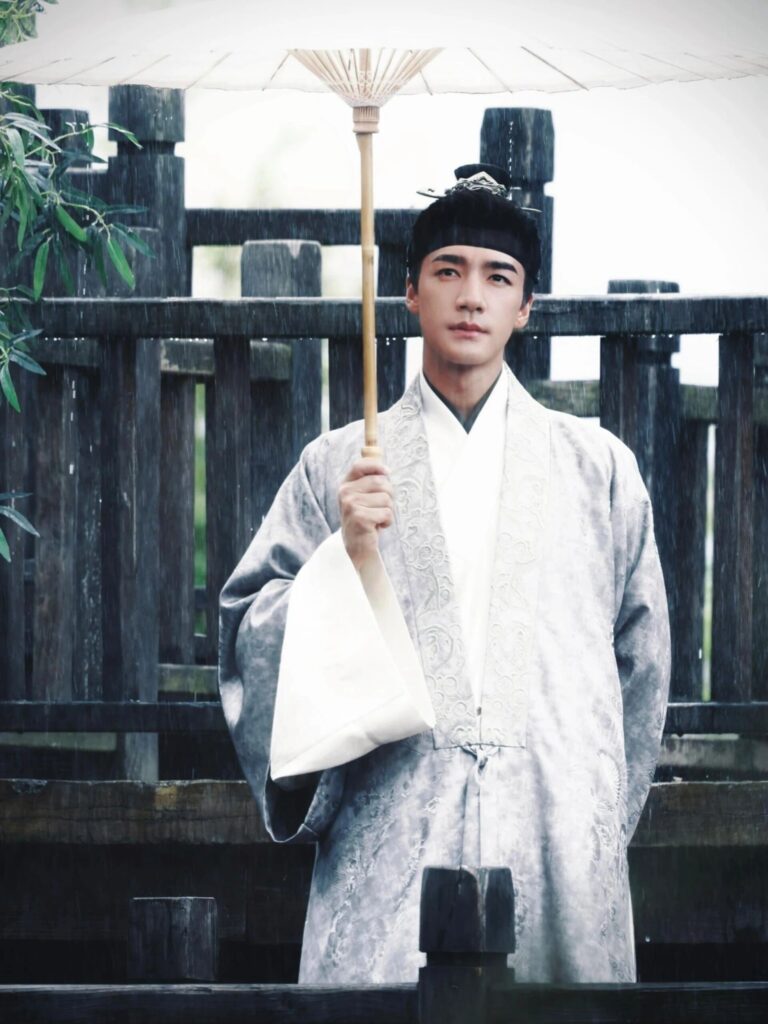
That is what makes the character genuinely complex.
His conflict does not primarily come from his political identity as a powerful court figure, but from the fact that he has spent years living inside a state of constant self-restraint.
Most of the time, it is not that he does not want something.
He simply does not allow himself to lose control.
And that, perhaps more than anything else, explains why Ci Sha feels more natural in this role than in almost any performance he has given before.
Because by nature, he has never been an overly external actor.
For a long time, many viewers watching Ci Sha perform have shared a similar impression: his aura fits the role, but the emotional core does not always fully come alive.
His portrayal of Yang Jian in Creation of the Gods (封神) remains the clearest example.
Even at that stage, Ci Sha already possessed a highly compatible costume-drama presence. He carries a kind of physical heaviness that has become increasingly rare among younger male actors — not the polished prettiness common in idol dramas, but something rougher, wilder, and slightly untamed. That quality naturally benefited a mythological character like Yang Jian.
The issue, however, was that Yang Jian leaned too heavily into divine distance and symbolic presence. As a result, audiences remembered Ci Sha more for his atmosphere and physical aura than for detailed emotional movement.
In simple terms, he looked convincing, but did not always feel fully alive emotionally.
Later, in The Legend of Heroes (金庸武侠世界), his version of Guo Jing moved in a different direction entirely.
Guo Jing requires emotional bluntness rather than sharpness. Many actors playing the role try too hard to make the character appear smarter or more charming, but Ci Sha did not overly decorate the performance. In fact, his naturally slower rhythm and grounded heaviness fit Guo Jing surprisingly well.
Yet Guo Jing himself is a fundamentally straightforward character.
His emotional logic is direct. His loyalty, sense of responsibility, and moral growth are all openly expressed, leaving relatively limited room for layered psychological complexity.
Chen Yanyun, however, is completely different.
For the first time, the qualities that once caused debate around Ci Sha’s acting are now becoming the character’s greatest strengths.
His slowness no longer feels like pacing issues, but like the cautious behavior of a man conditioned to constantly calculate consequences. His heaviness no longer functions merely as “good costume-drama aura,” but begins to resemble emotional exhaustion accumulated through years of repression.
Most importantly, this performance marks the first time he truly starts handling emotional detail on a finer level.
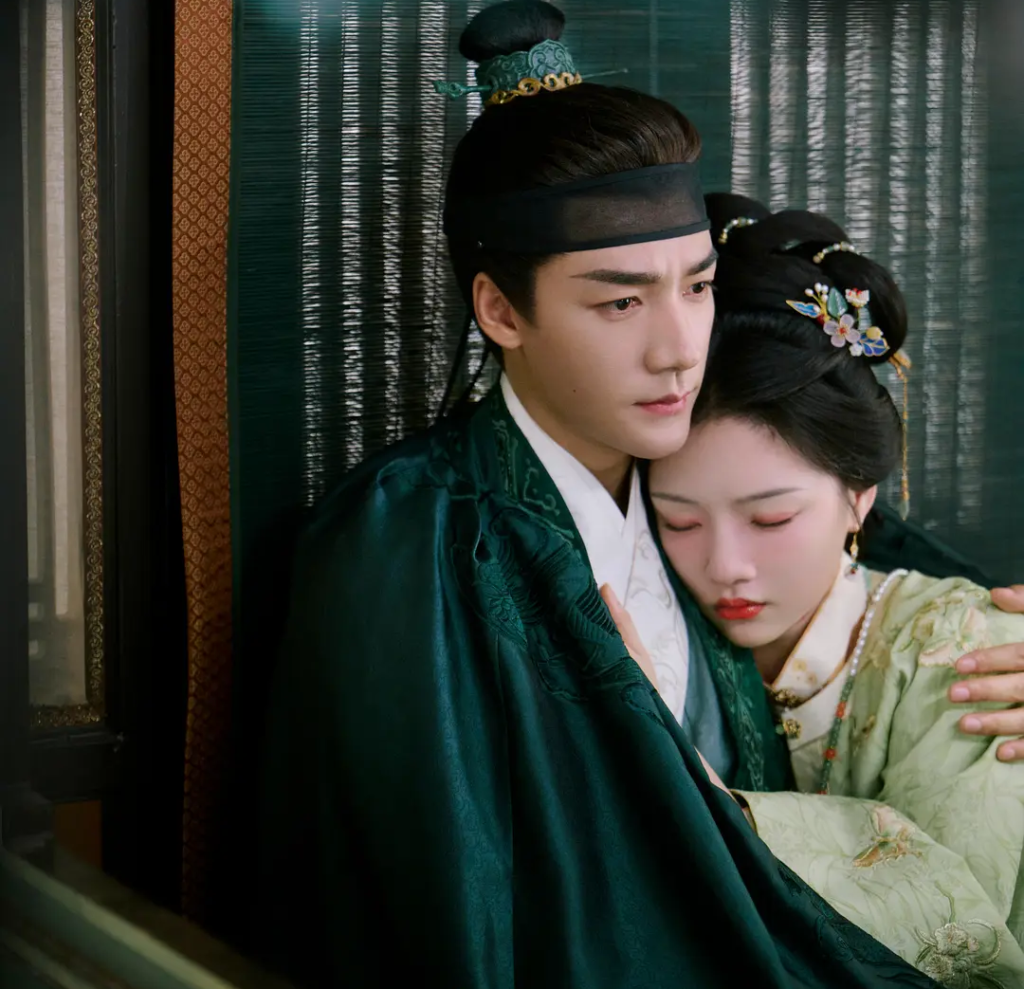
When interacting with Gu Jinchao, Chen Yanyun often gives the impression of someone emotionally shaken for only a split second before immediately forcing himself back under control. Sometimes the shift lasts only through a brief pause or a momentary avoidance of eye contact, yet the audience can already sense that the character’s emotional balance has been disturbed.
But he never fully reveals it.
Because Chen Yanyun is not someone accustomed to emotionally exposing himself.
Ironically, this also addresses what had long been one of Ci Sha’s biggest acting limitations.
Previously, he often relied heavily on external atmosphere. Audiences remembered his screen presence, body language, and costume compatibility, but struggled to fully enter the emotional interior of his characters. There was often a sense that “the role feels right,” while the emotional layers underneath remained comparatively thin.
The Glory of Fine Beauty (良陈美锦) feels like the first time he genuinely begins moving inward.
He is no longer depending solely on standing there and visually resembling the character. Instead, he starts portraying what it actually feels like to live for years while constantly suppressing emotion.
Of course, some limitations still remain.
Ci Sha is still not naturally an actor built around explosive emotional release. In scenes requiring complete emotional collapse, his instinct continues to lean toward restraint rather than full rupture. As a result, certain dramatic peaks may lack a truly devastating emotional impact.
Yet in a strange way, that limitation also suits Chen Yanyun perfectly.
Because this is not a man who completely loses control.
He resembles a tightly stretched string that never fully snaps. The audience constantly senses emotion existing beneath the surface, even if it rarely erupts openly.
And for the first time, the natural heaviness, dullness, and quiet repression that once felt like restrictions in Ci Sha’s acting no longer work against him.
Instead, they finally feel inseparable from the character himself.

