In the historical wuxia drama Rain Bells (雨霖铃), Yang Yang takes on the role of Zhan Zhao, the series’ central protagonist and one of the most iconic heroic figures in classic Chinese martial arts literature. Adapted from minifish’s novel of the same name and inspired by the legendary “Southern Hero” from The Seven Heroes and Five Gallants, this version of Zhan Zhao reimagines the familiar character through a far more restrained, conflicted, and emotionally burdened lens.
Co-produced by Daylight Entertainment and Youku, Rain Bells is directed by Liu Hongyuan, written by Wu Tong, and produced by renowned producer Hou Hongliang. The drama officially announced Yang Yang as Zhan Zhao in May 2024 before eventually securing its broadcast license and premiering in 2026.
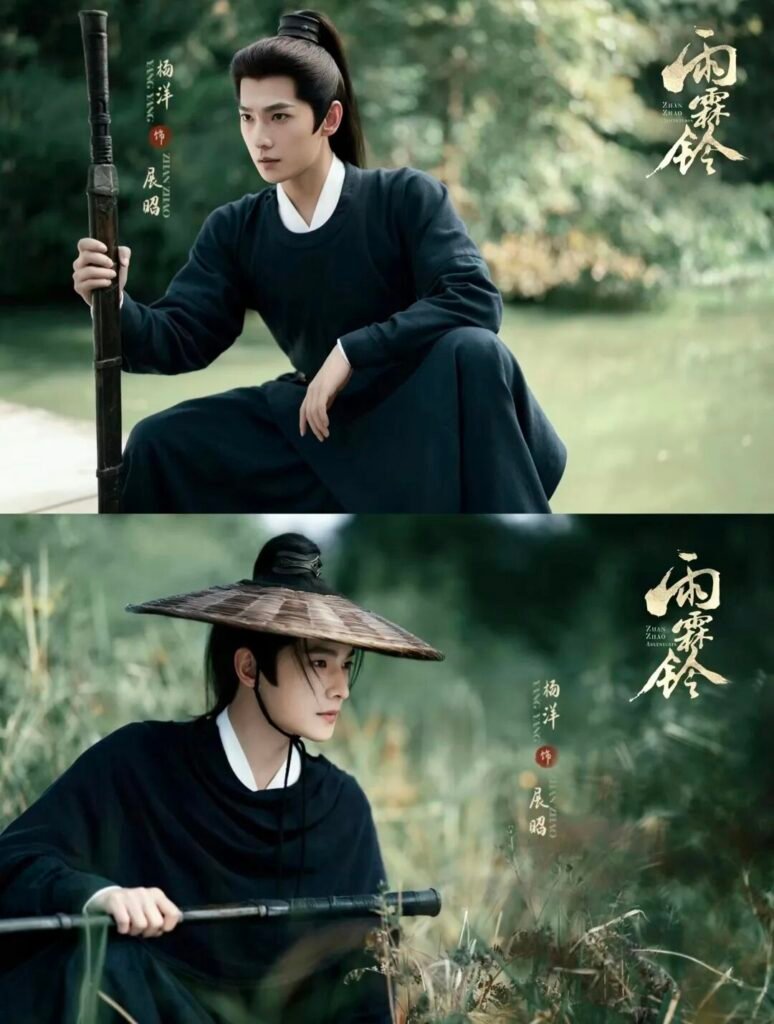
Set during the reign of Emperor Renzong of the Northern Song Dynasty, the story follows Zhan Zhao, who serves as a fourth-rank imperial guard carrying the title of “Imperial Cat.” Though officially tied to the court, he also remains deeply connected to the jianghu world as a wandering swordsman and martial arts legend.
This dual identity becomes one of the character’s defining conflicts.
The drama begins when Zhan Zhao investigates a mysterious unsolved case left behind by a deceased friend, only to become entangled in a dangerous web involving both political conspiracies and martial arts factions. Along the way, he encounters Huo Linglong, the spirited young mistress of Linglong Manor played by Zhang Ruonan, as well as Bai Yutang, the charismatic “White Jade Mouse” portrayed by Fang Yilun.
Together, the three form an investigative trio that gradually uncovers evidence tied to Prince Xiangyang’s rebellion plot.
Unlike more traditional adaptations that primarily emphasize Zhan Zhao’s upright heroism, Rain Bells places far greater focus on his psychological burden and moral struggle. This version of the character is still recognized as the greatest martial artist in the jianghu and retains the legendary title of “Southern Hero,” but beneath that reputation lies a man trapped between loyalty, justice, law, and personal emotion.
Rather than simply protecting order, he slowly evolves into someone willing to directly challenge corrupt systems and hidden powers.
Throughout the series, Zhan Zhao repeatedly faces life-threatening situations. He is hunted by both martial arts sects and political forces, poisoned while protecting innocent civilians, forced to infiltrate enemy territory disguised in black robes and a bamboo hat, and often chooses to lure enemies away alone in order to save others.
These moments reinforce the drama’s darker and more tragic interpretation of the character.
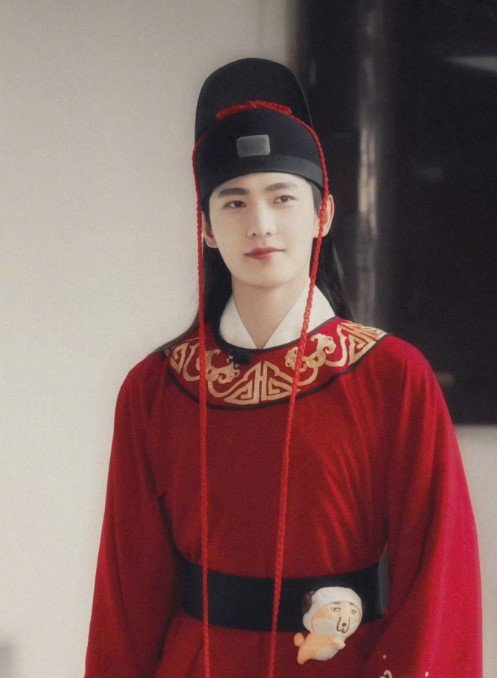
Visually, Rain Bells also deliberately breaks away from the classic image traditionally associated with Zhan Zhao. Earlier versions often dressed the character in bright red official robes symbolizing nobility and righteousness. This adaptation instead introduces a striking “black-clad Zhan Zhao” aesthetic featuring dark robes, high ponytails, black-and-gold arm guards, and shadow-heavy cinematography.
The result is a version of Zhan Zhao that feels colder, lonelier, and more emotionally repressed.
At the same time, the production still preserves elements of the classic red-robed look for certain scenes, creating a visual contrast between his public identity as an imperial guard and his more isolated inner self as a wandering swordsman burdened by responsibility.
The costume and prop design reportedly drew inspiration from Song Dynasty military aesthetics and official attire regulations, helping ground the drama in a more historically textured atmosphere.
To prepare for the role, Yang Yang underwent martial arts and Wudang swordsmanship training. The action choreography combines traditional swordplay with flowing qinggong movement, emphasizing elegance, precision, and the graceful restraint associated with classic wuxia heroes. Promotional footage featuring rooftop leaps, rain-soaked sword fights, and rapid close-range combat quickly became major discussion points online even before the drama premiered.
One reason audiences have responded so strongly to this adaptation is because it attempts to humanize Zhan Zhao beyond the traditional “perfect hero” archetype.
This version highlights not only his righteousness, but also his exhaustion, hesitation, emotional suppression, and loneliness. Much of the character work relies on Yang Yang’s restrained body language and eye acting rather than overt emotional monologues. Compared to earlier heroic portrayals, this interpretation carries a much heavier sense of tragedy.
Ultimately, Rain Bells presents Zhan Zhao not simply as an unbeatable martial arts legend, but as a man constantly forced to sacrifice parts of himself in order to uphold justice. And that shift in tone is precisely what has made this darker, more conflicted version of the “Imperial Cat” one of the most discussed wuxia reinterpretations in recent years.

