In the Chinese drama The Lead (主角), one of the most quietly compelling female characters is Xiao Baixie, played by Wang Likun. Although the role has not been promoted as heavily as the central protagonist Yi Qin’e, Xiao Baixie remains an important figure whose emotional journey and personal transformation are deeply tied to the drama’s larger themes of fate, survival, and the passage of time.
According to the production team, Xiao Baixie’s character arc reflects the idea that “after walking through mud and hardship, beauty can still be found.” That symbolic description already hints at the kind of woman she represents within the story — someone shaped by struggle, but never entirely defeated by it.
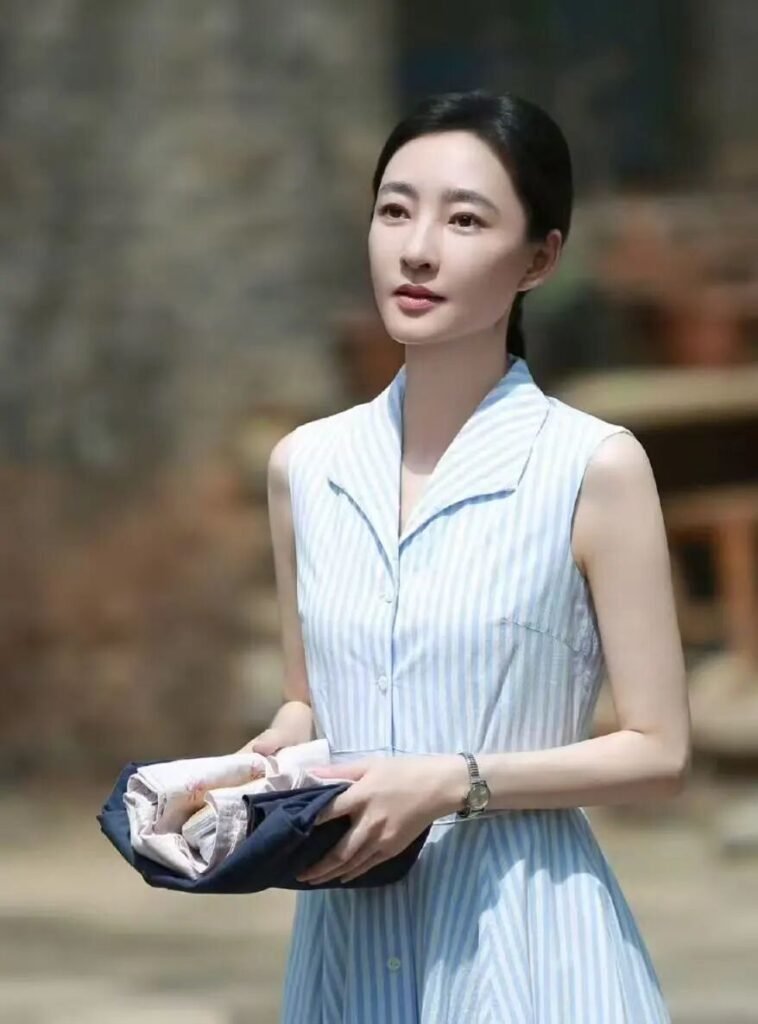
Adapted from Chen Yan’s Mao Dun Literature Prize–winning novel, The Lead is not a conventional idol drama driven by romance or glamorous character archetypes. Instead, it is a deeply literary and realist production centered on Qin Opera culture, generational change, and the emotional cost of living through turbulent times. In that kind of storytelling environment, atmosphere, emotional restraint, and lived-in realism matter far more than surface-level charm.
This is precisely why many viewers believe Xiao Baixie is such a suitable role for Wang Likun at this stage of her career.
Years ago, Wang Likun was widely recognized for her beauty-focused image, often referred to as a “natural beauty” or “goddess without makeup.” But in recent years, her screen presence has gradually shifted away from youthful or glamorous roles toward more mature, grounded characters. Rather than competing in the increasingly crowded “idol actress” space, she now appears more naturally suited for historical dramas, realist storytelling, and ensemble productions that require emotional depth and life experience.
The Lead fits that transition perfectly.
From the currently released information, Xiao Baixie is not merely a supporting character inserted to serve the plot. She is described as a major female figure whose story runs throughout the drama, experiencing repeated emotional upheavals and personal evolution against the backdrop of a changing era.
The production team reportedly emphasized showing different stages of her life through costume, emotional tone, and performance detail, using the character to reflect the difficult choices and emotional endurance of ordinary women living through historical transformation.
What makes Wang Likun particularly effective in these kinds of roles is not explosive acting or dramatic emotional outbursts. Her strength has always been subtle emotional control.
She carries a very distinctive “old-era woman” atmosphere — gentle, restrained, and quietly melancholic. On screen, she rarely feels aggressive or overly performative. Instead, she creates emotional impact through stillness, pauses, glances, and internal tension. That style of acting often works especially well in realist dramas, where characters are expected to feel lived-in rather than theatrical.
In many ways, Wang Likun is especially convincing when portraying women who have been worn down by life but continue moving forward anyway.
That quality aligns naturally with Xiao Baixie’s role in The Lead. The drama itself focuses heavily on themes of destiny, sacrifice, and emotional resilience within the world of Qin Opera performers. Surrounded by actors like Zhang Jiayi and Qin Hailu — both known for grounded, naturalistic performances — Wang Likun’s restrained acting rhythm may actually stand out more effectively here than it would in a purely commercial idol production.
Objectively speaking, Wang Likun is no longer positioned as one of the most aggressively marketed top-tier actresses in the Chinese entertainment industry. Her exposure and project frequency are lower than those of many mainstream “85 Flowers.” However, that distance from the pressure of traffic and constant hype may also be giving her a different kind of career freedom.
Audiences are no longer watching her purely to see whether she can remain a trending star. Instead, they are increasingly evaluating whether she truly fits the characters she plays.
And Xiao Baixie appears to be exactly the kind of role that benefits from that shift.
Because The Lead is rooted in literary realism and heavily tied to Qin Opera culture, the drama places enormous importance on authenticity and emotional texture. If Wang Likun successfully captures Xiao Baixie’s quiet endurance, tenderness, and emotional complexity, this role could become one of the more respected performances of her recent career.
It may not push her back into the center of traffic-driven celebrity culture, but it could very well reinforce her value as a serious actress capable of carrying emotionally mature, era-driven storytelling.

